





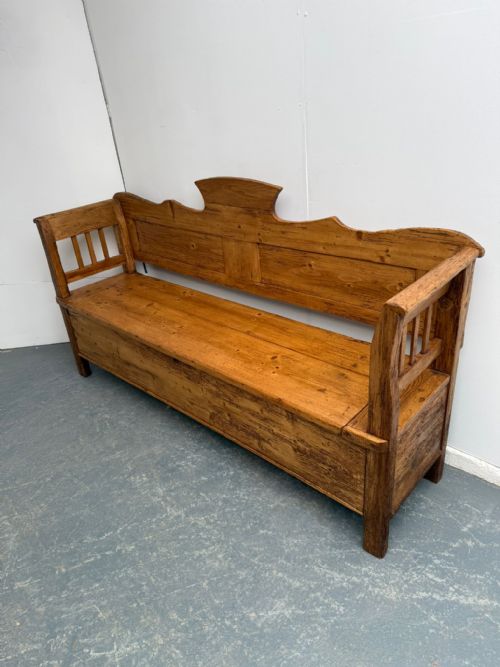


Waxed Pine Box
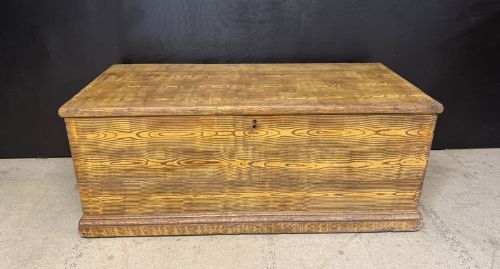
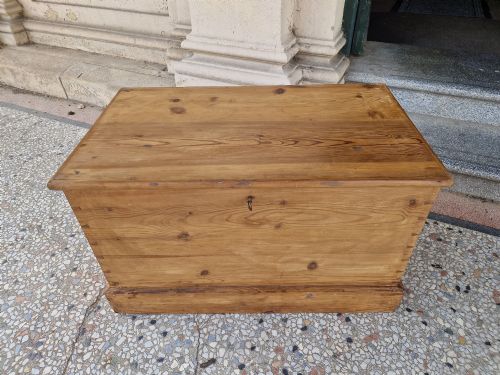
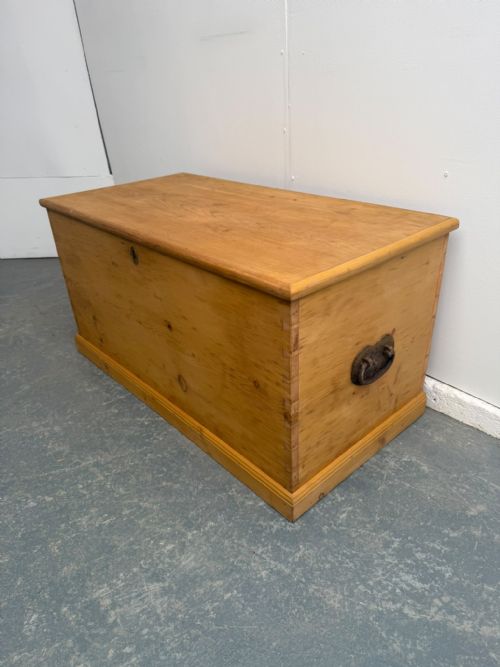
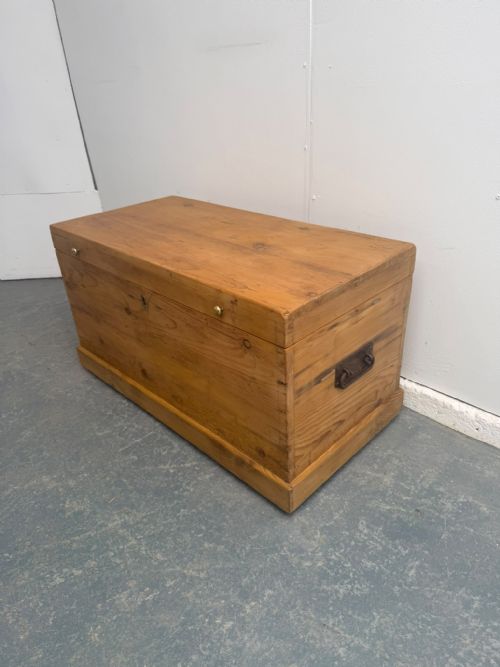
A waxed pine box is a domestic storage piece built from soft timber and finished with a protective wax coating to highlight the grain.
Waxed Pine Box
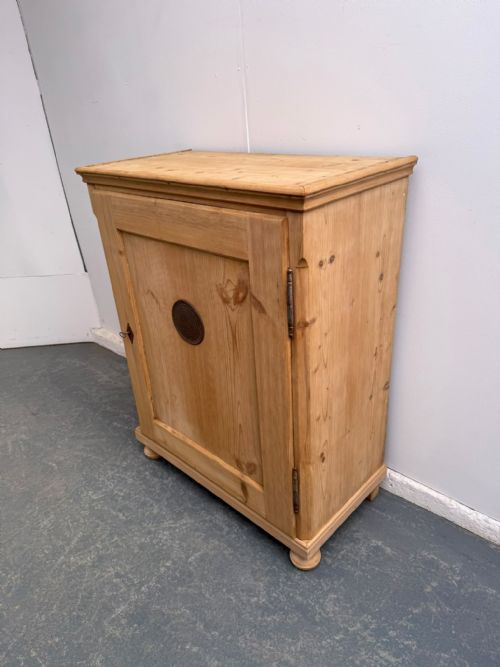
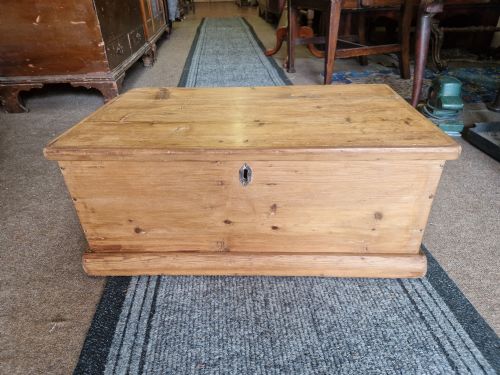
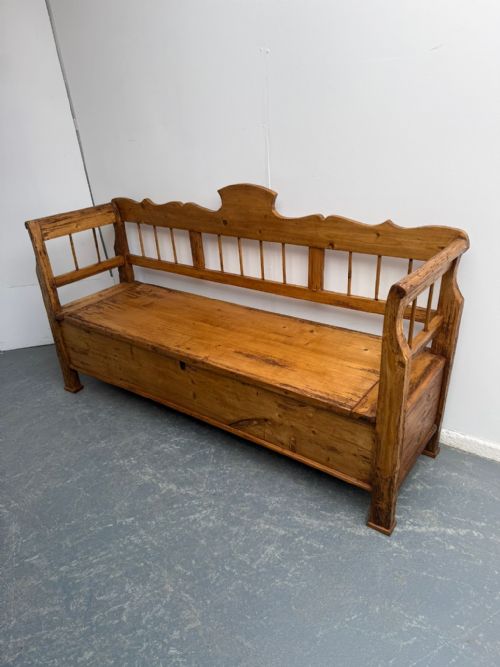
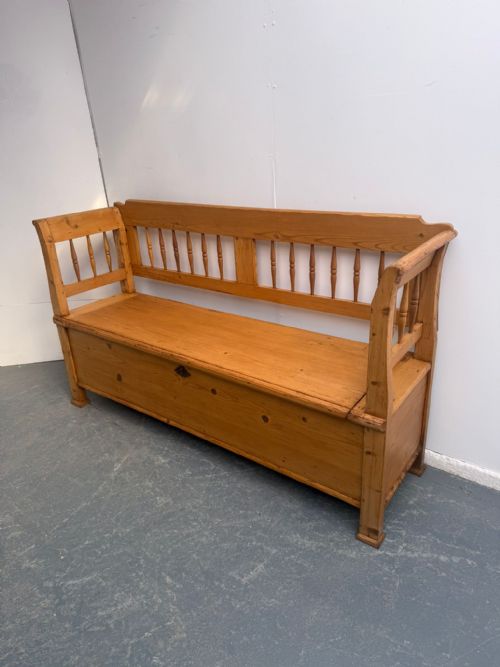
When you search for a waxed pine box, you encounter utilitarian containers spanning the eighteenth, nineteenth, and early twentieth centuries. These range from simple lidded blanket chests and coffers to mule chests fitted with internal drawers, alongside multi-seater box settles originating from Hungary.
The pieces on this page derive primarily from the Georgian and Victorian eras, carrying distinct regional characteristics from British workshops and continental sources. The domestic forms serve as practical storage, while larger bench variations double as seating with concealed compartments beneath the seat boards.
How they were made
Carpenters constructed these items using solid pine timber, joining structural panels with traditional methods to withstand heavy daily use. Iron and brass hardware such as strap hinges, carrying handles, and key escutcheons reinforced the corners and lids.
The finish relies upon the application of wax to the bare pine surface, building a protective layer that deepens the tone of the wood over decades of handling.
Waxed Pine Box Retail Price Guide 2026
Typical asking prices for waxed pine box among the pieces listed under this phrase on Sellingantiques today, from the lower quarter to the upper quarter. They describe what is for sale here now, not the wider market.
Several Victorian storage boxes manage to conceal up to four secret drawers within their frames for hiding valuables.
What varies in quality
The quality of a waxed pine box depends on the integrity of its original construction and the proportion of the timber used. Heavier planks, intact dovetailed joints, and functional internal compartments elevate the standard of a piece far above basic utility builds.
Surviving original hardware and the depth of the patination accumulated through years of polishing separate ordinary storage trunks from superior regional examples.
The Waxed Pine Box Glossary
- Mule chest
- A storage chest featuring one or more drawers built into the base beneath the main lidded compartment. This form bridges the gap between a traditional coffer and a chest of drawers.
- Box settle
- A high-backed wooden bench with a hinged seat that lifts to reveal a large storage box underneath. Hungarian examples frequently appear in pine.
- Coffer
- A heavy, robust chest traditionally used for storing valuables or documents before the widespread adoption of fitted household closets. Early examples often rest directly on the floor or short stile feet.
- Patina
- The surface sheen and darkening acquired by pine timber and wax over long periods of handling and exposure to light. It serves as an indicator of age and continuous use.
- Dovetail
- A joint formed by interlocking wedge-shaped fingers, used extensively in period drawer construction to provide structural strength without relying on metal fasteners.
Waxed Pine Box: Frequently Asked Questions
What were waxed pine boxes used for?
These boxes primarily stored household textiles, woollens, blankets, and personal possessions in domestic settings.
Larger versions such as box settles and mule chests combined seating and drawer storage in communal living areas.
How do I care for a waxed pine box?
Maintain the finish by applying a traditional beeswax polish periodically and buffing it with a soft cloth to renew the sheen.
Keep the timber away from direct heat sources and sudden humidity changes to prevent warping in the old pine boards.
How can I tell a Georgian pine box from a Victorian one?
Georgian pieces often display finer joinery details, such as hand-cut dovetails on internal till boxes and early drawer configurations.
Victorian and later nineteenth-century boxes frequently appear in larger proportions, sometimes incorporating heavy iron bracing or simpler box construction.
Can I use a pine box as a coffee table?
Low and wide pine boxes suit contemporary living spaces well when adapted to serve as coffee tables or television stands.
The sturdy flat lids provide a stable surface while the interior maintains concealed storage for everyday items.