
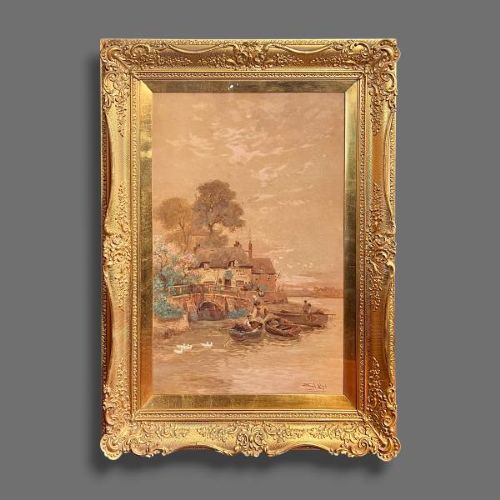
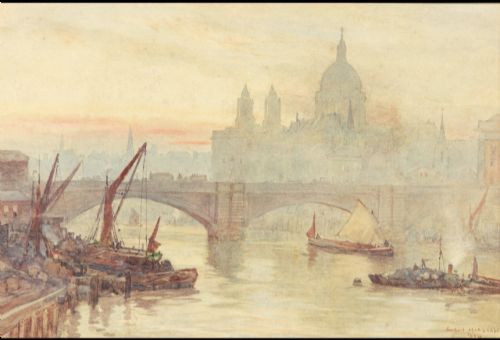
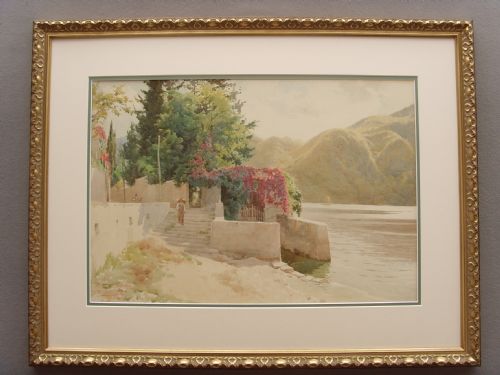
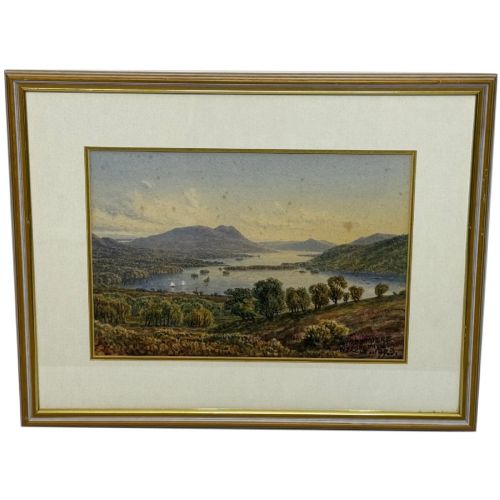
Watercolour Landscape
Watercolour landscape works capture outdoor scenes on paper using pigment and water, offering buyers a glimpse into historic rural and coastal views.
Watercolour Landscape
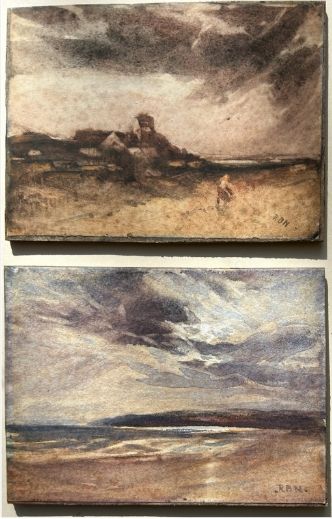
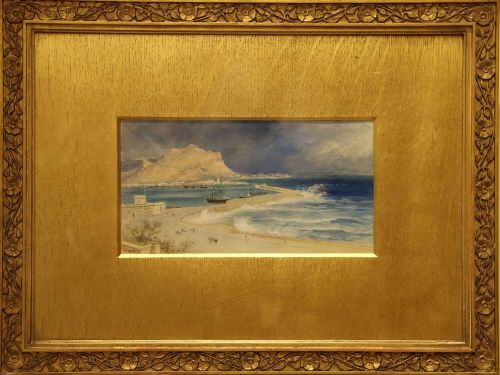
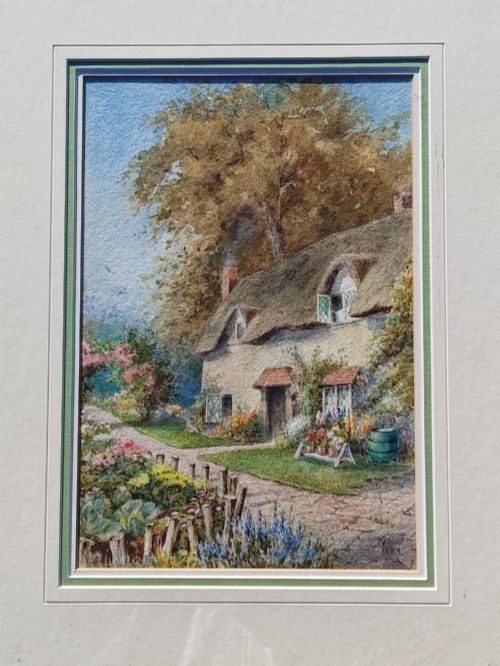
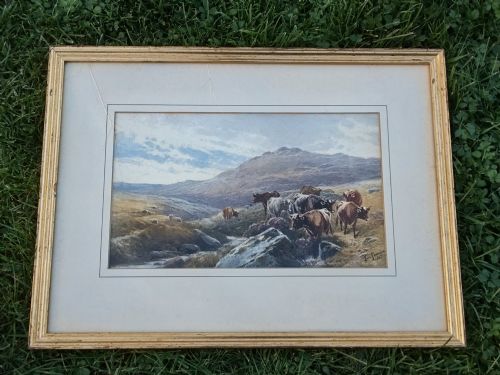
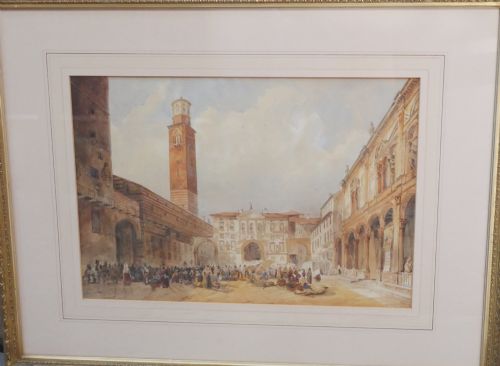
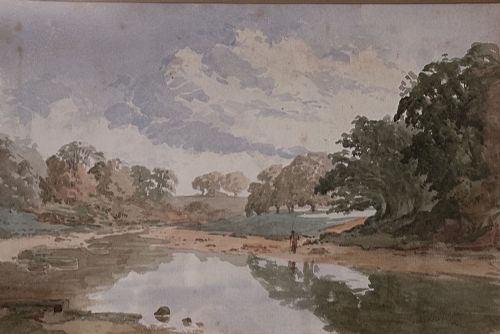
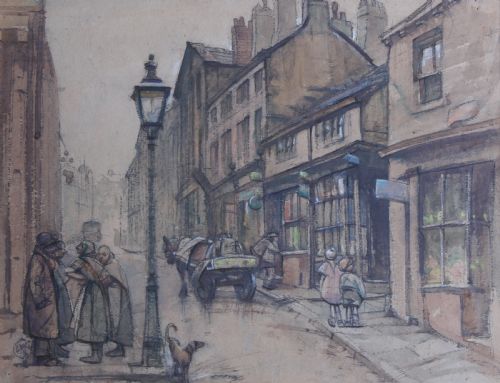
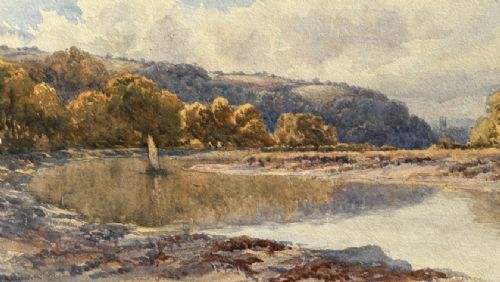
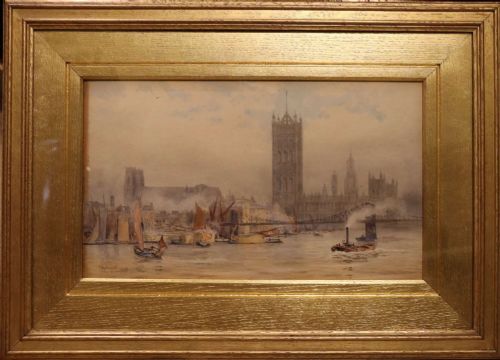
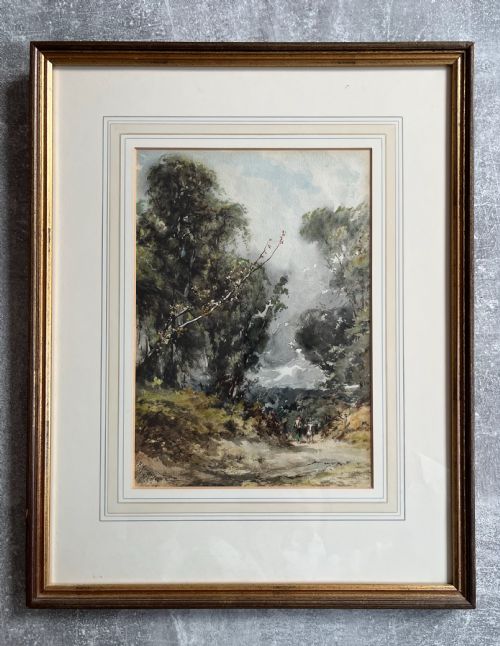
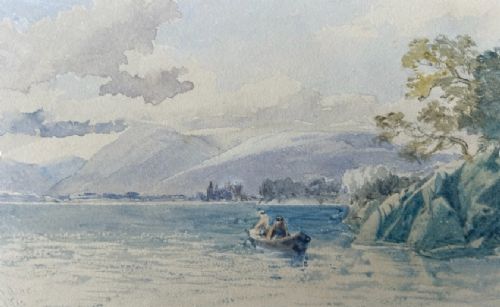
A watercolour landscape presents views of fields, rivers, cottages and coastal harbours captured by artists working on paper. These paintings range from mid 19th Century Scottish vistas and English pastoral scenes to Edwardian townscapes and Italian lake views.
Most examples found here date from the Victorian era through the early decades of the 20th century. Buyers encounter framed artworks depicting local countryside, grand tour subjects, and quiet rural moments signed by period artists.
How they were made
Artists painted these watercolours utilising pigment suspended in water applied directly onto paper or occasionally silk. Many works incorporate ink for initial outlining or fine detail before washes of colour build the composition.
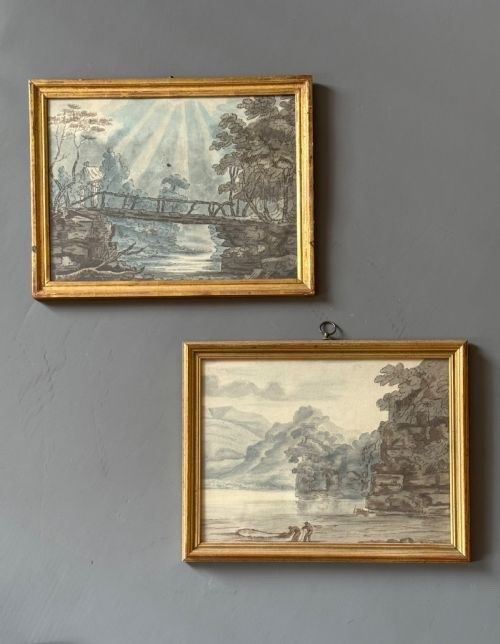
Finished works typically sit behind glass within wood frames, frequently including gilt wood mouldings that protect the delicate paper surface from moisture and handling.
Listings span the 18th, 19th and 20th centuries, featuring paper, silk, ink and gilt wood.
What varies in quality
Quality rests in the handling of light, atmospheric depth and the certainty of the brushwork. A proficient hand achieves transparent washes and convincing perspective that bring a riverbank or harbour to life.
The condition of the paper and the vibrancy of the watercolour pigment also separate ordinary examples from finer works. Strong provenance, legible signatures and original period frames add further distinction to individual paintings.
Robert Buchan Nisbet·Thomas Rowden·Cuthbert Crossley·Stuart Lloyd·Herbert Menzies Marshall·Robert George Talbot Kelly·William Taylor Longmire·David Law·H. Medlycott·George Fotherly Hargitt·Thomas Miles Richardson Jnr·James Orrock·William Henry Earp·Richard Principal Leitch·John R Prentice·Thomas Ellison·Alfred Young Nutt·Percy Lancaster·A. Mitchell·A. Marie Parsons·John McDougal·EJ Letheren·Robert Leslie Howey·James E. Aitken·John E. Aitken
The Watercolour Landscape Glossary
- Watercolour pigment
- Colouring material finely ground and mixed with a water-soluble binder. It creates transparent washes on paper.
- Gilt wood
- Timber framing finished with a thin layer of gold leaf or metallic gilt. It frames and protects many 19th-century works.
- Grand tour
- Period of European travel undertaken by upper-class artists and collectors. It inspired many foreign landscape subjects.
- Monogram
- A motif made by overlapping two or more letters to form a logo or identifier. Artists occasionally used them instead of full signatures.
Watercolour Landscape: Frequently Asked Questions
How should I display a watercolour landscape?
Keep watercolours away from direct sunlight to prevent the pigments from fading over time. Hang them on interior walls where temperature and humidity remain relatively stable.
Ensure the protective glass does not press directly against the paper surface. Proper framing maintains a small gap between the artwork and the glass.
How do I identify the date of a watercolour?
Look for visible signatures, dates inscribed by the artist, or framing materials characteristic of specific periods. Victorian and Edwardian works often bear distinct handwriting styles and paper watermarks.
Examine the style of dress or architecture depicted within the scene for clues. Period labels on the reverse of the frame can also confirm the era.
What is the difference between a watercolour and an oil painting?
Watercolours utilise water-soluble pigments applied to paper, producing a luminous and translucent effect. They are lighter in weight and traditionally require glass protection.
Oil paintings use slow-drying oil mediums on canvas or wood panels. Oils offer heavier texture and deeper opacity without needing a glass cover.
Are these works painted outdoors?
Many artists produced preliminary sketches en plein air to capture natural light and topography. Finished watercolours were frequently completed inside the studio using these field studies.
Portable watercolour boxes made outdoor sketching popular during the 19th century. This practice allowed artists to record rural and coastal views accurately.