




Warm Timber Refectory Table
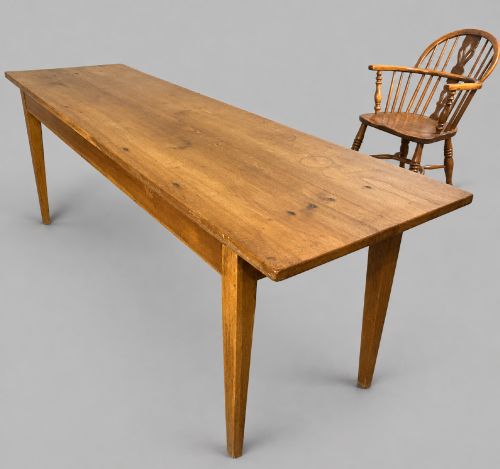
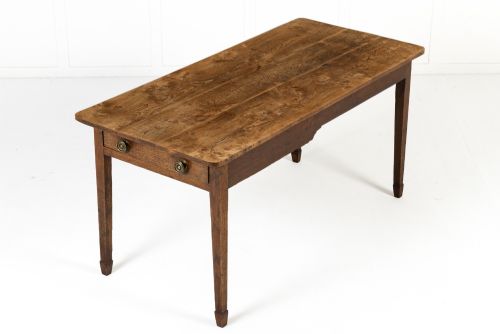
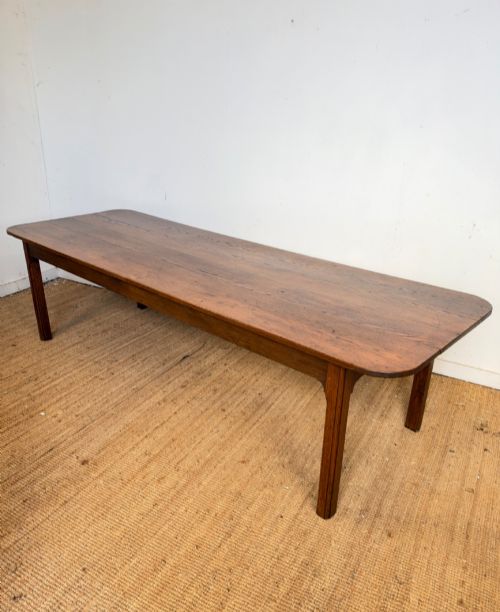
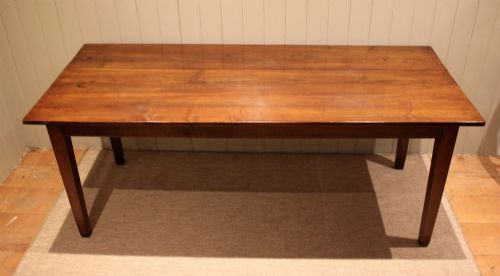
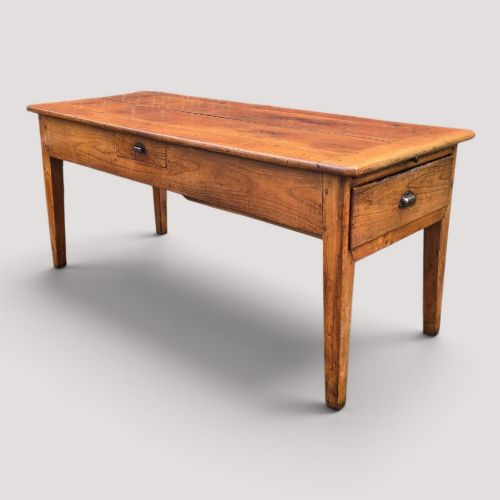
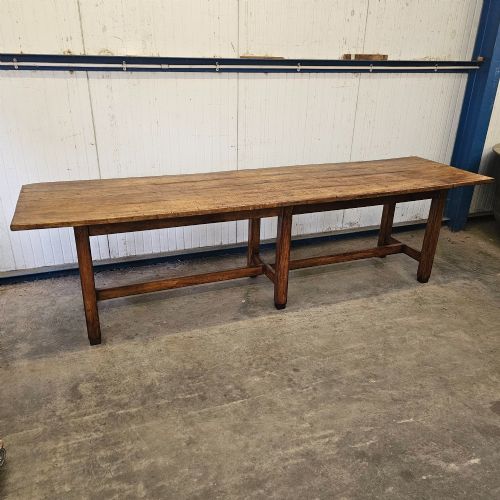
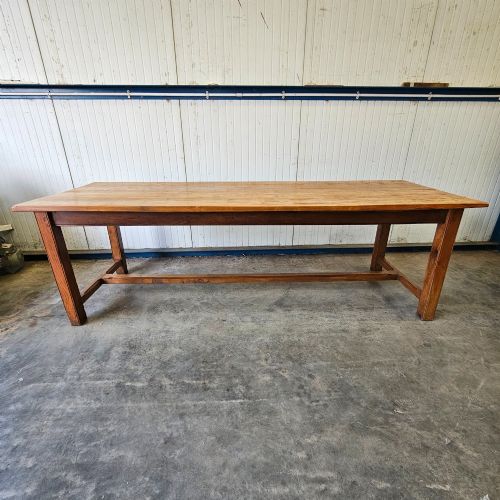
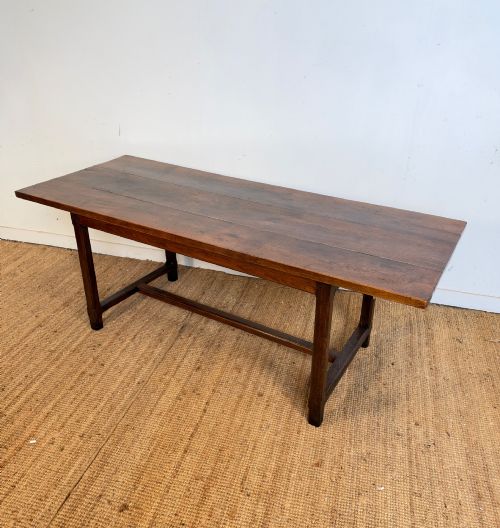
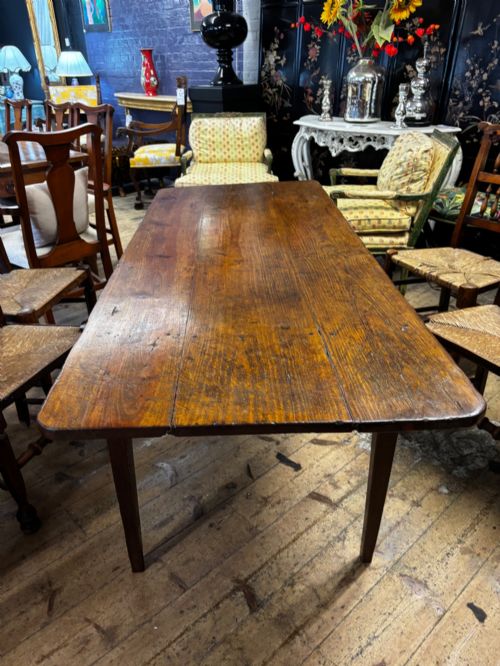
A warm timber refectory table brings immediate presence to a room, offering generous proportions and rich grain that anchors a busy kitchen or dining space.
Warm Timber Refectory Table
When you search for a warm timber refectory table, you encounter large dining and kitchen tables drawn from nineteenth-century and eighteenth-century traditions. These sturdy boards served communal dining and daily work, bearing the marks of honest domestic service.
The selections here span English and French country origins, taking forms such as farmhouse dining tables, community hall boards, and kitchen preparation surfaces. Elm, oak, fruitwood, cherry, beech, walnut, poplar, and chestnut provide the substantial timber foundations of these pieces.
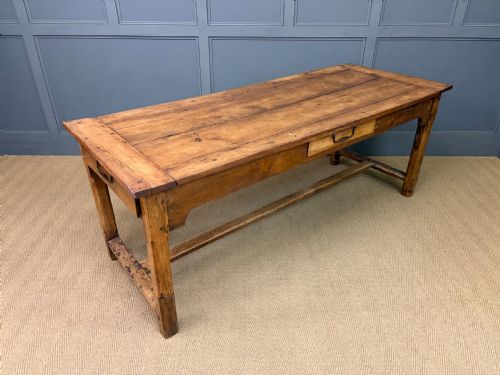
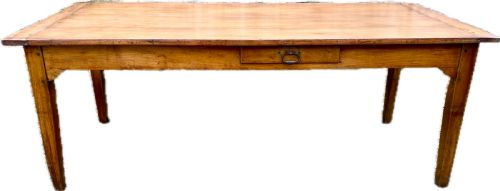
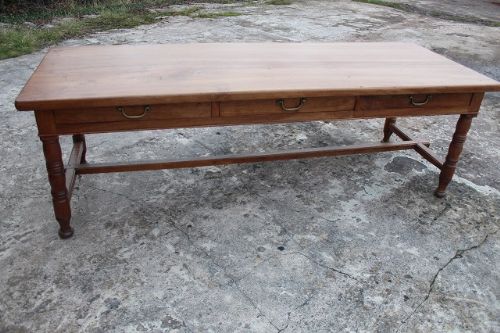
Most examples lean into rustic farmhouse, French provincial, and Victorian country aesthetics. You find long twin-plank tops, occasional drawers, and practical bread slides integrated into the construction.
Construction and materials
Joinery relies on solid timber boards joined securely to support heavy daily use in kitchens and dining halls. Carpenters selected local hardwoods like oak, elm, beech, and various fruitwoods for their durability and attractive grain patterns.
Iron and brass hardware occasionally reinforce the structural framework, while simpler tables utilise pegged joints and substantial stretchers. Surfaces show the straightforward hand-planing and smoothing of traditional timber workshops.
Warm Timber Refectory Table Retail Price Guide 2026
Typical asking prices for warm timber refectory table among the pieces listed under this phrase on Sellingantiques today, from the lower quarter to the upper quarter. They describe what is for sale here now, not the wider market.
Some tables arrive with bread slides still sliding smoothly after centuries of slicing.
Markers of quality
Quality rests in the selection of the timber planks and the integrity of the underlying structure. Single or twin-plank tops displaying rich, unadulterated grain carry distinct visual weight compared to heavily patched surfaces.
The Warm Timber Refectory Table Glossary
- Refectory table
- A long, narrow dining table traditionally used in communal dining halls. These sturdy timber boards provide substantial seating capacity.
- Twin-plank top
- A table surface constructed from two wide boards joined lengthwise. This method utilises mature timber widths common in older furniture.
- Bread slide
- A pull-out wooden shelf integrated beneath the tabletop. Historically, it provided extra workspace for slicing bread or cooling loaves.
- Stretcher
- A horizontal timber beam connecting the legs of a table for added stability. It prevents the legs from wobbling under heavy loads.
Warm Timber Refectory Table: Frequently Asked Questions
How do I clean a timber table?
Wipe surfaces gently using a slightly damp cloth to remove everyday dust and debris. Avoid harsh chemical cleaners that strip natural oils from the wood.
Dry the timber thoroughly afterwards with a soft cloth. Occasional application of appropriate wax maintains the lustre of the grain.
Can I use these tables daily?
These tables were built for heavy domestic and communal service from the beginning. Their solid hardwood construction handles regular family meals and gatherings with ease.
Use coasters and placemats to protect the historic timber surface from excessive moisture and heat. Embracing minor marks preserves the authentic character of the piece.
How do I identify French country styles?
French country and provincial tables often utilise fruitwoods, cherry, or walnut timbers. Their silhouettes tend to be slightly softer and more refined than strict utilitarian designs.
Details like integrated bread slides or subtle curves on the aprons point towards continental workshops. The faded patinas on these woods develop unique warmth over generations.
What rooms suit a refectory table?
Spacious kitchens and open dining rooms provide the ideal footprint for these long boards. Their generous lengths naturally anchor large rooms and invite social gatherings.
Ensure you measure your floor space carefully to allow comfortable clearance around all sides of the table. Benches or mismatched chairs pair naturally with these rustic forms.