
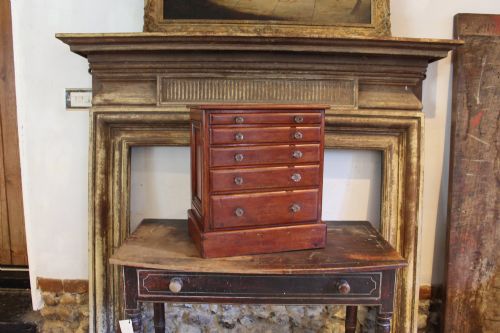
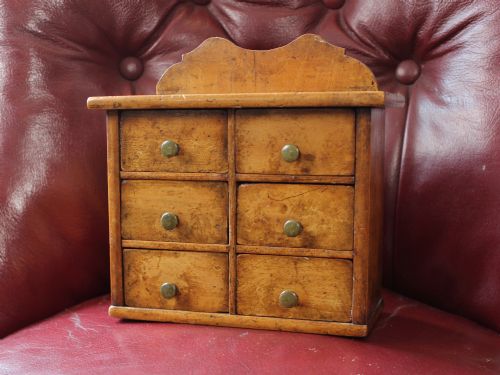


Warm Brown Collectors Chest
A warm brown collectors chest holds small treasures in fitted drawers, spanning centuries of cabinet-making skill.
Warm Brown Collectors Chest
A warm brown collectors chest is a compact storage piece designed to house specimens, coins, or trinkets in multiple small compartments. These items appear across several historic periods, running from seventeenth-century Spanish designs to late Victorian examples.
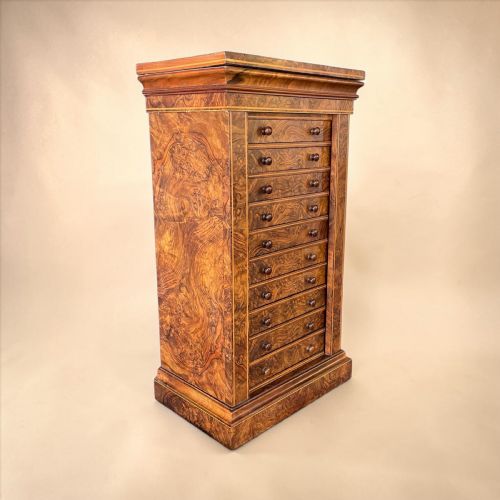
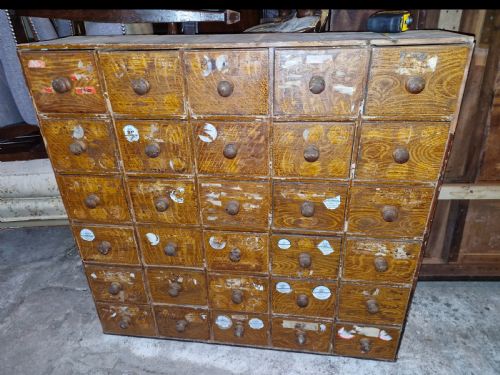
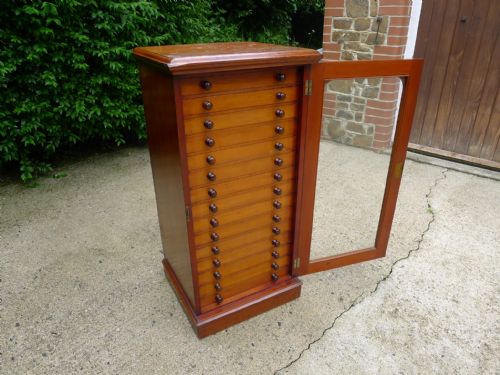
The selection here includes banks of drawers, miniature chests, spice cabinets, and insect cabinets. Walnut and mahogany dominate the offerings, bringing rich tones and deep grain patterns to the fore.
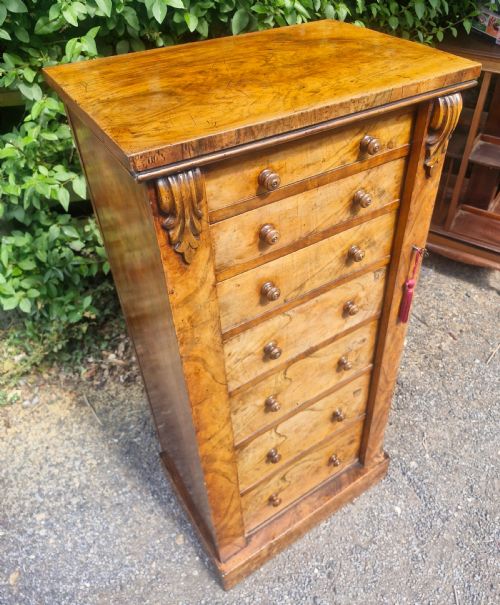
Buyers encounter table-top formats alongside miniature apprentice pieces and tall Wellington chests. Each variant serves the fundamental purpose of organising small items within a structured timber frame.
Materials and construction
Cabinet-makers relied on solid timbers such as mahogany, walnut, fruitwood, and pine to build these robust carcasses. Decorative veneers like burr walnut and laburnum oyster add visual texture to the exterior surfaces.
Object forms on this page include Wellington chests, spice drawers, miniature apprentice chests, and specialised insect cabinets.
Distinctions in quality
Construction standards emerge in the precision of the drawer joints and the selection of figured timber veneers. Superior examples display careful matching of grain patterns across the drawer fronts and carcass exteriors.
Original brass hardware and working locks elevate an example above pieces with replaced fittings. The complexity of the internal configuration, such as multi-drawer insect cabinets, reflects the ambition of the original workshop.
MESSRS WATKINS & DONCASTER·J.T.CROCKETT
The Warm Brown Collectors Chest Glossary
- Wellington chest
- A tall, slender chest of drawers featuring a locking side pilaster that secures all the drawers at once. This form became particularly popular during the Victorian era.
- Vargueno cabinet
- A traditional Spanish desk or cabinet form featuring a drop-front panel that conceals numerous small internal drawers. The style dates back to earlier centuries of Iberian craftsmanship.
- Oyster veneering
- A decorative technique where small branch wood sections are cut transversely to display circular rings and patterns. This method appears on seventeenth-century and later revival pieces.
- Bank of drawers
- A utilitarian multi-drawer unit designed for sorting specimens or documents rather than clothing. These pieces prioritize storage capacity over domestic ornamentation.
Warm Brown Collectors Chest: Frequently Asked Questions
What were collectors chests originally used for?
These cabinets housed specialised items such as insect specimens, coins, shells, and small valuables. Naturalists and hobbyists utilised the numerous shallow drawers to organise delicate collections safely.
Over time, many of these pieces transitioned into general domestic settings for holding jewellery, sewing equipment, or small desk accessories.
How do I date a wooden collectors chest?
Dating relies on observing the timber species, construction techniques, and hardware styles. Eighteenth-century pieces often feature Georgian mahogany proportions, while Victorian examples introduce walnut veneers and specific locking mechanisms.
Secondary woods inside the drawers also offer clues, as regional workshops shifted their material preferences across the decades.
Can I use a miniature chest for modern storage?
The small proportions suit the organisation of modern trinkets, stationery, or keepsakes on a desk or dressing table. The shallow drawers protect delicate items while keeping surfaces tidy.
Placing them away from direct sunlight and excessive heat sources preserves the antique timber and polished finish.
What is the difference between a spice cabinet and an insect cabinet?
Spice cabinets typically feature small wooden doors enclosing a cluster of compact drawers once used for culinary provisions. Insect cabinets contain many shallow, uniform drawers fitted with glass or cork linings designed for entomological displays.
Both forms share a multi-drawer layout but serve entirely different historical functions.