



Walnut Wood Footstool
A walnut wood footstool brings warmth and period charm to any room through rich timber and fine upholstery.
Walnut Wood Footstool
A walnut wood footstool encompasses a variety of low seating forms, ranging from compact Victorian fireside pieces to grander French revival ottomans. Buyers seeking a walnut wood footstool encounter sturdy frames shaped for resting feet or serving as occasional dressing seats.
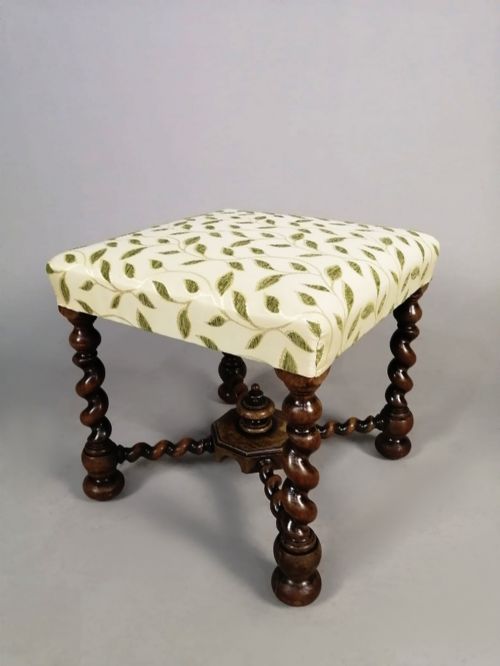
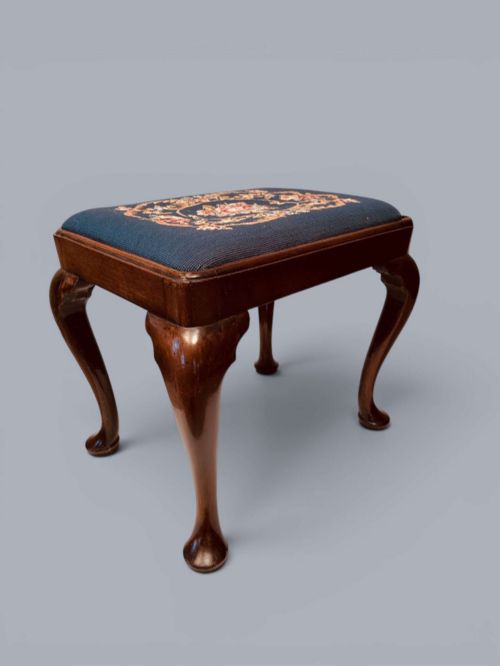
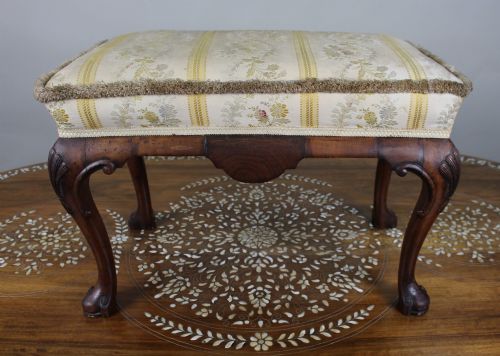
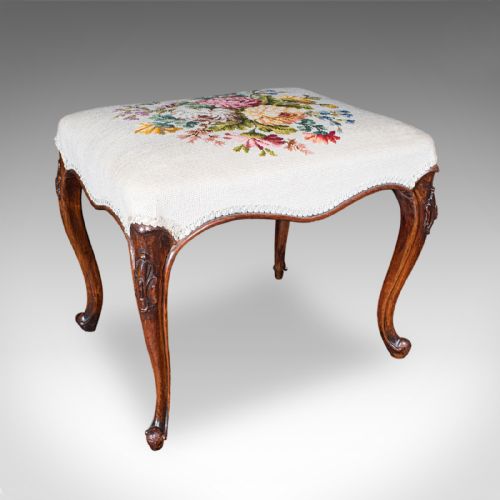
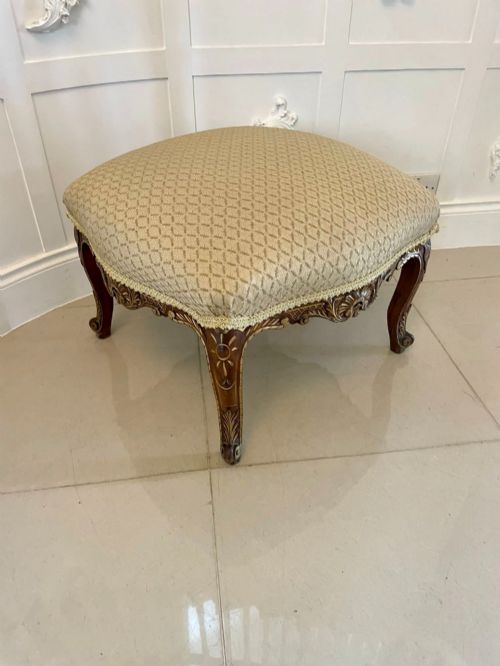
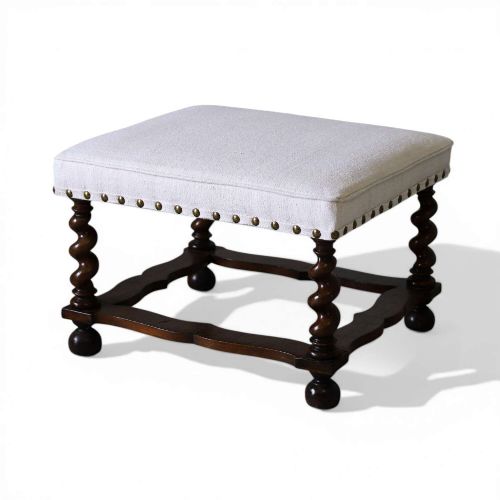
The selection on this page spans several distinct periods, with the Victorian era heavily represented alongside earlier interpretations such as William and Mary revival designs. Forms include X-frame stools, cabriole-legged examples, and oval or rectangular dressing table seats.
Origins stretch across English workshops and French cabinet makers, utilising rich dark timber matched with period textiles. These items function equally well beside an armchair or freestanding in a dressing room.
How they were made
Makers shaped structural elements from solid walnut or applied decorative veneers such as oyster cuts over hardwood bases. Frames often feature intricate hand-carved details, barley-sugar turnings, or twisted rope legs reflecting their respective period styles.
Upholstery relies on traditional textile applications including needlepoint, tapestry, velvet, and patterned fabric secured with decorative braid and brass tacks. Interior padding supports historical stuffing methods beneath the final decorative cover.
Walnut Wood Footstool Retail Price Guide 2026
Typical asking prices for walnut wood footstool among the pieces listed under this phrase on Sellingantiques today, from the lower quarter to the upper quarter. They describe what is for sale here now, not the wider market.
One listed piece carries the wonderfully specific designation of a cock-fighting stool, built low for spectating rather than resting feet.
What varies in quality
Quality rests in the crispness of the timber carving and the architectural proportion of the frame, where superior pieces exhibit confident cabriole legs and balanced turning. The selection of the walnut timber itself dictates visual depth, particularly in figured grains and contrasting stretcher assemblies.
Upholstery execution separates standard examples from exceptional ones, with hand-worked needlepoint and period-appropriate textile choices elevating the piece. Frame integrity and the precision of joinery determine the lasting stability of the stool under daily use.
James Shoolbred
The Walnut Wood Footstool Glossary
- Cabriole leg
- A furniture leg that curves outward and then tapers inward, mimicking an animal's curving leg. This form is common on eighteenth-century and revival stools.
- Oyster veneer
- Small circular or oval slices cut obliquely from small branches or roots of walnut timber. These pieces are arranged to create an oyster-shell pattern across flat surfaces.
- Needlepoint
- Embroidery stitched onto a stiff open-weave canvas ground, frequently employed for historical seat covers. It provides durable and highly decorative patterns.
- X-framed stool
- A seating form supported by intersecting diagonal legs forming an X shape from the side view. This architectural design often denotes formal seating arrangements.
- Barley-sugar twist
- A turning technique resembling the spiral shape of twisted confectionery. This decorative woodworking detail appears frequently on legs and stretchers.
Walnut Wood Footstool: Frequently Asked Questions
How do I clean the wooden frame?
Dust the walnut frame regularly with a dry cloth to prevent dirt accumulation on the carved surfaces. Apply a quality beeswax periodically to nourish the timber and maintain a soft sheen without modern silicones.
Avoid placing the footstool near direct heat sources or strong sunlight, which can dry out the walnut and fade the timber colour over decades.
Can I use these daily?
Most antique stools are structurally robust enough for everyday seating or resting feet, provided the joints remain tight. Heavier frames handle frequent use easily, though delicate revival pieces benefit from careful placement.
Consider the original intended function of the piece, as dressing stools and fireside footstools were built to support sitting and resting weights.
How do I care for antique upholstery?
Vacuum textile and tapestry seats gently using a low-suction attachment with a soft brush guard. Protect delicate needlepoint and velvet surfaces from abrasive wear and keep them out of direct sunlight to preserve the original fibres.
Many pieces feature replacement covers or restored upholstery that allows comfortable modern living while retaining historical character.
How do I date a walnut stool?
Examine the construction methods, tool marks, and leg styles to determine the period of manufacture. Victorian pieces often display heavier proportions and machine-assisted turnings, while earlier revival and Georgian items show distinct hand-tool signatures.
Compare the timber grain, patina, and upholstery tack styles against documented examples from the same era to confirm the approximate decade.