

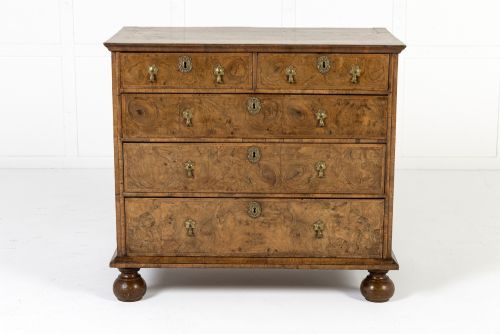
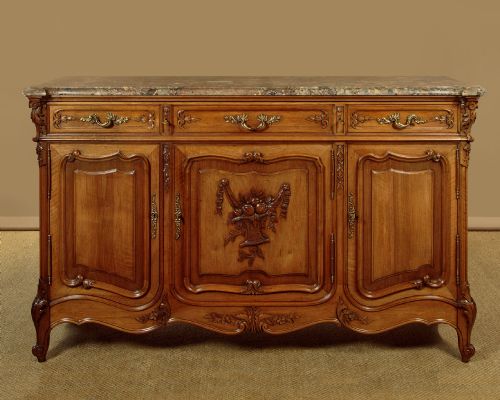
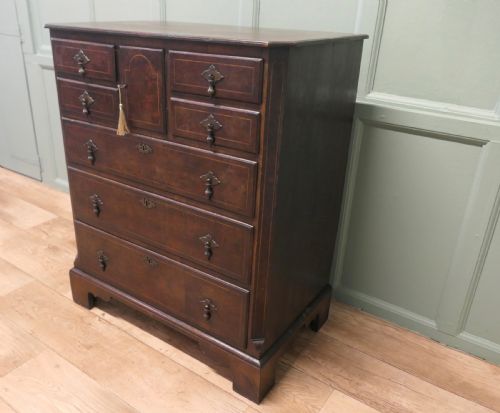
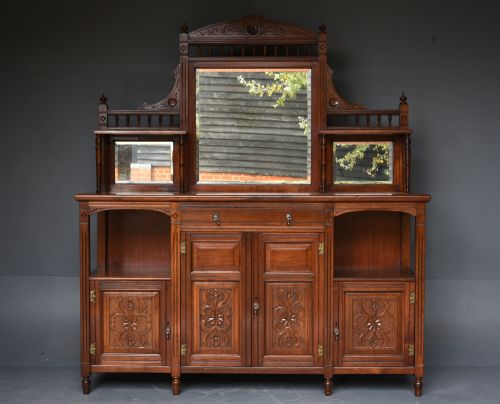
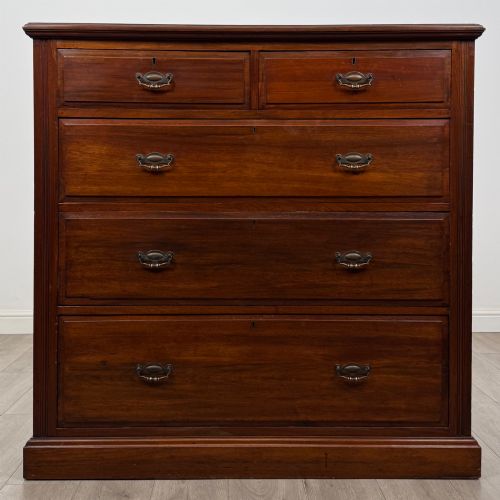
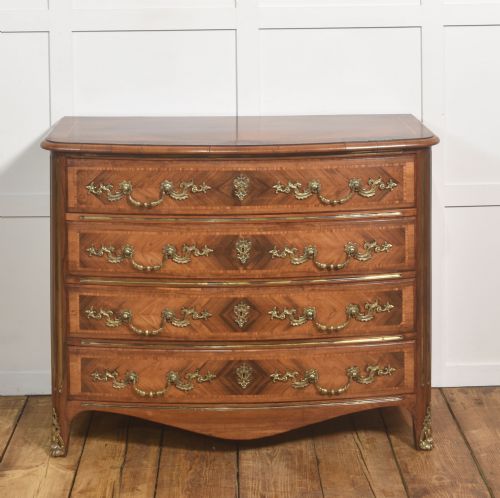
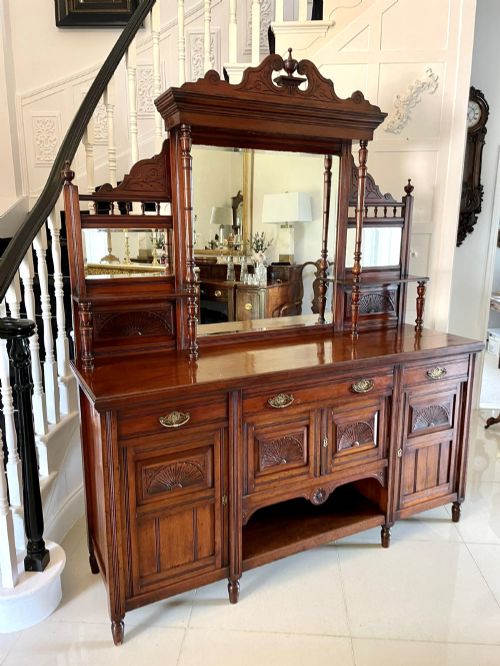
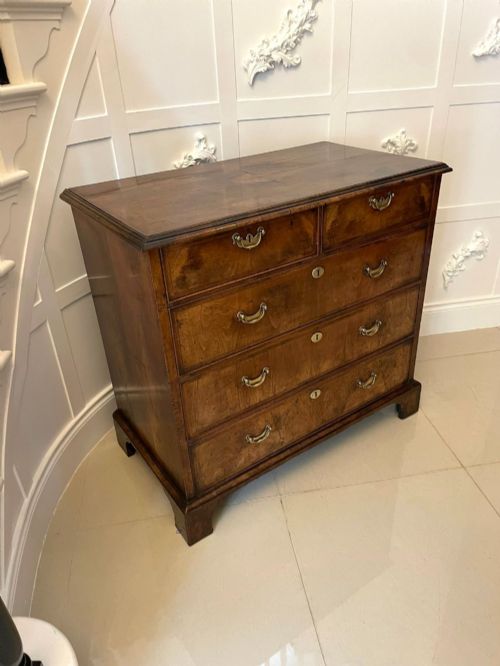
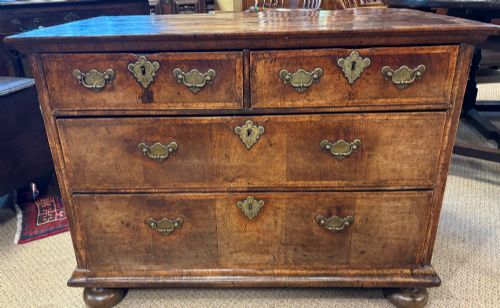
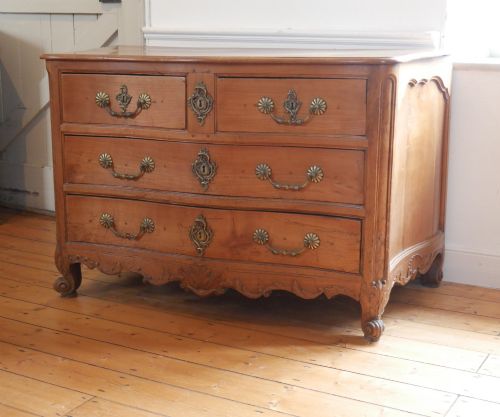
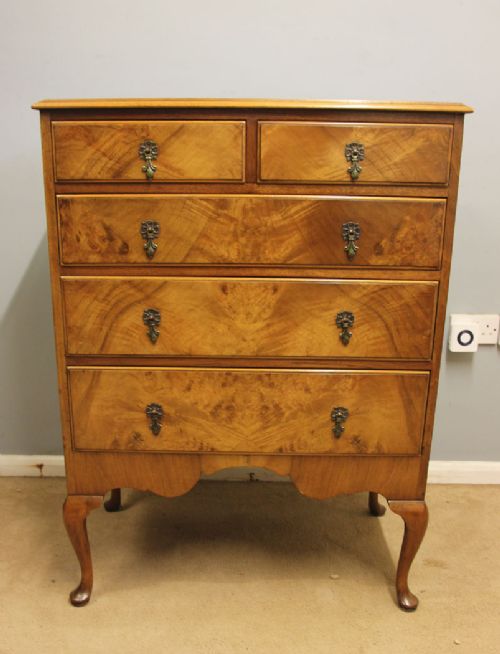
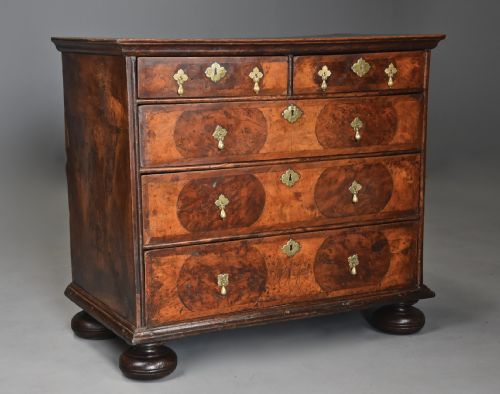
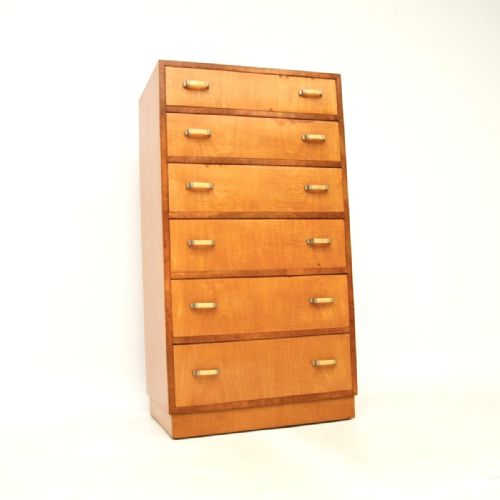
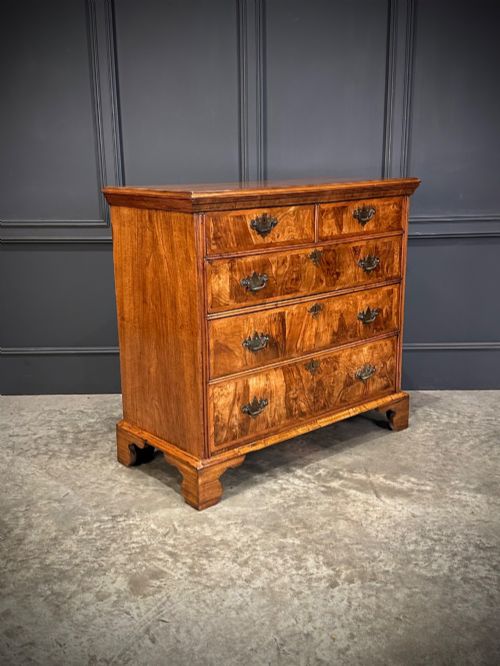
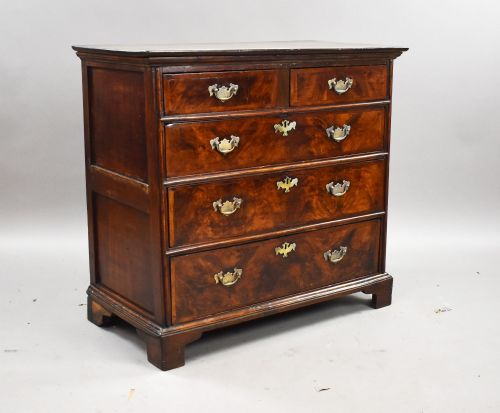

Walnut Wood Dresser
A walnut wood dresser brings rich timber grain and classic proportions into a room, offering both generous storage and enduring presence.
Walnut Wood Dresser
The materials reflect the evolution of cabinetmaking, pairing solid walnut and burr walnut with oak, fruitwood, and brass hardware. Many pieces demonstrate distinct regional styles, including French Provincial curves, Georgian proportions, and Victorian craftsmanship.
Construction and materials
Cabinetmakers utilised both solid timber and decorative veneers, often laying burr walnut or figured walnut across primary surfaces to create striking grain patterns. Carved details, marquetry, and inlaid banding appear alongside secondary structural woods such as oak and pine.
Hardware played an essential functional and decorative role, with brass drop handles, escutcheons, and sliding top panels integrated into the cabinetry. Surface finishes relied on traditional polishing techniques that developed a deep patina over decades of use.
Walnut Wood Dresser Retail Price Guide 2026
Typical asking prices for walnut wood dresser among the pieces listed under this phrase on Sellingantiques today, from the lower quarter to the upper quarter. They describe what is for sale here now, not the wider market.
The listings span periods from the 17th century through the Victorian era into the 1930s, utilising walnut, burr walnut, oak, brass, and glass.
Distinctions in quality
The standard of a piece rests heavily on the selection of the timber veneer and the symmetry of its grain matching across the drawer fronts. Finer examples display meticulous dovetail joinery, original brass hardware, and untouched patination that reveals the natural depth of the wood.
Structural integrity and the retention of original components separate standard items from exceptional ones. Pieces that maintain their original feet, paneling, and smooth drawer action command greater appreciation from collectors.
The Walnut Wood Dresser Glossary
- Burr walnut
- A figured wood taken from the knot or burl of the walnut tree, prized for its swirling, highly decorative grain patterns.
- Marquetry
- The art of applying pieces of veneer to a structure to form decorative patterns, frequently seen in floral and geometric designs on seventeenth and eighteenth-century pieces.
- Oyster piece
- A small circular or oval veneer cut transversely from small branches or roots, resembling an oyster shell in appearance.
- Dovetail
- A traditional interlocking joint used to secure drawer corners, valued for its strength and durability.
- Commode
- A low chest of drawers or cabinet, often of French origin, frequently topped with marble.
Walnut Wood Dresser: Frequently Asked Questions
How do I date a walnut chest?
Dating relies on examining construction methods, such as hand-cut dovetails, wood types used for secondary linings like oak, and the style of the hardware.
Changes in furniture fashion across periods from William and Mary to Edwardian times also leave distinct marks on leg shapes, proportions, and veneer techniques.
How should I care for walnut timber?
Walnut furniture benefits from being kept away from direct sunlight and sudden temperature shifts, which can cause timber to dry out and veneers to lift.
Regular dusting with a soft, dry cloth and occasional application of appropriate wax helps maintain the lustre of the finish.
Are these pieces suitable for everyday use?
Most antique chests of drawers and sideboards remain robustly functional and provide deep, reliable storage for modern homes.
Drawer runners and internal structures are built to withstand daily opening and closing when handled with reasonable care.
What is the difference between a dresser and a chest?
Historically, terms overlap significantly, with some listings using dresser to describe sideboards, dressing tables, or drawer units with mirrors.
Chest of drawers specifically denotes a stack of horizontal drawers used primarily for clothing storage.