



Walnut Veneer Commode
A walnut veneer commode is a storage chest wrapped in figured timber, prized for rich grain patterns and period presence.
Walnut Veneer Commode
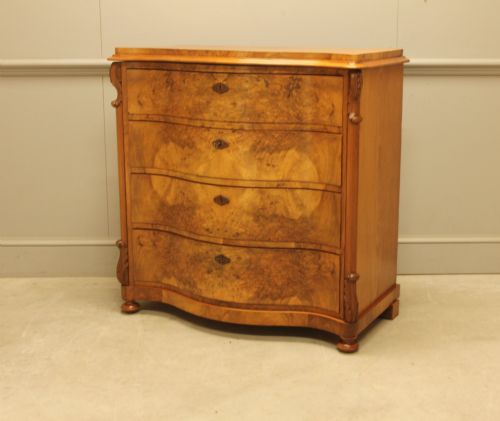
A walnut veneer commode brings together centuries of cabinet-making, spanning the late seventeenth century through to the twentieth century. The primary form is a chest of drawers or small cupboard, often shaped with a serpentine or bow front.
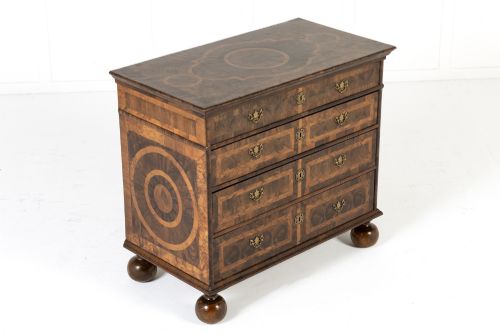
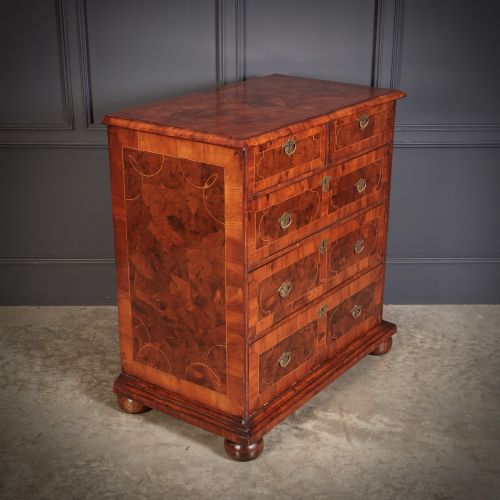
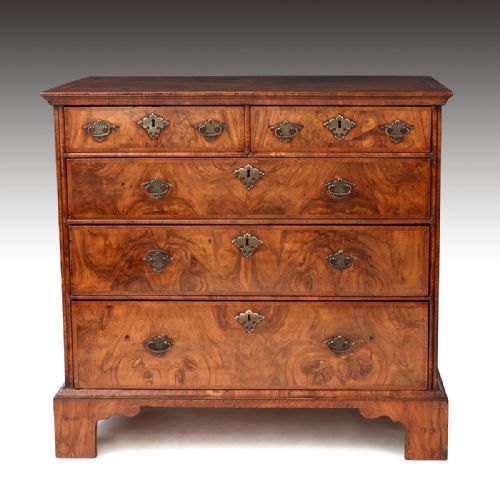
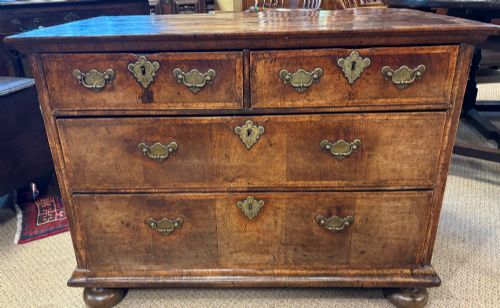
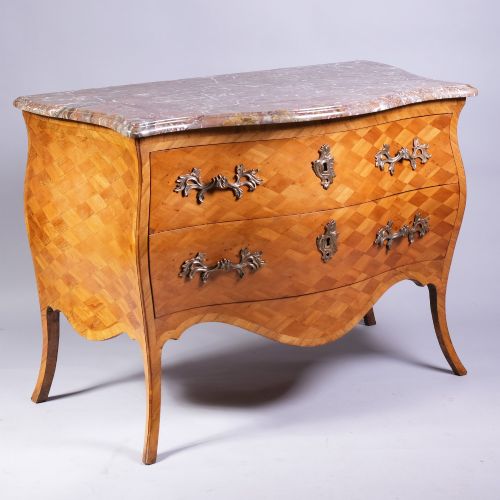
The walnut veneer commode appears in several distinct regional styles on this page. Examples range from William and Mary and Queen Anne British pieces to Dutch Baroque, Biedermeier, and French marble-topped commodes.
The materials reflect sophisticated timber selection, utilising burr walnut, oyster veneer, oak carcases, and occasional boxwood or ebonised details. Many pieces date from the seventeenth and eighteenth centuries, alongside nineteenth-century interpretations and later twentieth-century iterations.
How they were made
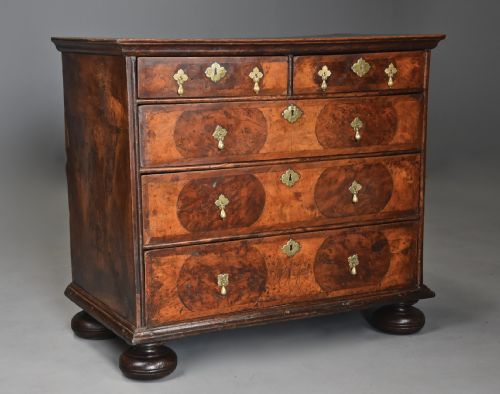
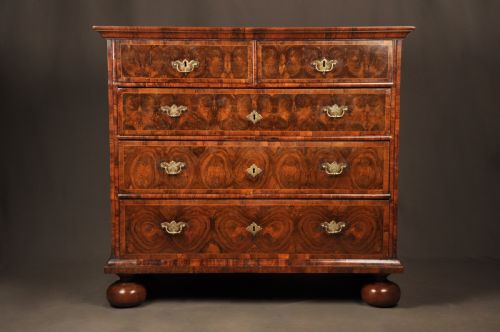
The construction relies on thin slices of figured timber applied to a secondary carcase wood such as oak. Craftsmen cut circular oyster veneers from smaller branches or selected burr walnut for swirling patterns.
Inlays of boxwood or contrasting woods often accent the primary walnut surfaces. Hardware utilises brass for handles and escutcheons, while certain continental pieces incorporate marble tops.
Walnut Veneer Commode Retail Price Guide 2026
Typical asking prices for walnut veneer commode among the pieces listed under this phrase on Sellingantiques today, from the lower quarter to the upper quarter. They describe what is for sale here now, not the wider market.
Some seventeenth-century branches gave their all so a cabinet-maker could tile a drawer front in wooden oysters.
What varies in quality
Quality rests upon the selection and matching of the timber veneer across the drawer fronts and top. Early seventeenth-century oyster work and intricate marquetry demonstrate greater precision than later or simpler examples.
The integrity of the underlying carcase and the depth of the timber's patina dictate the overall standing of an individual chest. Finer pieces retain original brass hardware and balanced proportions in their graduated drawers.
The Walnut Veneer Commode Glossary
- Oyster veneer
- Slices cut transversely from small branches to create circular or oval patterns resembling oyster shells. This technique is typical of late seventeenth-century cabinet work.
- Burr walnut
- Timber taken from a tree growth or wart, producing highly figured, swirling grain patterns. It is frequently utilised on front surfaces for visual impact.
- Commode
- A low chest of drawers or cabinet originating in France. The term frequently applies to continental European drawer chests.
- Serpentine front
- A furniture front curving outward in the centre and inward at the sides. This contour requires advanced carpentry to veneer successfully.
- Biedermeier
- A Central European style from the nineteenth century focusing on clean lines and blond figured woods. These pieces emphasise minimalist domestic comfort.
Walnut Veneer Commode: Frequently Asked Questions
What is a walnut veneer commode?
A walnut veneer commode is a timber chest of drawers covered in figured wood grain. These pieces function primarily for bedroom or reception room storage.
They range from late seventeenth-century British and Dutch designs to nineteenth-century continental European examples.
How do I identify a William and Mary walnut chest?
William and Mary pieces date from the late seventeenth and early eighteenth centuries. They often feature oyster veneer, laburnum, or marquetry inlay.
The carcase construction utilises oak, paired with distinct brass hardware and geometric drawer arrangements.
What is oyster veneering?
Oyster veneering involves cutting thin transverse sections from small tree branches. The resulting circular or oval shapes fit together like puzzle pieces.
Cabinet-makers used this method extensively during the seventeenth century on walnut and olive timbers.
Where were marble-topped commodes made?
Marble-topped commodes appear frequently in French and continental European traditions. The stone slab sits directly upon the wooden chest carcase.
These pieces date from the eighteenth and nineteenth centuries, offering a durable and decorative upper surface.