

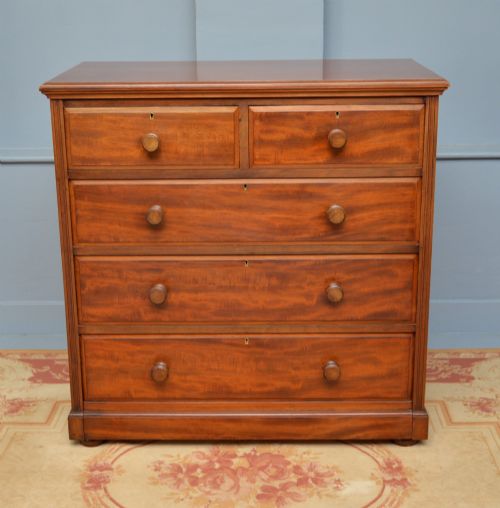
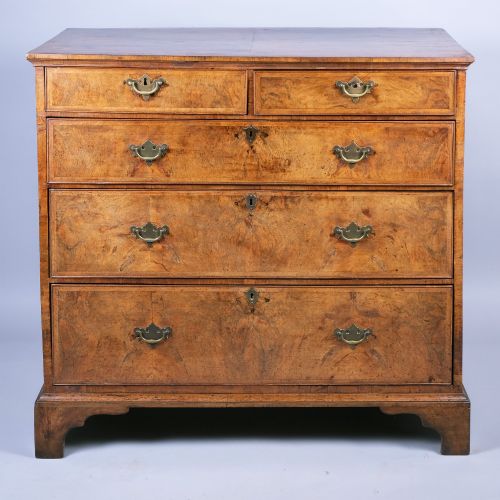
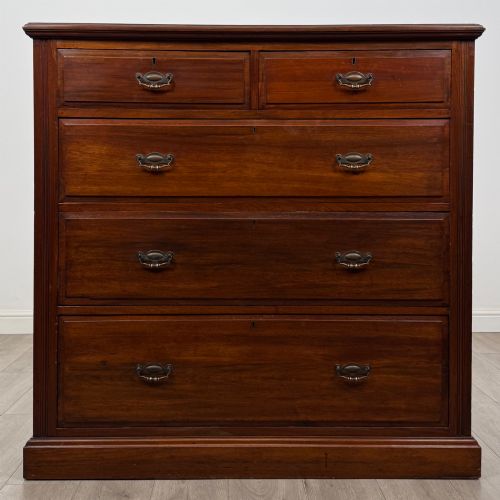
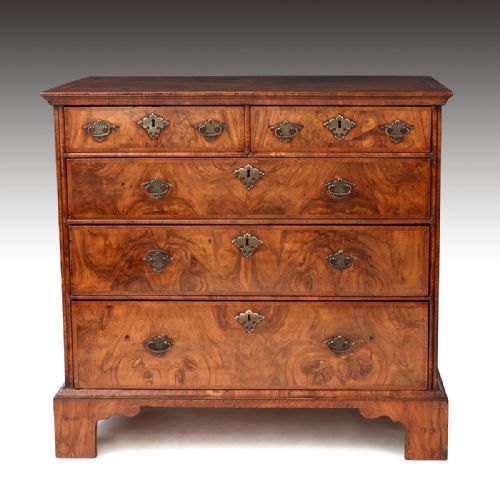




Walnut Two Over Three Chest
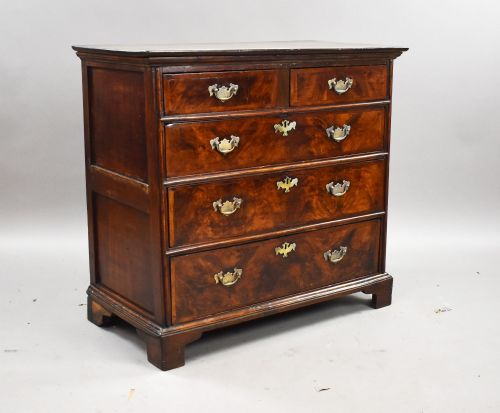
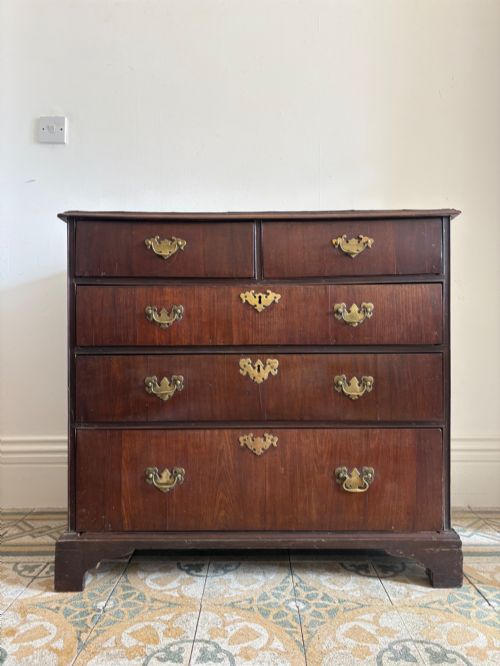
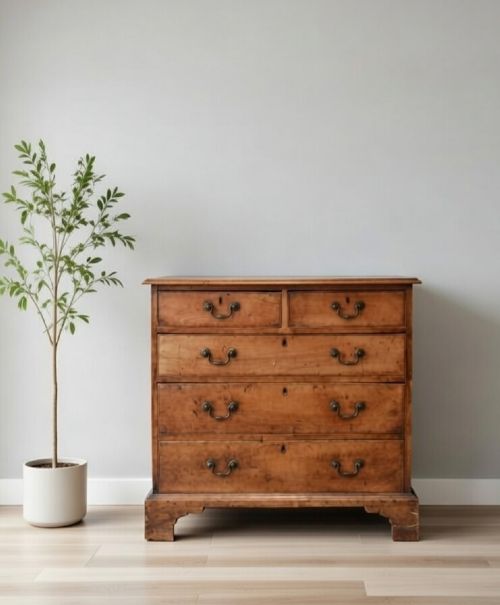
A walnut two over three chest offers the classic proportion of two small drawers above three graduated long ones, prized for rich grain and symmetry.
Walnut Two Over Three Chest
A walnut two over three chest presents a disciplined facade of two compact upper drawers set above three wider, graduated lower ones, arranged for both utility and formal balance. This specific configuration recurs across the 17th century, Georgian periods, and into the 19th and Edwardian eras, serving as a principal storage form in domestic interiors.
Makers adapted this standard five-drawer arrangement across centuries, adjusting scale from small chamber chests to larger case pieces. The core layout remains constant, defined by the division between the upper pair and the lower trio of drawers.
What varies in quality
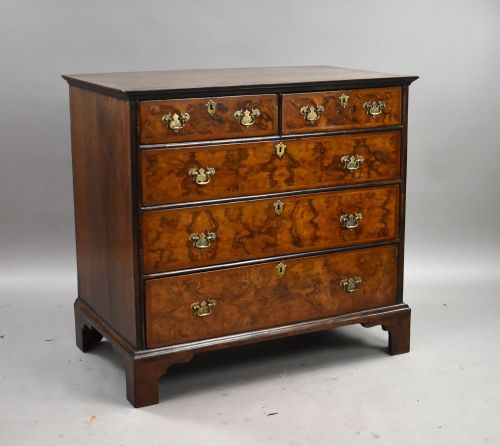
Quality rests in the selection of the timber and the handling of the veneer, where heavily figured burr walnut commands greater visual presence than plain stock. The continuity of grain patterns across drawer fronts demonstrates the cabinet maker's care during construction.
Proportion and scale distinguish finer pieces from heavier utilitarian versions, particularly in the moulding profiles and the graduation of the lower drawers. The integration of secondary woods like fruitwood or oak alongside primary walnut reveals regional methods and workshop standards.
Walnut Two Over Three Chest Retail Price Guide 2026
Typical asking prices for walnut two over three chest among the pieces listed under this phrase on Sellingantiques today, from the lower quarter to the upper quarter. They describe what is for sale here now, not the wider market.
Listings demonstrate forms spanning the 17th century through the Georgian and Victorian eras, utilising solid walnut, burr walnut veneer, oak, and fruitwood.
The Walnut Two Over Three Chest Glossary
- Graduated drawers
- Drawers of decreasing depth from bottom to top, creating a balanced visual progression on the chest facade. This arrangement is standard in two over three configurations.
- Burr walnut
- Timber taken from the growth excrescences on walnut trees, yielding highly decorative, swirling grain patterns. It is typically sliced into veneers for principal display surfaces.
- Red walnut
- A descriptor used historically for specific tonal varieties of American or European walnut timber. It often appears in mid-18th-century pieces.
- Veneer
- Thin slices of decorative wood applied over a more stable secondary timber such as oak. This technique permitted extensive use of highly figured grain without risking structural warping.
- Escutcheon
- A protective metal plate surrounding the keyhole of a drawer. It prevents the surrounding wood from splintering during regular use.
Walnut Two Over Three Chest: Frequently Asked Questions
What is a two over three chest?
A two over three chest is a set of drawers featuring two smaller drawers placed side by side at the top, positioned above three wider drawers that increase in depth toward the bottom. This layout provides a balanced facade.
Historically, this configuration allowed for the organisation of smaller garments or documents separately from bulkier items stored below.
How do I date a walnut chest?
Dating relies on examining construction methods, timber choices, handle hardware, and stylistic details such as bracket feet or mouldings. Pieces from the William and Mary period differ significantly in leg and carcase design from Victorian interpretations.
Comparing the secondary woods inside the drawers alongside the exterior veneer application helps clarify the period of manufacture.
Where should I place it?
These chests suit bedrooms, hallways, or living spaces where their formal proportions and rich wood tones can act as a focal point. Their flat tops also offer a surface for displaying lamps or decorative objects.
Positioning them away from direct sunlight and strong heat sources protects the walnut veneer from drying out and cracking.
What is burr walnut?
Burr walnut comes from a deformed growth on the walnut tree, which produces dense, swirling patterns of grain rather than straight lines. Cabinet makers sliced this wood into thin veneers to cover large drawer fronts and tops.
This material was prized for its decorative impact and remains a hallmark of finer case furniture.