






Walnut Trumpet Work Box
A walnut trumpet work box is a distinctive nineteenth-century sewing piece designed for domestic utility and elegance.
Walnut Trumpet Work Box
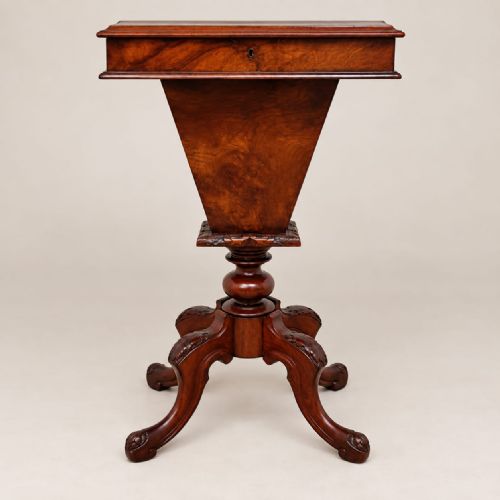
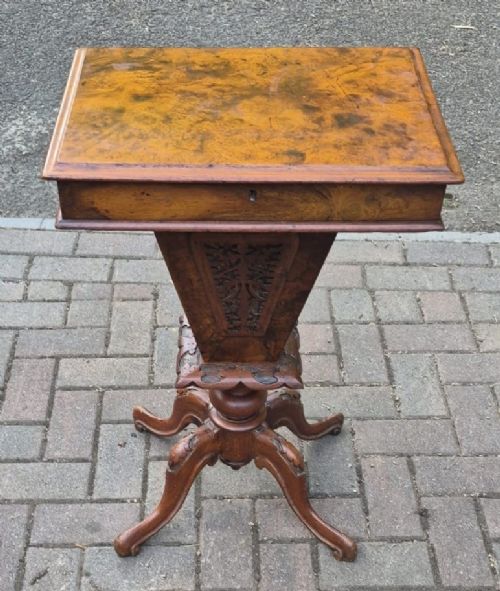
A walnut trumpet work box stands on a tripod base and flares outward toward the rim, mirroring the bell of a musical instrument. These pieces serve primarily as sewing and needlework repositories, often combining functional storage with occasional or games table surfaces.
The versions met most frequently on this page date from the Victorian period, spanning the mid-to-late nineteenth century. They appear in plain walnut and burr walnut, frequently featuring fitted interiors for thread, needles, and small accessories.
Materials and Construction
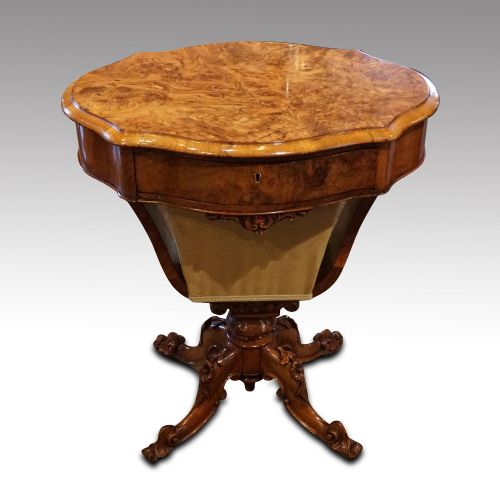
Cabinet makers utilised solid walnut and decorative veneers of burr walnut to cover the main bodies of these sewing pieces. Burr walnut provides a highly figured, swirling grain pattern that defines the exterior lid and sides.
The archive shows that games boards frequently accompany sewing interiors on pieces produced during the eighteen-seventies and eighties.
Assessing Quality in Work Boxes
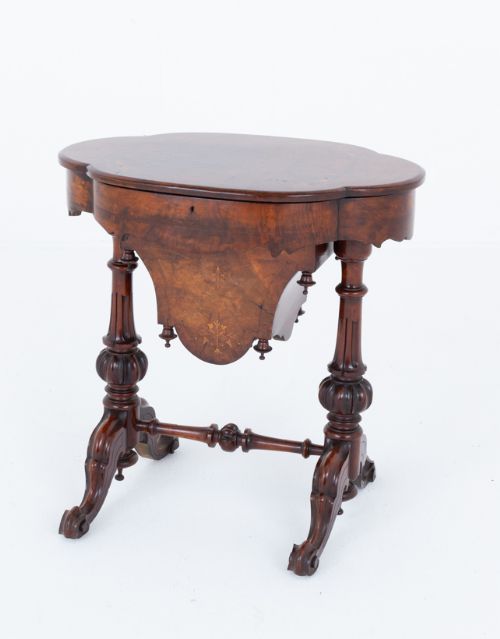
The choice of veneer sets the visual standard, with dense, highly figured burr walnut commanding attention over plainer timber stocks. The intricacy and precision of the boxwood inlay and marquetry across the lid demonstrate the maker's skill.
Internal arrangement dictates practical merit. A fully fitted interior with compartmentalised wooden lids and tiny turned knobs represents a higher grade of manufacture than a plain, open well.
The Walnut Trumpet Work Box Glossary
- Burr walnut
- A prized timber veneer taken from the abnormal growth or burl of a walnut tree, yielding rich, swirling grain patterns. It forms the primary decorative surface on the best Victorian examples.
- Trumpet form
- A distinctive furniture silhouette where the body expands gradually from a slender stem into a wide, bell-shaped opening. This shape provides stability on a tripod base while maximising internal storage.
- Marquetry
- The art of applying pieces of veneer to a structure to form decorative patterns and pictures. It appears on the lids of these work boxes alongside geometric boxwood lines.
- Tripod base
- A three-legged support structure commonly found beneath the stem of these tables. It ensures steady placement on uneven nineteenth-century floorboards.
Walnut Trumpet Work Box: Frequently Asked Questions
What is a trumpet work box?
A trumpet work box is a Victorian sewing table featuring a flared body and a fitted interior. It holds sewing implements, yarn, and needles within easy reach during needlework sessions.
Most examples stand on three legs and include a hinged lid above the deep, cone-shaped storage compartment.
How were these tables used?
Victorian women utilised these tables for sewing, embroidery, and small crafting projects. The upper compartment kept current projects organised while sitting in the parlour.
Some variants incorporate chess or games boards on the top surface, serving a dual purpose for evening entertainment.
How do I date a walnut work box?
Dating relies on stylistic markers from the Victorian era, spanning the mid-to-late nineteenth century. Construction methods, such as the use of solid walnut framing beneath burr veneers, point to this period.
Turned tripod stems and specific brass hardware designs help narrow the decade of manufacture within the broader Victorian timeframe.
Do the interiors usually have compartments?
Many examples retain their original fitted wooden interiors, complete with tiny lidded compartments and small turned pulls. These sections organise spools, pins, and thimbles securely.
Some interiors lift out entirely to reveal a deeper well for larger balls of wool or fabric scraps.