



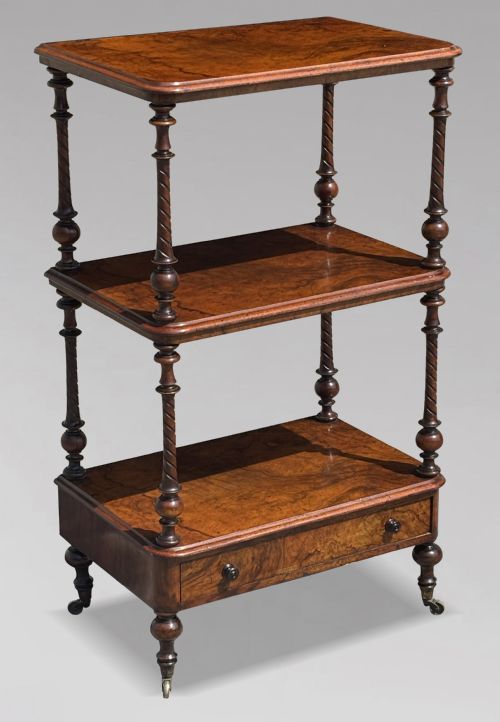

Walnut Tier Shelving
Walnut tier shelving brings together stacked display surfaces and rich timber figures, offering practical levels for books and ornaments.
Walnut Tier Shelving
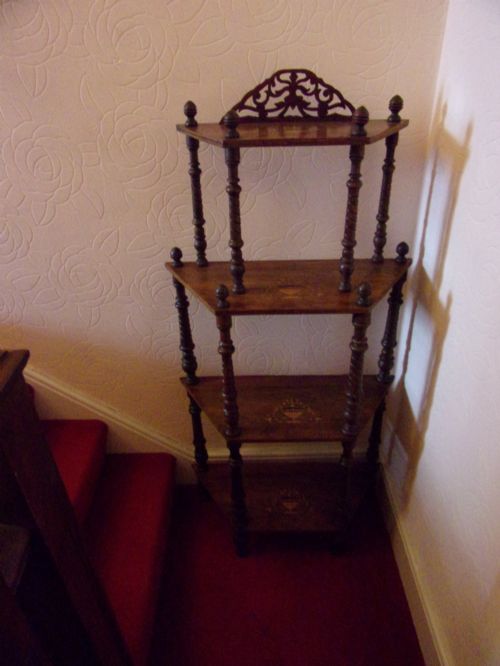
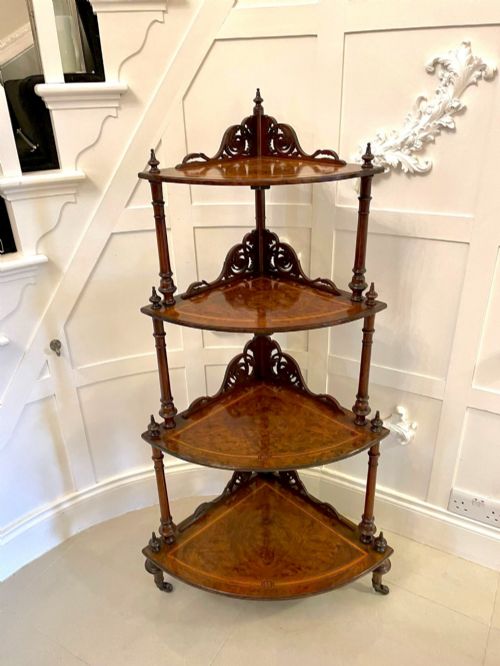
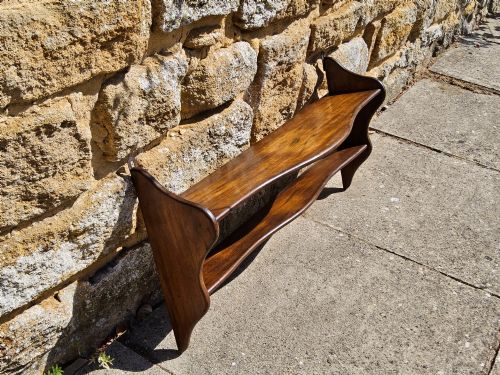
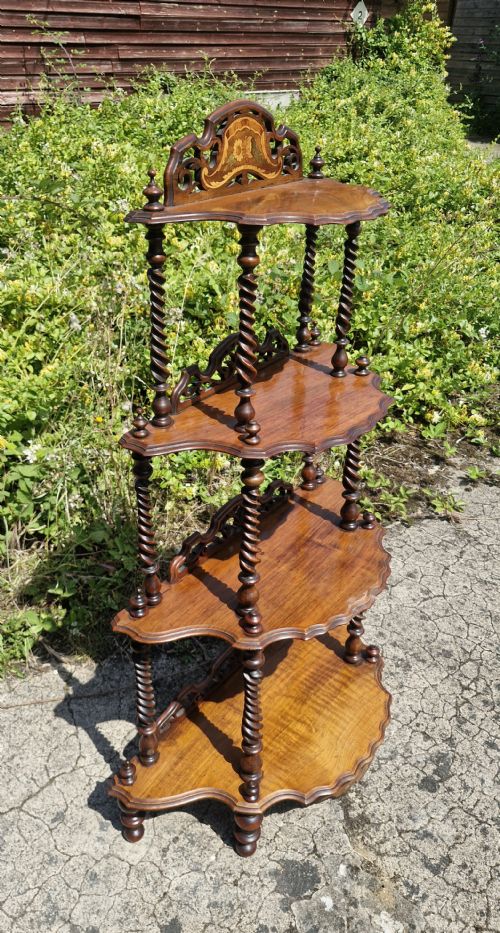
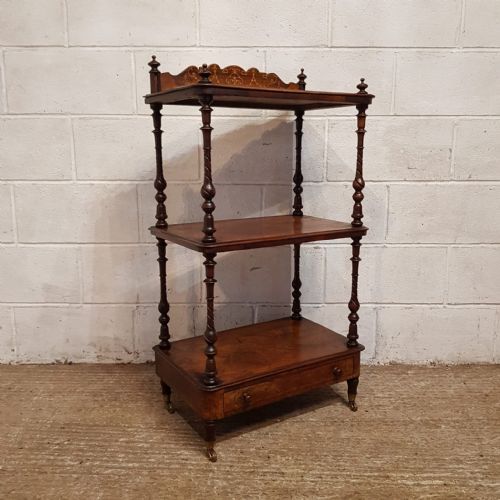
When searching for walnut tier shelving, buyers encounter multi-tiered display furniture designed to hold books, ornaments, and curiosities across several levels. These tiered pieces include freestanding whatnots, corner stands, etageres, and wall-mounted shelves originating mainly from the Victorian era and the nineteenth century.
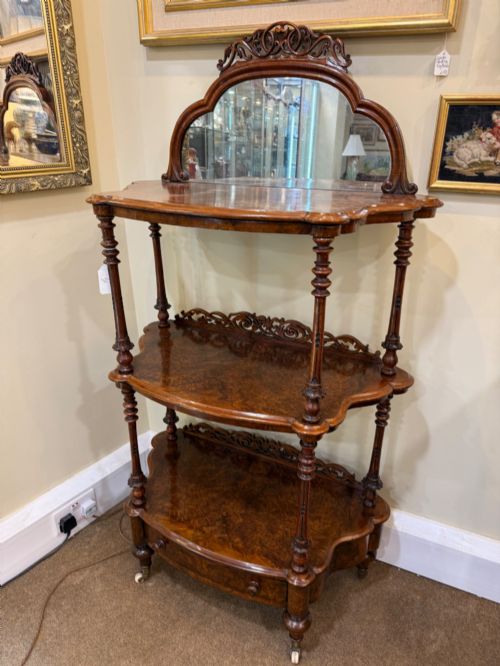
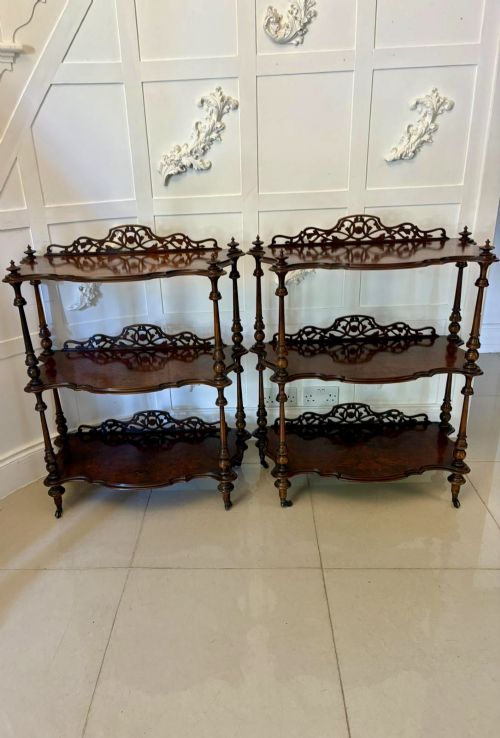
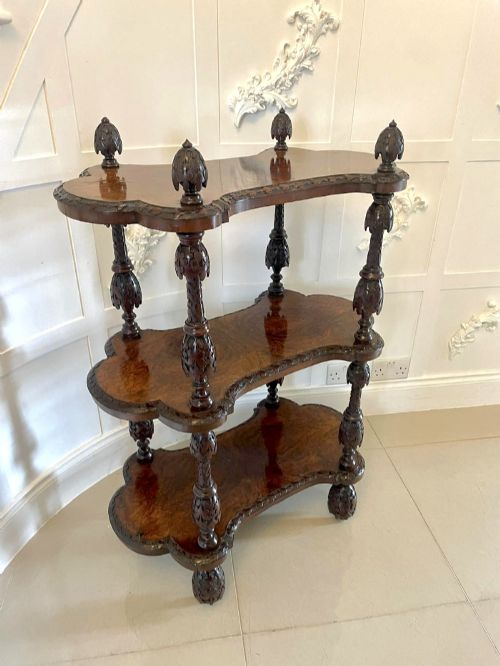
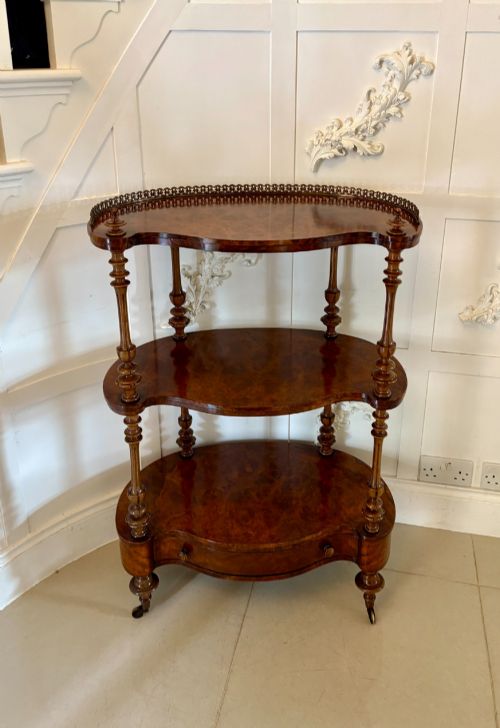
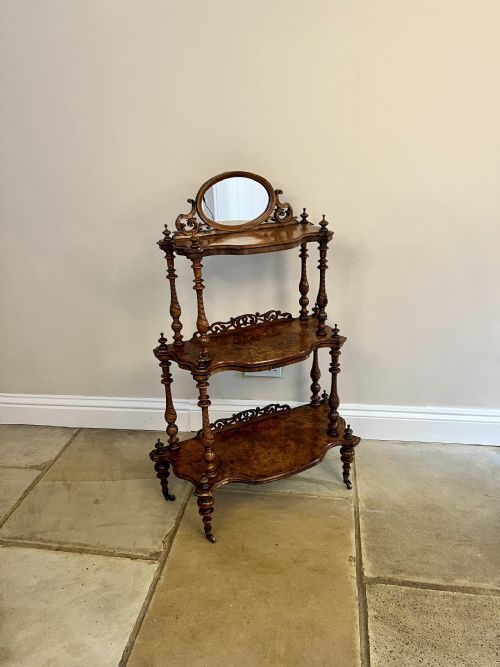
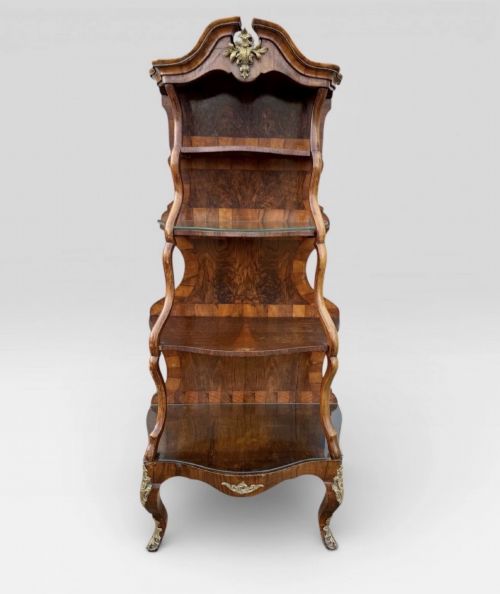
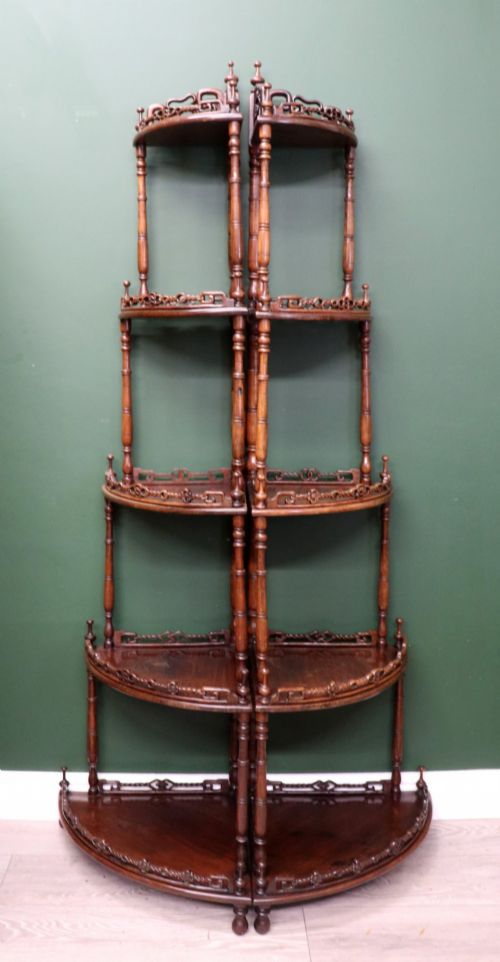
The version most commonly met on this page is the Victorian walnut whatnot or etagere, often featuring three or more graduated tiers supported by turned columns or barley twist uprights. Alongside these, buyers find corner units, serpentine display consoles, and occasional French-influenced designs utilising similar tiered principles.
Many of these multi-level pieces incorporate specialised forms, such as demi-lune console tables, pier cabinets with shelving units, and stacking bookcases from later periods like Art Deco. The structural commonality across all these examples is the division of vertical space into distinct horizontal platforms for display.
How they were made
Cabinet makers utilised solid walnut and decorative burr walnut veneers applied to secondary timbers, creating rich grain patterns across the shelves and panels. Marquetry and satinwood inlays frequently decorate the surfaces of nineteenth-century examples, adding contrasting geometric or floral motifs.
Structural joints and decorative embellishments often incorporate turned wooden supports, hollow barley twist columns, and pierced fretwork galleries. Brass mounts, gilt metal accents, and glass components occasionally complement the timber framework, particularly in pieces influenced by French design styles.
Walnut Tier Shelving Retail Price Guide 2026
Typical asking prices for walnut tier shelving among the pieces listed under this phrase on Sellingantiques today, from the lower quarter to the upper quarter. They describe what is for sale here now, not the wider market.
Listings feature Victorian and nineteenth-century pieces alongside French styles, incorporating walnut, burr walnut, brass, and marquetry inlay.
What varies in quality
The distinction between standard tier shelving and exhibition pieces lies in the selection of timber veneers and the intricacy of the carving. Highly figured burr walnut and delicate pierced fretwork separate exceptional tier shelving from simpler utilitarian units.
Joinery execution and detailing also define quality tiers, from plain turned legs to finely carved barley twists and sophisticated serpentine shaping. The presence of matching pairs, original brass mounts, and refined marquetry inlay elevates the standing of a piece within its period.
The Walnut Tier Shelving Glossary
- Whatnot
- A moveable set of open shelves for displaying ornaments, books, or china. This multi-tiered form became popular during the nineteenth century.
- Etagere
- A piece of furniture consisting of a number of open shelves for displaying small objects. French examples often display lighter proportions and brass mounts.
- Burr walnut
- Timber taken from a walnut tree outgrowth, yielding highly figured, swirling grain patterns. Cabinet makers prized this material for decorative veneer panels.
- Fretwork
- Ornamental design executed by cutting patterns in wood, often seen in the pierced galleries of Victorian shelves. This technique adds visual lightness to upper tiers.
- Serpentine
- A shape featuring a curved line that is convex in the middle and concave at the ends. This contour appears on the front edges of high-quality display consoles.
Walnut Tier Shelving: Frequently Asked Questions
What is a walnut whatnot?
A whatnot is a multi-tiered piece of open shelving designed for displaying ornaments, books, and small decorative objects in domestic interiors.
Originating in the nineteenth century, these freestanding pieces use graduated shelves supported by turned posts or columns to organise display space vertically.
How do I use tier shelving at home?
Tiered shelving serves to display collections of ceramics, books, and small sculptures without taking up excessive floor space in a room.
Corner units fit neatly into unused angles, while freestanding etageres function effectively as room accents or against living room walls.
Are all walnut tier shelves freestanding?
Most traditional whatnots and etageres stand independently on the floor, supported by four or more legs.
However, the selection also includes wall-mounted shelving units and corner stands designed to attach directly to architectural surfaces.