



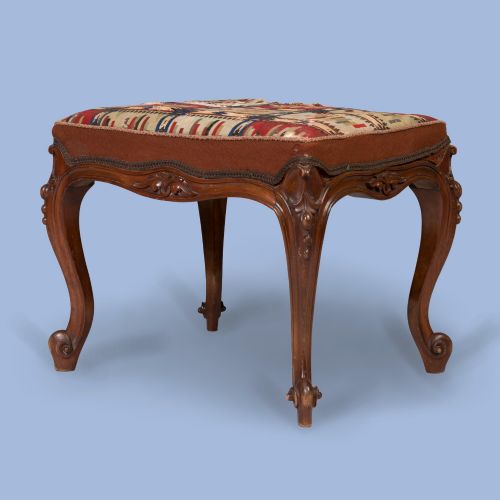
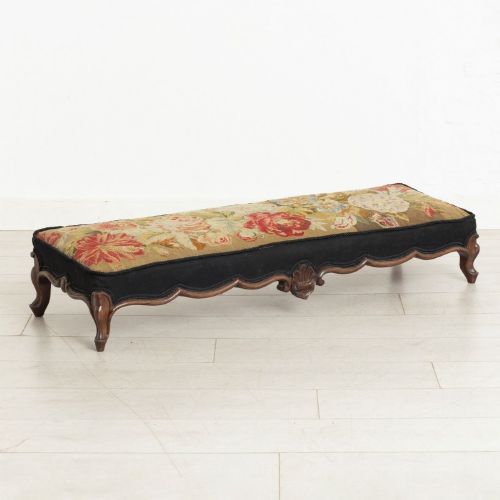


Walnut Tapestry Footstool
A walnut tapestry footstool brings warmth and texture to a room, offering compact seating rooted in nineteenth-century domestic comfort.
Walnut Tapestry Footstool
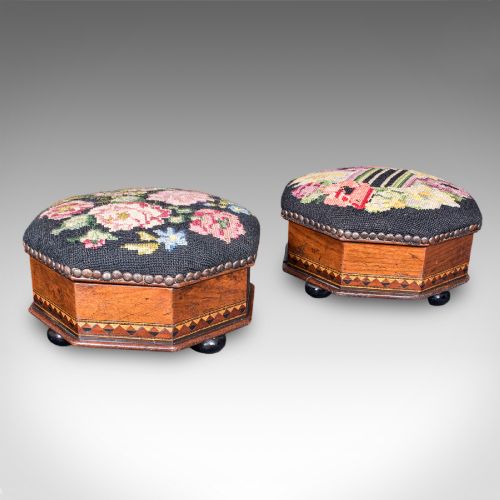
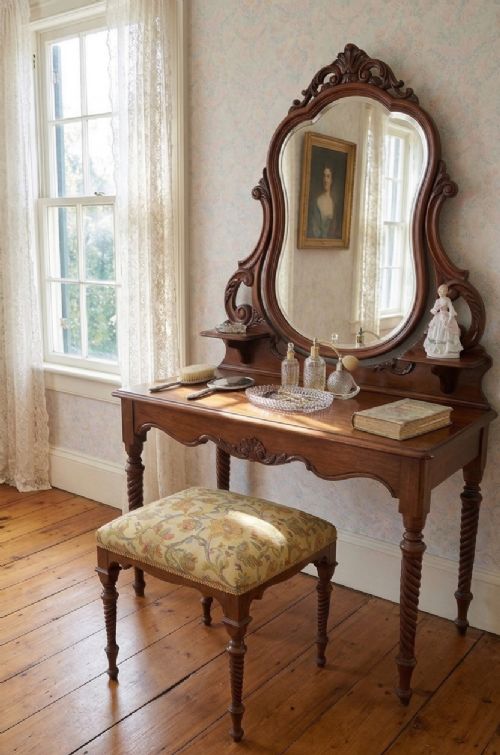
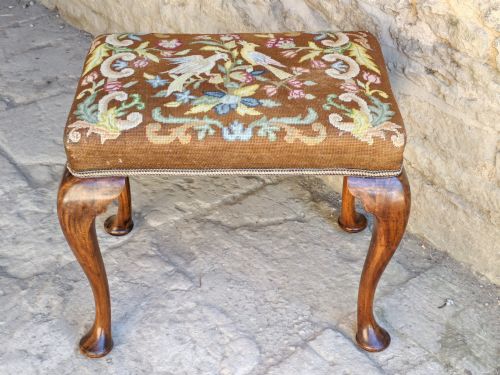
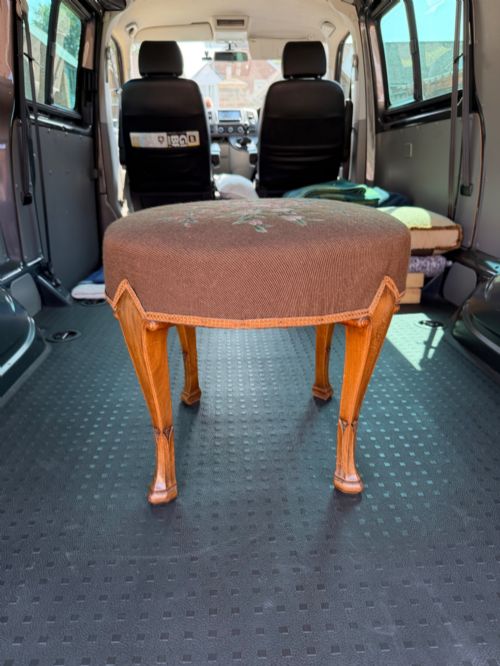
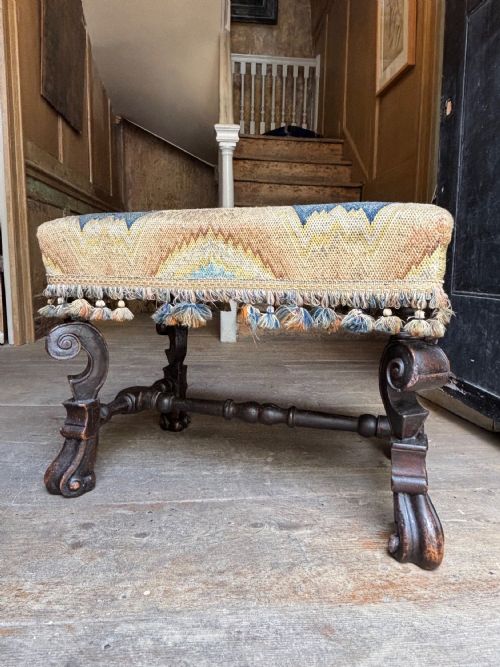
A walnut tapestry footstool is a low seating form designed for firesides, dressing tables, and window seats, frequently appearing in Victorian incarnations alongside revival styles such as Queen Anne and French Rococo. These pieces range from small round gout stools to large Scottish Baronial and X-frame window seats, reflecting diverse domestic uses across the nineteenth and early twentieth centuries.
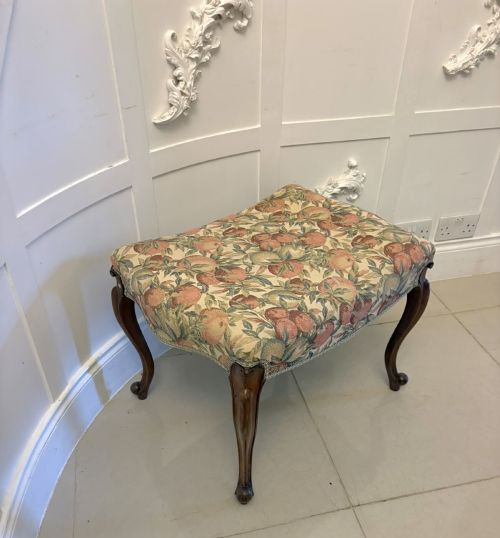
The walnut tapestry footstool most commonly encountered on this page dates from the Victorian era, utilising rich dark timber frames paired with hand-worked textile covers. They span simple low footstools to revolving piano stools and dressing table seats, accommodating varied interior spaces with traditional craft.
How they were made
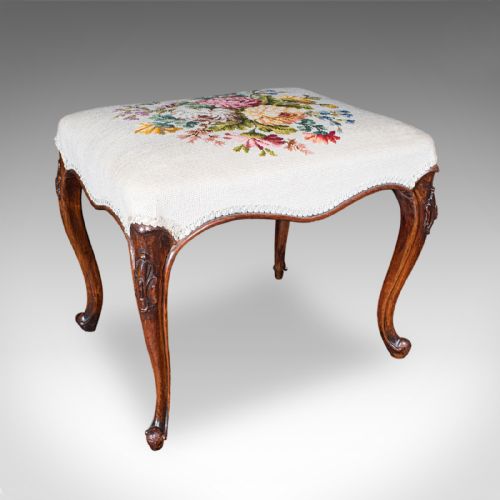
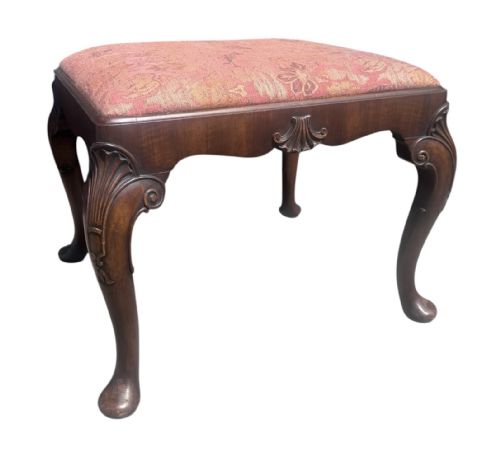
Makers shaped the structural framework from solid walnut, utilising turned, carved, or cabriole legs, and occasionally incorporating details like brass elements or Tunbridge Ware inlay. Frames often feature X-frame supports or scroll carved motifs influenced by baroque and revival aesthetics.
Upholstery relies on traditional textiles, specifically wool tapestry, needlepoint, petit point, and geometric kilim fabrics, secured over padded foundations. These covers frequently display floral, figurative, or geometric patterns worked by hand.
Walnut Tapestry Footstool Retail Price Guide 2026
Typical asking prices for walnut tapestry footstool among the pieces listed under this phrase on Sellingantiques today, from the lower quarter to the upper quarter. They describe what is for sale here now, not the wider market.
Listings feature walnut frames paired with wool tapestry, needlepoint, and velvet across Victorian and twentieth-century periods.
What varies in quality
The distinction between ordinary and exceptional examples rests upon the depth of timber carving and the sophistication of the frame's architectural form. Pieces featuring intricate execution, such as carved hunting dog heads or exuberant baroque curves, stand apart from simpler utilitarian frames.
Quality also depends on the preservation and complexity of the textile seat, with dense needlepoint, petit point, and original historic covers commanding greater attention than plain or later replacement upholstery.
The Walnut Tapestry Footstool Glossary
- Cabriole leg
- A furniture leg that curves outward at the knee and tapers inward to an ankle, mimicking an animal's limb. This form appears frequently on Queen Anne style walnut footstools.
- Needlepoint
- A type of canvas work embroidery executed with a yarn in a counted thread stitch. It forms the decorative seat cover on many antique footstools.
- X frame
- A structural base formed by intersecting curved or straight wooden members resembling the letter X. It provides sturdy support for window seats and dressing stools.
- Petit point
- A very fine needlepoint stitch worked on high-count canvas that permits intricate pictorial detail. It distinguishes finer tapestry seats from coarser wool work.
- Tunbridge Ware
- Small-scale decorative woodwork ornamented with mosaic patterns made from tiny wood blocks. It occasionally decorates the walnut frames of Victorian footstools.
Walnut Tapestry Footstool: Frequently Asked Questions
What rooms suit a walnut tapestry footstool?
These compact pieces fit naturally beside firesides, armchairs, or dressing tables where low seating or foot support is useful. Their rich timber and textile surfaces also sit well beneath windows or in hallways as occasional seats.
Because they occupy minimal floor space, they integrate easily into both traditional and eclectic modern interiors without dominating the room.
How do I care for the tapestry seat?
Protect the wool and textile covers from direct sunlight to prevent fading of the historic dyed yarns. Gentle surface dusting with a soft brush keeps the weave clear of embedded debris.
Avoid using liquid cleaners on antique needlepoint or tapestry to protect the fragile natural fibres from moisture damage.
Are these footstools comfortable for daily use?
Victorian and revival footstools were built for domestic comfort, featuring padded upholstered tops supported by webbing or springs. While their firm historical padding differs from modern foam, they provide solid support for resting feet or short periods of sitting.
Larger window seats and dressing stools offer broader surfaces suited for relaxed seating.
How can I tell a Victorian stool from a revival piece?
Examine the construction methods, tool marks, and timber patination visible on the underside of the walnut frame. Victorian pieces often display period-specific hardware and hand-cut joinery that reveal their nineteenth-century origin.
Revival pieces built in later decades frequently adopt earlier styles like Queen Anne, yet carry subtle manufacturing indicators of their actual twentieth-century production date.