

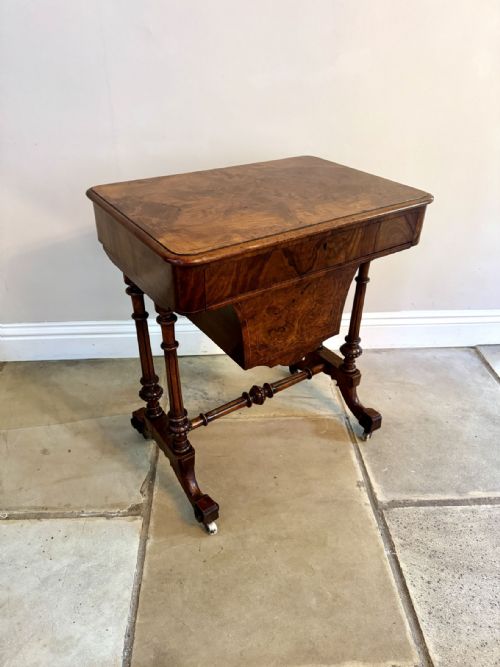
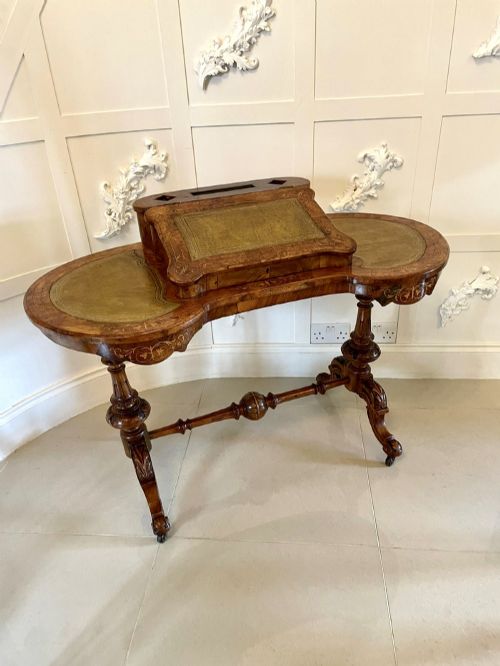
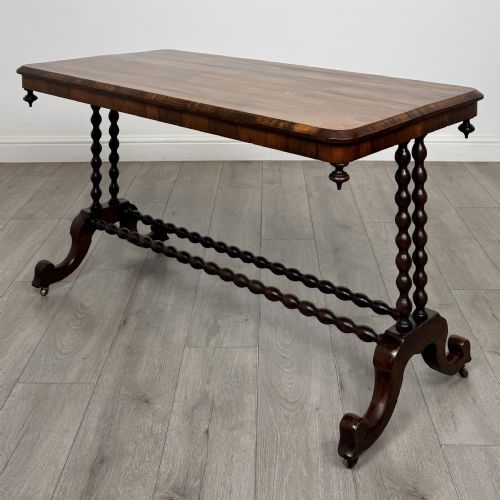
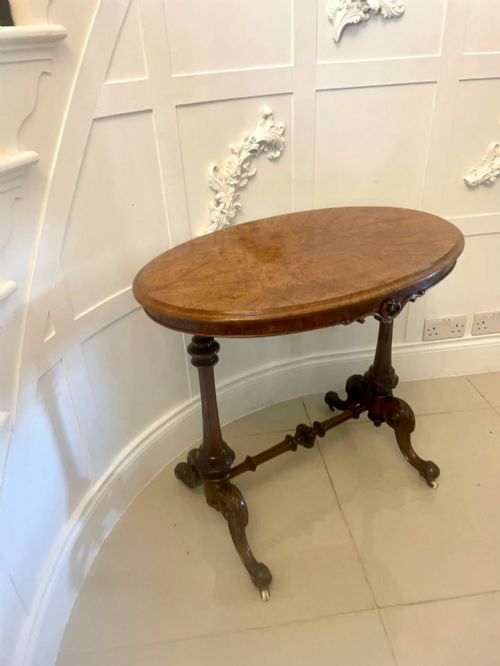




Walnut Table with Castors
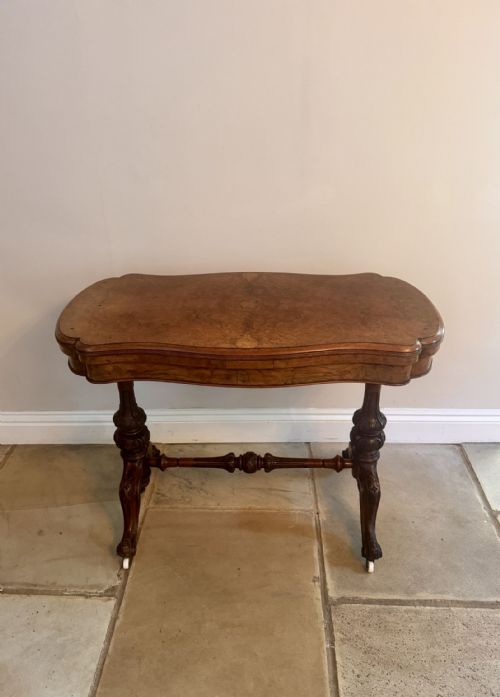
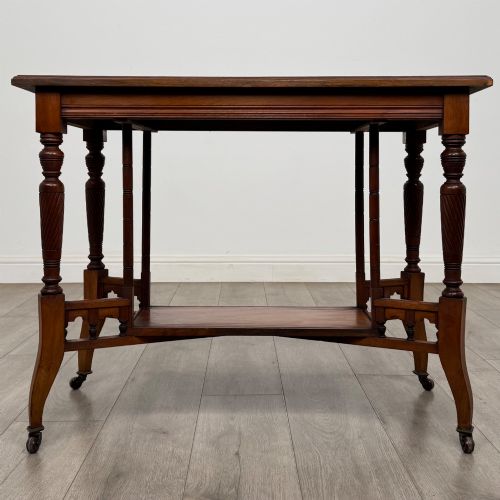
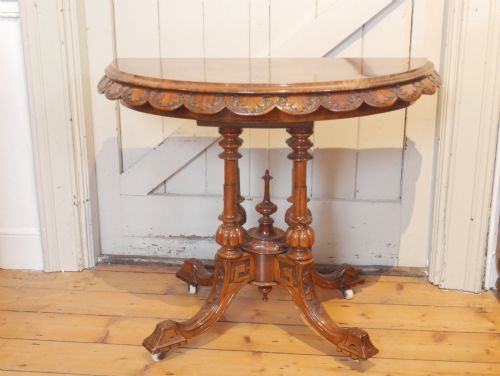
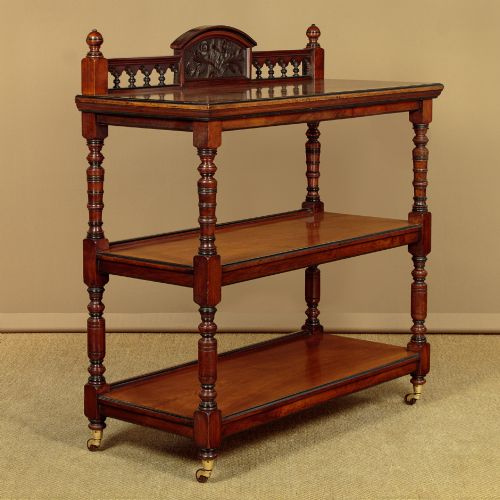
A walnut table with castors is a movable surface of timber and metal built for practical rooms.
Walnut Table with Castors
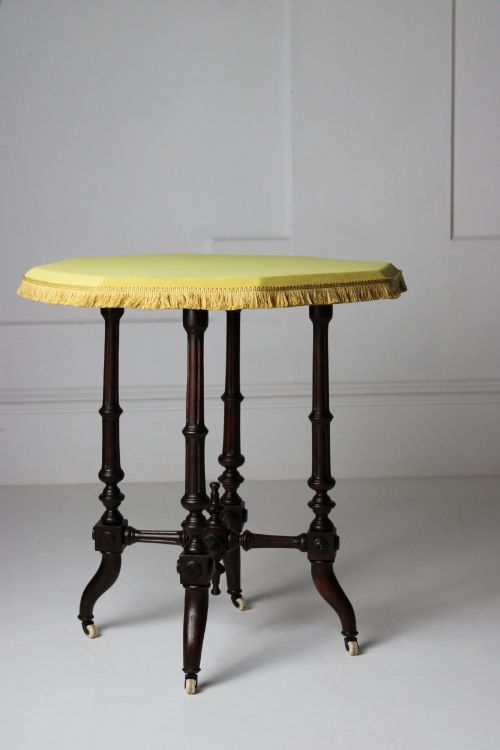
A walnut table with castors combines warm figured timber with the utility of small wheel mechanisms. These pieces emerge from nineteenth-century and Edwardian workshops to serve specific household tasks.
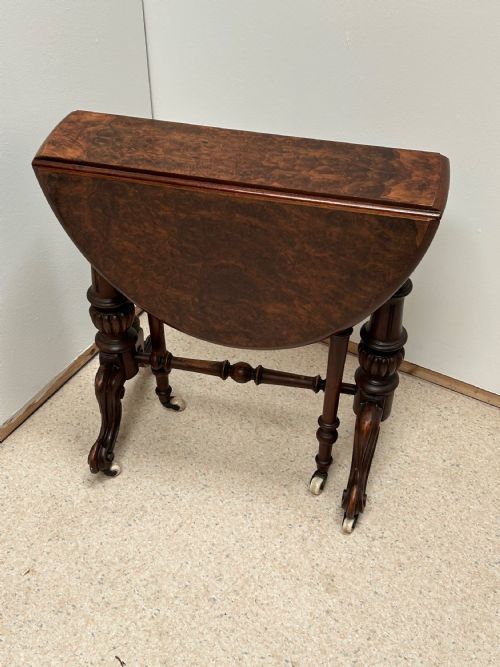
The selection centres on smaller forms designed to move easily across carpets and floorboards. Occasional tables, writing desks, sewing cabinets and card tables make up the core of what appears here.
Victorian examples dominate the selection, spanning decades from eighteen-sixty onwards. Buyers encounter occasional tables and library desks alongside occasional etageres and delicate sewing furniture.
How they were made
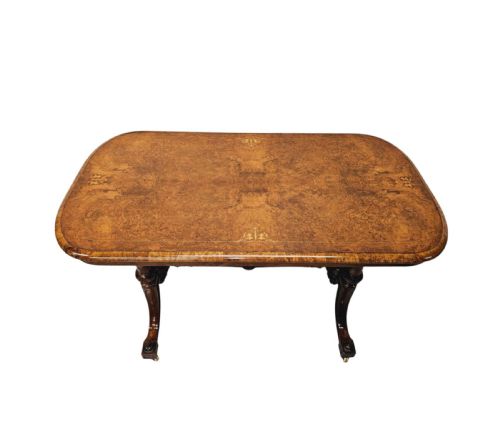
Cabinet makers utilised solid walnut alongside burr walnut veneer to cover primary surfaces. Inlaid details and secondary timbers such as satinwood enhance the decorative schemes.
Undersides and moving parts incorporate brass castors, frequently paired with ceramic wheel components. These metal fittings allowed heavy timber furniture to shift position without damaging floors.
Walnut Table with Castors Retail Price Guide 2026
Typical asking prices for walnut table with castors among the pieces listed under this phrase on Sellingantiques today, from the lower quarter to the upper quarter. They describe what is for sale here now, not the wider market.
Listings feature Victorian and Edwardian periods, utilising walnut, burr walnut veneer, brass, ceramic, leather and satinwood.
What varies in quality
The richness of the timber grain dictates visual standing, particularly where burr walnut veneer shows complex natural patterns. Finer pieces incorporate crisp inlay work and carefully chosen secondary woods like satin walnut.
Proportion marks the difference between standard production and superior cabinet work. Diminutive scales and neat dimensions require precise execution to maintain stability on wheeled legs.
The Walnut Table with Castors Glossary
- Burr walnut
- A decorative timber veneer taken from the growth excrescences of walnut trees. It yields swirling, highly figured patterns across table tops.
- Castor
- A small wheel attached to the base of furniture legs. It enables smooth movement across rooms.
- Etagere
- A set of open shelves for displaying small objects. These tiered structures often sit on castors for easy repositioning.
- Satin walnut
- A timber derived from American sweetgum with a lustrous grain. Makers utilised it for lighter Edwardian writing furniture.
Walnut Table with Castors: Frequently Asked Questions
What rooms suit a walnut table with castors?
These pieces function well in studies, drawing rooms and libraries where movable surfaces are practical. Their compact footprints allow them to sit beside seating or act as writing desks.
The inclusion of castors means the furniture moves easily to accommodate changing household needs without heavy lifting.
How do I date a walnut table with castors?
Dating relies on stylistic clues and construction methods visible in the timber and hardware. Victorian examples often display rich burr veneers and elaborate inlay, while Edwardian pieces can feature lighter satin walnut.
Examining the brass and ceramic castor fittings also helps place the object within the nineteenth or early twentieth century.
Are these tables sturdy enough for daily use?
Nineteenth and early twentieth-century construction prioritised durable hardwoods designed for active households. Tables built for sewing, writing and games feature robust internal framing to support regular handling.
The wheel mechanisms require smooth floors to distribute weight evenly and prevent strain on the lower legs.
What is the difference between an occasional table and a library table?
Occasional tables are smaller, lighter pieces intended for flexible placement around a room for drinks or lamps. Library tables are heavier, more substantial workspace surfaces designed for books and reading materials.
Both variants frequently incorporate castors to assist movement across domestic spaces.