


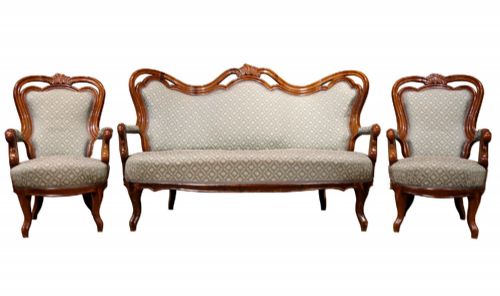


Walnut Parlour Sofa
A walnut parlour sofa brings nineteenth-century drawing-room elegance to a modern interior through rich timber and curved lines.
Walnut Parlour Sofa
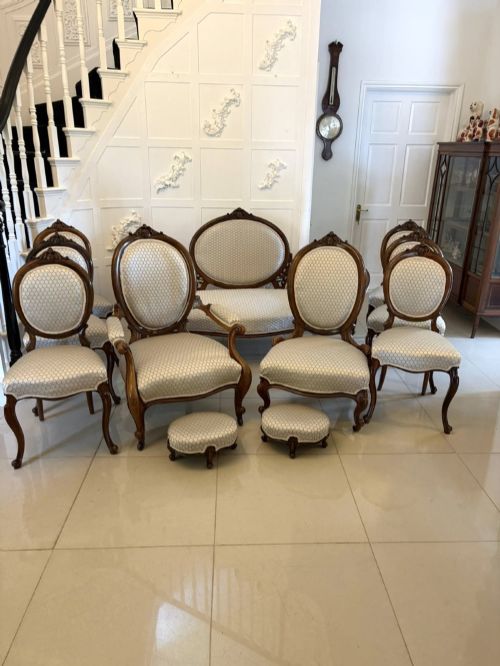
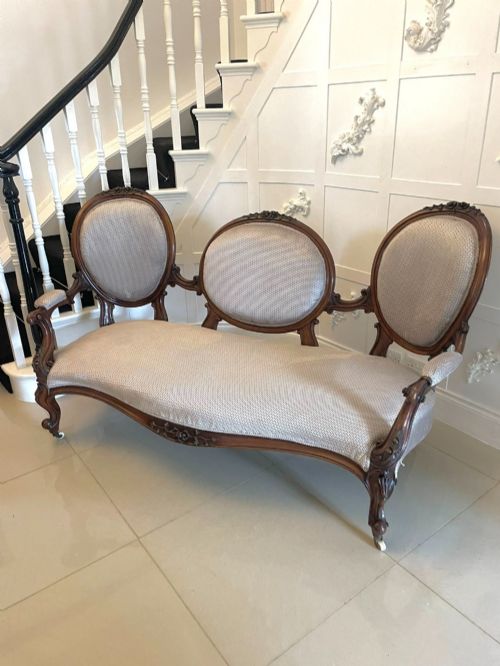
A walnut parlour sofa sits at the heart of Victorian and early twentieth-century formal seating. These pieces emerge from periods spanning the mid-nineteenth century through to the Edwardian era, often appearing as standalone settees or as part of larger salon suites. The most common iteration met here is the Victorian carved walnut sofa, frequently showing French Rococo Revival or Empire Revival influences.
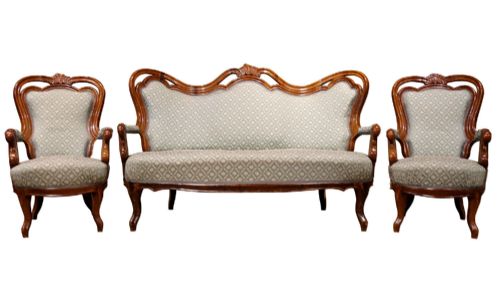
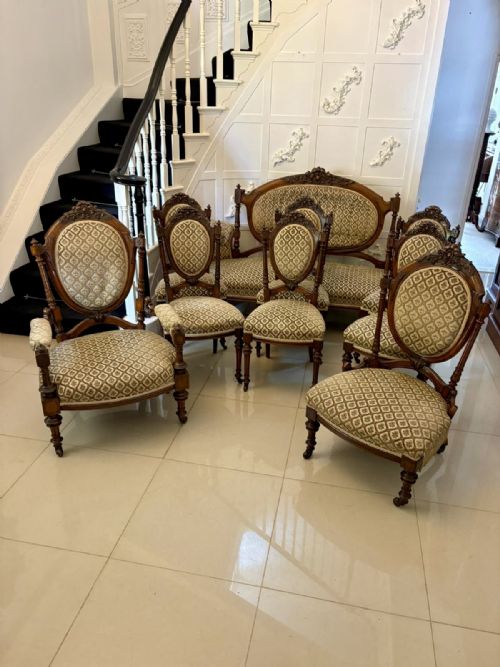
Makers and manufacturers designed these couches for formal entertaining and domestic display in reception rooms. Forms range from cameo back settees to expansive three-piece and multi-piece salon suites accompanied by matching armchairs. The primary function remains a blend of decorative presence and cushioned comfort, upholstered in various revival textiles.
How They Were Made
Cabinet makers utilised solid walnut and figured burr walnut veneers over secondary timbers to construct the structural frames of these sofas. Artisans carved intricate details into the wood, frequently incorporating curvilinear floral motifs and classical revival patterns. Boxwood inlay adds linear contrast to flat surfaces on select examples from later decades.
Traditional upholstery techniques involved webbed foundations, coil springs, and horsehair stuffing held beneath outer textiles such as velvet, silk damask, and modern replacement fabrics. Brass castors often support the feet on nineteenth-century specimens, allowing movement across carpets.
Walnut Parlour Sofa Retail Price Guide 2026
Typical asking prices for walnut parlour sofa among the pieces listed under this phrase on Sellingantiques today, from the lower quarter to the upper quarter. They describe what is for sale here now, not the wider market.
Listings feature walnut furniture spanning from the Victorian era through the Edwardian period and into the early twentieth century.
What Varies in Quality
The crispness and depth of the timber carving dictate much of the visual distinction between individual walnut parlour sofas. Hand-carved flourishes executed with precision set apart better workshops from standard commercial production. Burr walnut veneers demonstrate varying degrees of grain figuring, where highly patterned surfaces elevate the visual weight of the piece.
Structural integrity rests upon the joinery concealed beneath the upholstery and the retention of original framing elements. Suites that survive intact as matched multi-piece sets carry greater cohesion than single sofas gathered later.
The Walnut Parlour Sofa Glossary
- Cameo back
- A sofa or chair back shaped to resemble a carved cameo profile, typically oval with a defined wooden border. This style is characteristic of mid-nineteenth-century Victorian seating.
- Burr walnut
- Timber sliced from walnut tree growths, yielding intricate swirling grain patterns used as a decorative veneer. Cabinet makers employed this material on prominent panels and tabletops.
- Rococo Revival
- A nineteenth-century design movement resurrecting eighteenth-century asymmetrical scrollwork, naturalistic foliage, and C-scrolls. It dominates many Victorian parlour furniture forms.
- Salon suite
- A coordinated set of seating and tables intended for a formal reception room. These groupings typically include a settee and matching armchairs or side chairs.
- Empire Revival
- A neoclassical style drawing on the French Empire period, featuring restrained symmetry and classical motifs. Pieces from this movement often display darker walnut and architectural lines.
Walnut Parlour Sofa: Frequently Asked Questions
What is a parlour sofa?
A parlour sofa is a formal nineteenth-century seating piece designed for reception rooms and drawing rooms. These couches combined decorative woodwork with upholstered comfort for entertaining guests.
They appear as standalone items or part of larger salon suites including matching armchairs. Their aesthetic reflected prevailing revival styles of the Victorian and Edwardian eras.
How do I date a walnut sofa?
Dating relies on stylistic clues, framing shapes, and timber treatments recorded across the nineteenth and early twentieth centuries. Mid-century pieces often display heavy Victorian carving and cameo backs.
Later examples incorporate Edwardian influences or Empire Revival lines. Burr walnut veneers and boxwood inlay help narrow down the specific decade of production.
Are these sofas comfortable to use?
These seating pieces were built with sprung foundations and padded upholstery to support upright formal sitting. Comfort levels depend heavily on whether the internal webbing and padding have been historically restored.
Original stuffing can feel firm compared to modern deep seating. Many examples feature supportive padded armrests and curved backrests designed for posture.
What is a salon suite?
A salon suite is a matching set of furniture comprising a settee alongside several armchairs or side chairs. These collections provided a unified decorative scheme for grand Victorian drawing rooms.
Surviving multi-piece suites share identical timber frames, carving details, and upholstery fabrics. They represent coordinated interior design from the nineteenth century.