

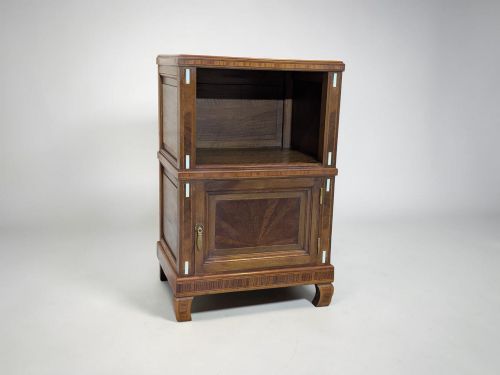

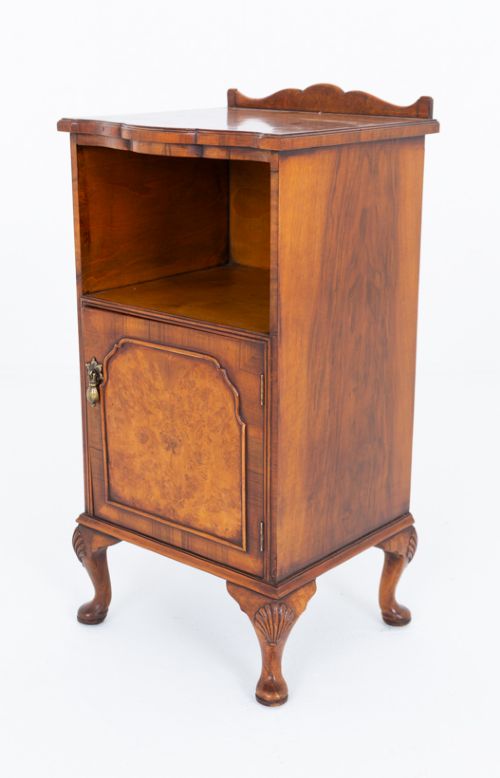
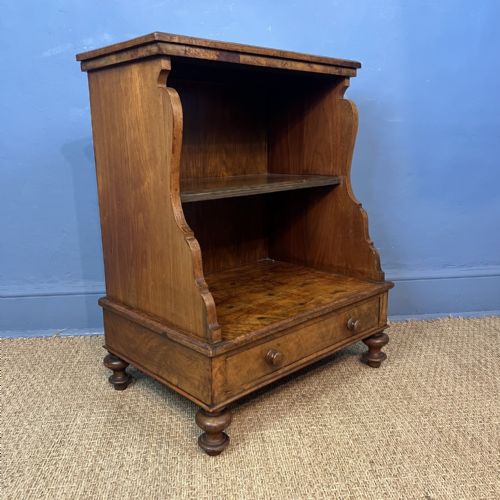


Walnut Open Shelf Table
A walnut open shelf table offers tiered display and accessible surface space, bringing rich wood grain and historic character into a room.
Walnut Open Shelf Table
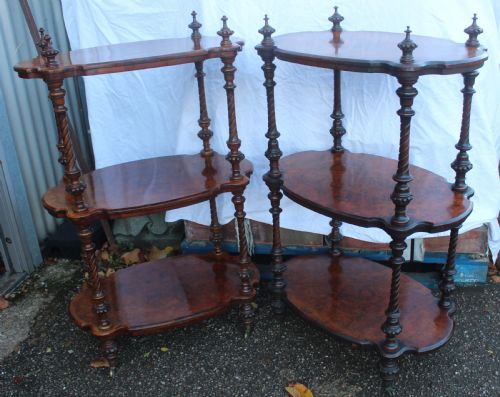
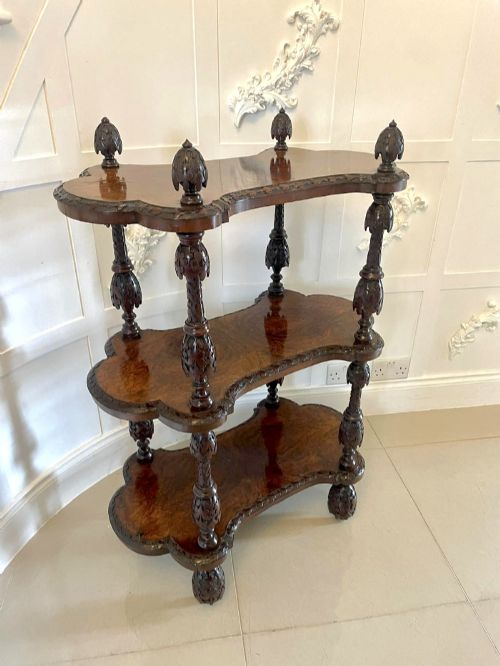
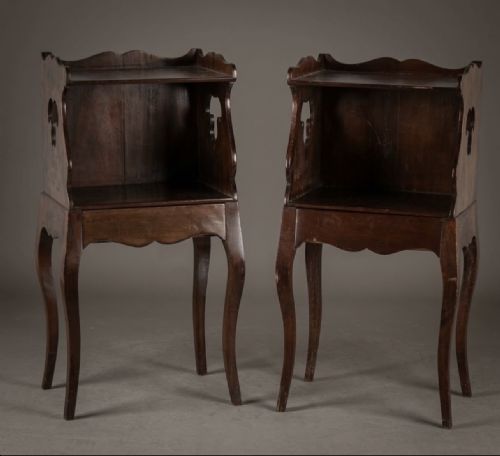
When you search for a walnut open shelf table, you are looking at tiered display furniture that encompasses whatnots, etageres, open bookcases, and bedside cabinets. These pieces serve practical storage needs while keeping objects visible on open shelves.
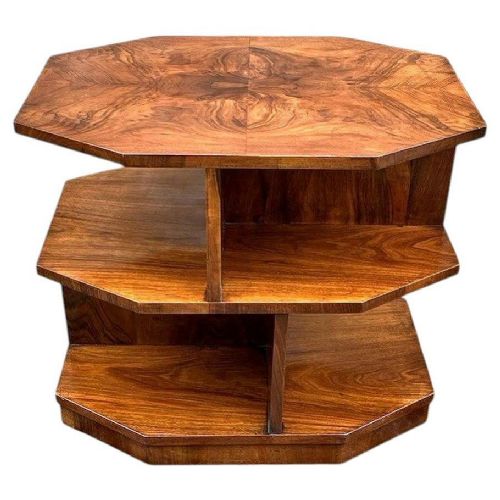
The versions you are most likely to meet on this page span the Victorian period through the early twentieth century, showing influences from French Provincial and Queen Anne styles. Forms range from freestanding bedside tables and low bookcases to multi-tiered display stands.
Makers utilised walnut in various configurations, including burr walnut, figured walnut, and marquetry veneer. Many examples incorporate open shelving alongside cabinets, drawers, or glass elements, creating versatile surfaces for daily use.
Materials and construction
The primary material across these pieces is walnut, frequently enhanced by burr walnut or figured walnut veneers to accentuate natural grain patterns. Marquetry veneer and boxwood inlay add decorative detail to surfaces and borders.
Structural embellishments often include brass mounts and ormolu details, particularly in pieces styled in the French manner. Turned legs and carved supports provide the framework for multi-tiered etageres and whatnots.
Walnut Open Shelf Table Retail Price Guide 2026
Typical asking prices for walnut open shelf table among the pieces listed under this phrase on Sellingantiques today, from the lower quarter to the upper quarter. They describe what is for sale here now, not the wider market.
Listings feature walnut alongside brass, boxwood, and ormolu across Victorian, Art Deco, and Queen Anne Revival styles.
What separates the fine from the ordinary
The distinction between standard examples and those of exhibition quality lies in the selection of the wood veneer and the precision of the inlay. Burr walnut and figured walnut require skilled handling to create balanced patterns across the surface.
Construction methods and decorative hardware also dictate quality. Fine pieces feature well-executed turned legs, crisp marquetry, and robust brass mounts that integrate harmoniously with the walnut structure.
The Walnut Open Shelf Table Glossary
- Etagere
- A piece of furniture consisting of a set of open shelves for displaying small objects. These tiered stands date frequently from the nineteenth century.
- Whatnot
- A multi-shelved open cabinet used for storing or displaying ornaments and books. Victorian examples often feature turned supports and freestanding designs.
- Burr walnut
- A prized wood veneer obtained from the tree's growths, showing swirling patterns. It appears frequently on the surfaces of Victorian cabinets and tables.
- Marquetry
- Decorative veneer work arranged in pictorial or geometric patterns using various woods. Boxwood is commonly employed alongside walnut for contrast.
- Ormolu
- Gilded bronze ornamentation applied to furniture. This technique appears on pieces influenced by French design styles.
Walnut Open Shelf Table: Frequently Asked Questions
Where should I place an etagere?
An etagere works well in a living room or hallway where open shelves can hold books, ceramics, or decorative objects. Its open structure prevents the piece from feeling heavy in smaller spaces.
Position it against a flat wall or use a freestanding version to divide a larger room while maintaining light flow through the tiers.
How do I care for walnut veneer?
Dust walnut surfaces regularly with a soft, dry cloth to prevent dirt accumulation. Avoid placing the furniture in direct sunlight or near heat sources, which can dry out the wood and veneer.
Apply occasional appropriate wax polish to maintain the finish and protect the grain structure without sealing the wood.
How can I identify Victorian walnut furniture?
Victorian walnut pieces often display rich figuring, deep colour, and detailed turnings or carvings. Examine the construction methods, such as dovetail joints in drawers and the thickness of the walnut veneers.
Stylistic cues like French Rococo Revival curves or brass mounts also point towards the mid to late nineteenth century.