
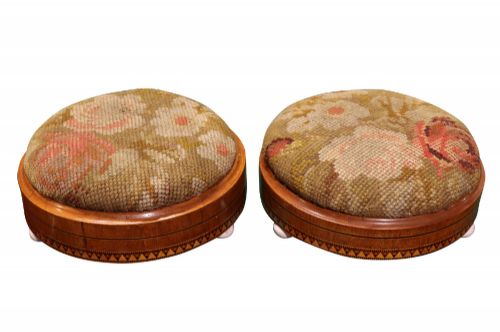
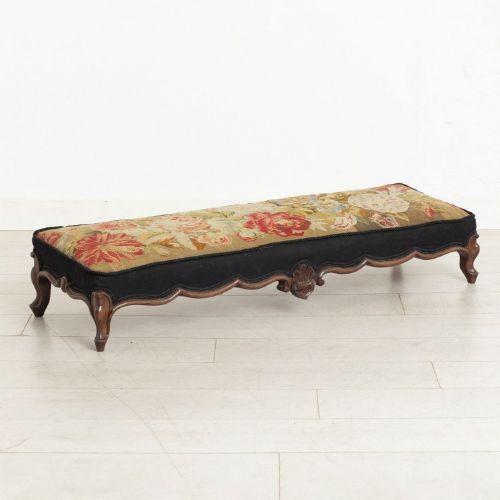


Walnut Needlepoint Stool
A walnut needlepoint stool brings rich textile work and warm timber to a room, offering both practical comfort and period character.
Walnut Needlepoint Stool
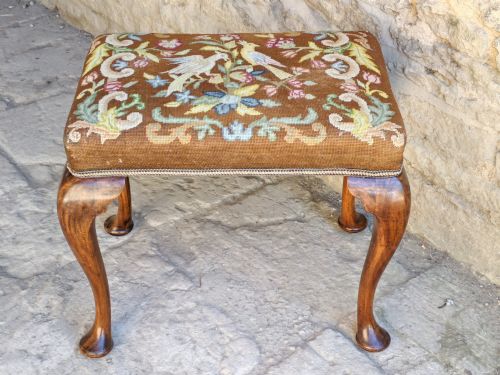
A walnut needlepoint stool combines a dark hardwood frame with hand-stitched textile covers, taking forms that range from low footstools to revolving piano seats and dressing table benches.
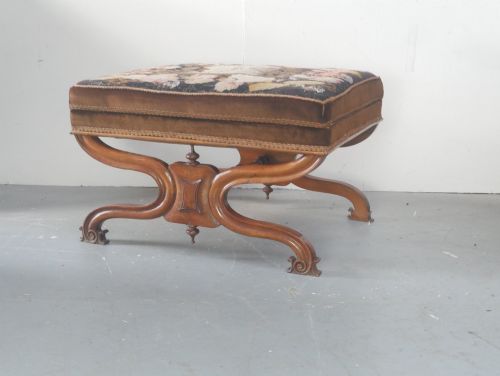
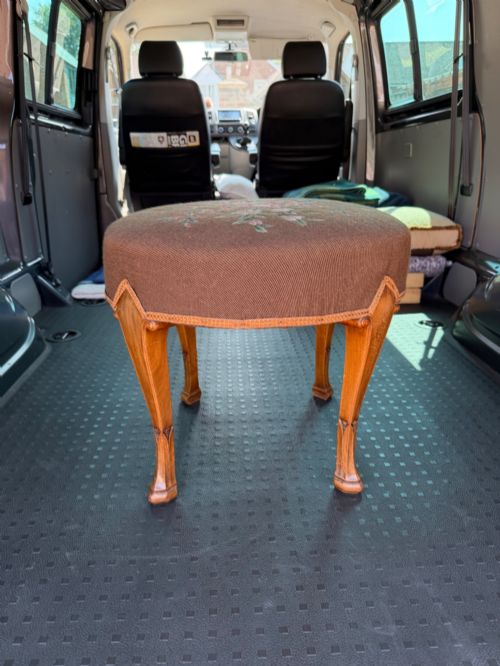
Victorian examples dominate the selection, spanning simple circular footstools to carved centre pieces and larger fireside designs.
Makers also drew on earlier aesthetics, producing revival pieces in Queen Anne and Chippendale styles alongside French-influenced forms.
How they were made
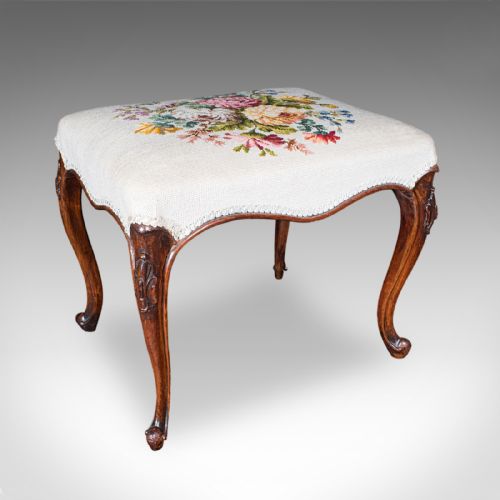
Craftsmen shaped the frames from walnut, often incorporating carved cabriole legs, inlaid details, or turned supports.
Upholstery relied on wool tapestry and needlepoint textiles, sometimes featuring intricate geometric kilim patterns or floral designs stretched over traditional stuffing.
A revolving piano stool allows you to spin gently while practising scales.
What varies in quality
Quality rests in the crispness of the timber carving and the complexity of the needlework upholstery, where denser stitching and balanced floral or geometric compositions elevate the piece.
Finer examples show superior joinery in the frame, such as secure cabriole legs and well-fitted turning, paired with original or sympathetic period fabric that retains its rich colour.
The Walnut Needlepoint Stool Glossary
- Needlepoint
- A type of counted thread embroidery stitched onto an open-weave canvas. It forms the durable, patterned top seen on many period footstools.
- Cabriole leg
- A furniture leg that curves out in a convex arc and tapers inward to a pad or claw foot. This profile appears frequently on revival seating.
- Tunbridge Ware
- Small-scale wooden items decorated with microscopic mosaic tesserae to form geometric pictures. Some Victorian examples incorporate this detailed woodwork.
- Prie-Dieu
- A devotional chair designed for kneeling, featuring a low seat and an upper rail for resting arms or books. Walnut versions with tapestry covers occasionally appear among these listings.
- Ottoman
- A low, upholstered seat without arms or a back, intended for resting feet or casual sitting. These larger formats provide ample surface for elaborate wool tapestry.
Walnut Needlepoint Stool: Frequently Asked Questions
Where did people use these stools?
These pieces served multiple domestic purposes, acting as footrests by the fireside, dressing table seats in bedrooms, or piano benches for musicians.
Their compact size allowed them to move easily about the home wherever extra seating or foot support was required.
How do I care for the needlepoint?
Protect the wool textile from direct sunlight to prevent the coloured threads from fading over time.
Gentle surface cleaning with a soft brush removes dust without disturbing the delicate stitching of the tapestry.
Are these frames solid walnut?
Most pieces utilise solid walnut for the structural frame, visible in the turned legs and carved supports.
Some incorporate decorative veneers or inlay work, particularly on Victorian dressing and centre stools.
How do I date a Victorian piece?
Look to the overall silhouette, the style of the carved cabriole legs, and the complexity of the needlepoint pattern.
Mid-century examples often feature simpler circular or rectangular frames, while later decades embraced heavier carving and revival influences.