


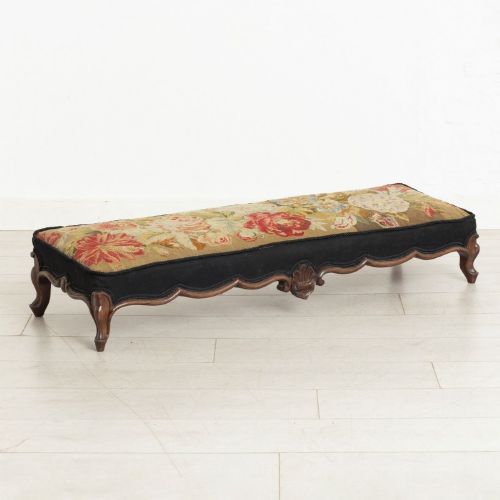


Walnut Long Bench
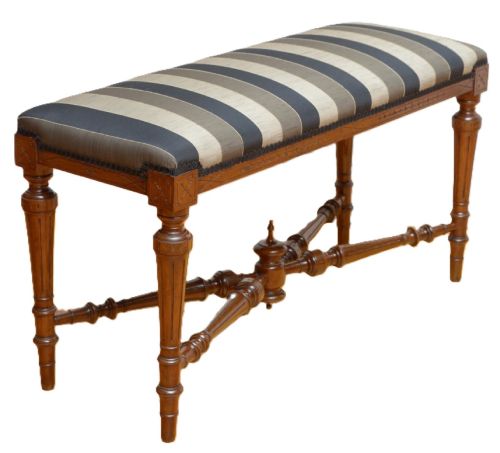
A walnut long bench brings rich timber grain and enduring seating utility to a hallway, window bay or gallery.
Walnut Long Bench
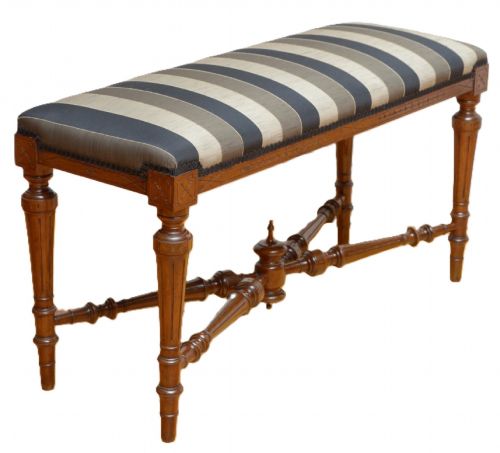
The pieces appearing on this page stretch from French and English country house aesthetics to Venetian Renaissance Revival and Aesthetic Movement designs. Most examples utilise solid walnut frames, frequently paired with textile coverings such as linen, tapestry, or original fabric.
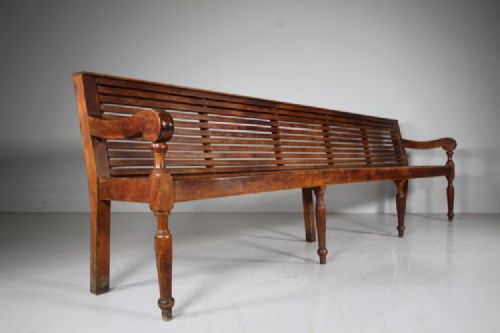
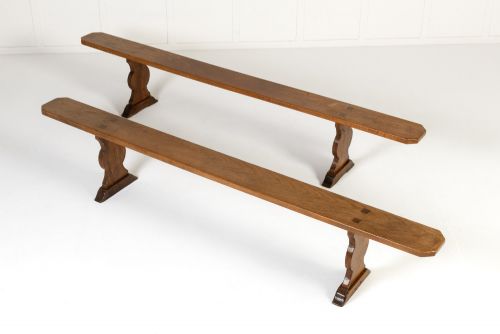
Makers and artisans of these periods employed varied regional styles, ranging from the carved ornamentation associated with Valentino Panciera Besarel to the simpler lines of slatted utility seating. Selecting a walnut long bench means choosing between low fender stools, hall benches with fluted legs, and larger three-seater upholstered variants.
How they were made
Makers constructed these benches primarily from walnut timber, sometimes supported by secondary hardwoods or oak framework depending on the regional workshop. Joinery relied on traditional methods to secure long spans of timber, accommodating the weight placed upon extended seats and waiting room forms.
Upholstered variants integrated textile coverings including linen, tapestry, and fabric over padded foundations, while wooden iterations featured carved details or slatted surfaces. Metal elements such as brass occasionally appeared in hardware or structural fixings, complementing the dark tones of the walnut.
Walnut Long Bench Retail Price Guide 2026
Typical asking prices for walnut long bench among the pieces listed under this phrase on Sellingantiques today, from the lower quarter to the upper quarter. They describe what is for sale here now, not the wider market.
Textile coverings recorded across these benches include linen, tapestry, and fabric alongside bare slatted wood.
What varies in quality
The distinction between standard commercial production and finer craftsmanship rests in the depth of timber selection and the execution of carved detail. Master carvers applied intricate ornamentation by hand, creating crisp relief work that elevates simple seating into notable decorative art.
Structural integrity across long spans depends upon the quality of the original timber seasoning and the stability of the joinery. Benches retaining their original fabric or untouched upholstery schemes demonstrate a higher degree of historical preservation than those subjected to modern re-covering.
Morris & Co.
The Walnut Long Bench Glossary
- Walnut
- A dense, dark hardwood valued for its rich grain patterns and durability in cabinetmaking. It served as the primary material for high-status furniture throughout the nineteenth and early twentieth centuries.
- Duet stool
- An extended seat designed to accommodate two people simultaneously, frequently placed at the foot of a bed or beside a window. These forms share structural similarities with long benches.
- Cabriole leg
- A furniture leg featuring a double curve, typically arching outward and then inward toward a pad or claw foot. This design originated in antiquity and saw revival across various nineteenth-century styles.
- Fender stool
- A low, long seat specifically designed to sit in front of a fireplace hearth. They often feature upholstered tops supported by short wooden legs.
- Aesthetic Movement
- A nineteenth-century design ethos that prioritised visual beauty over narrative or moral function. Pieces from this movement often display refined proportions and artistic simplicity.
Walnut Long Bench: Frequently Asked Questions
Where do you put a walnut long bench?
These benches suit narrow circulation spaces such as hallways, waiting rooms, or gallery landings where extended seating is useful without obstructing movement.
They also function effectively beneath large windows as window seats, providing a low profile that preserves natural light penetration.
How do you date a walnut long bench?
Dating relies on stylistic markers and structural clues, comparing the piece against Victorian, Edwardian, or Aesthetic Movement conventions recorded in the evidence.
Regional variations and specific revival styles, such as Carolean or Venetian Renaissance, further narrow the production window to particular decades.
Are these benches comfortable for daily use?
Comfort varies significantly between slatted wooden utility benches and fully upholstered three-seater stools designed for domestic lounging.
Upholstered variants provide softer seating through padded foundations, whereas slatted forms prioritise durability and straightforward maintenance.
What is the difference between a hall bench and a window seat?
Hall benches typically feature firmer wooden or slatted construction intended for transitional spaces and heavier public or domestic traffic.
Window seats generally incorporate upholstered tops and decorative frames designed for prolonged sitting in private rooms.