
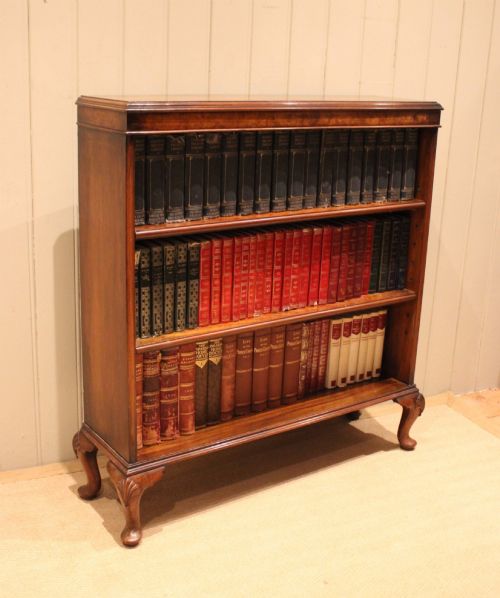
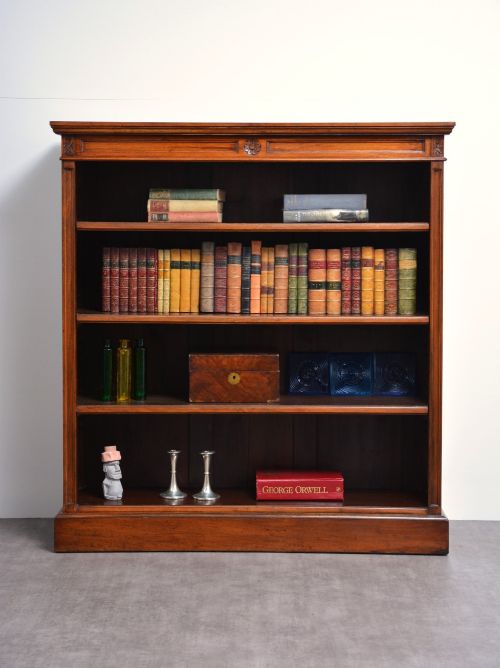
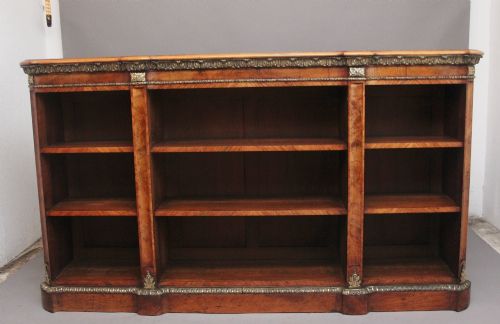
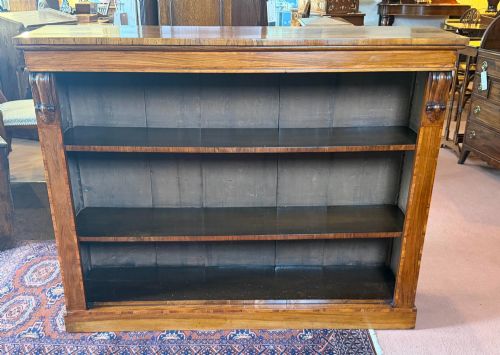
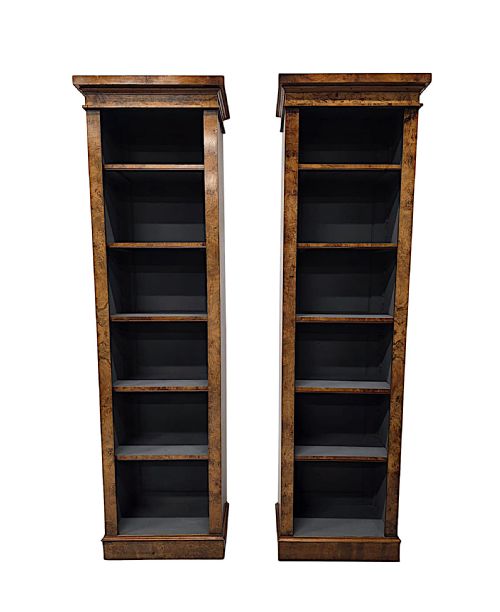
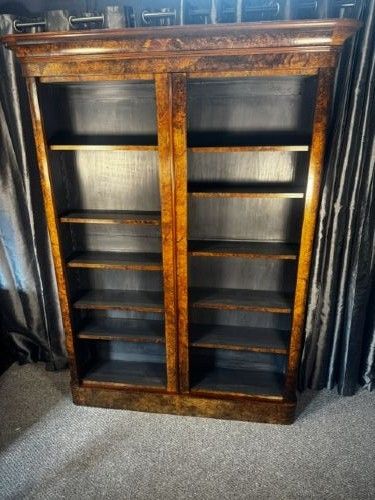
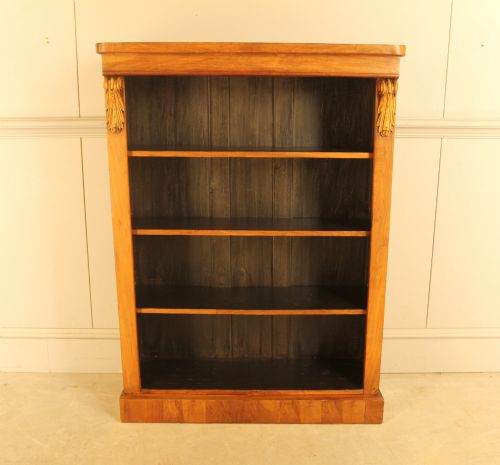
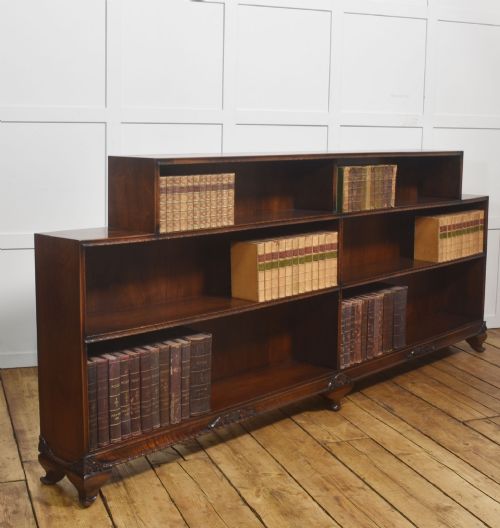
Walnut Library Shelves
These walnut library shelves bring warm grain and practical open storage to a room, spanning Victorian designs to 1930s pieces.
Walnut Library Shelves
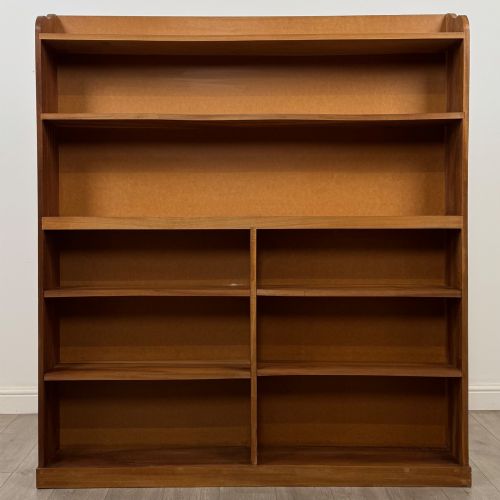
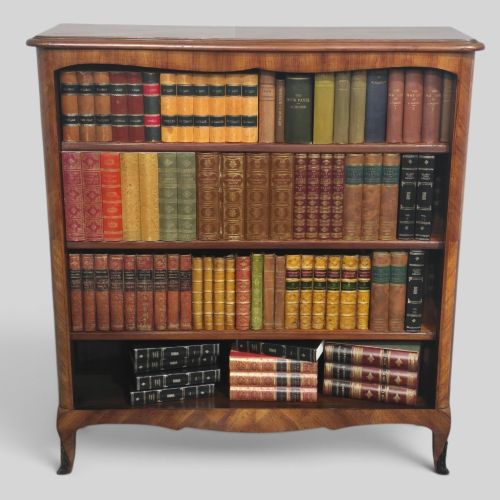
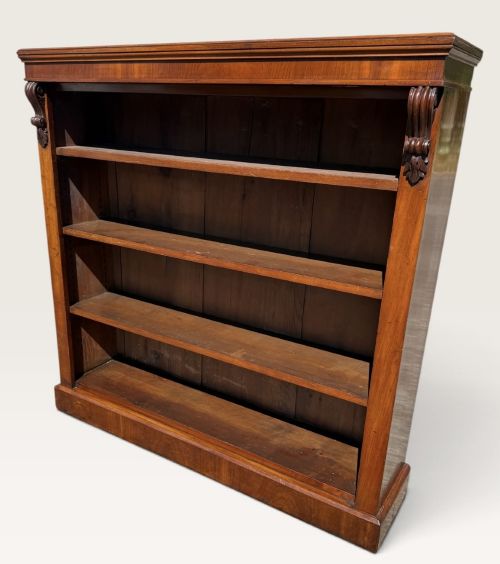
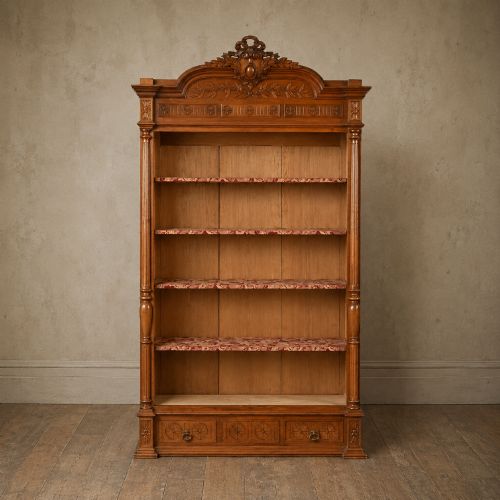
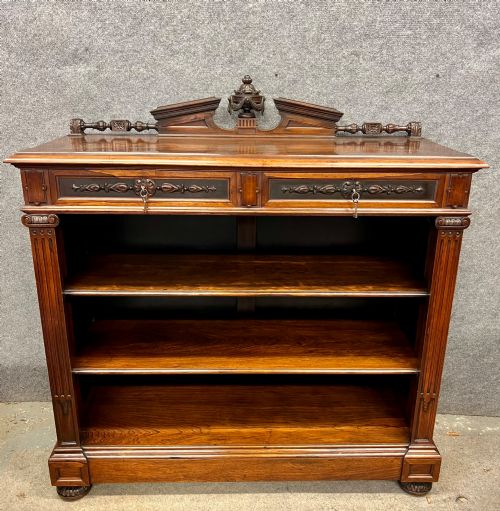
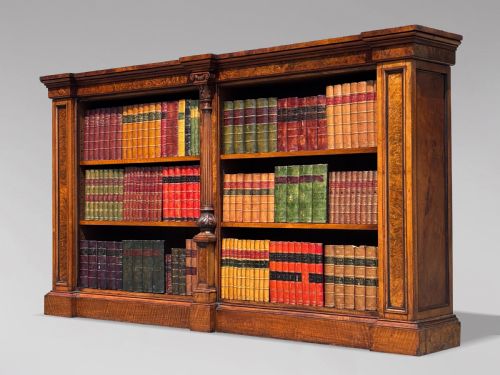
When you search for walnut library shelves, you encounter open bookcases, breakfront cabinets, and etageres designed for holding books. The most common version on this page is the Victorian or Edwardian open bookcase featuring adjustable timber shelves.
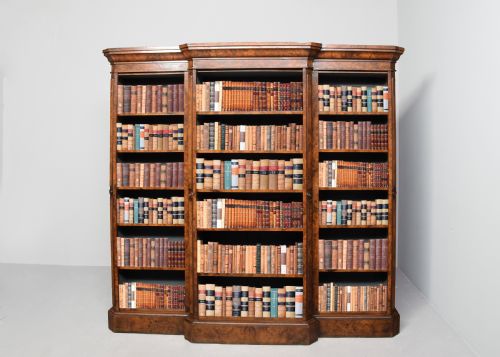
These pieces originate from the nineteenth and twentieth centuries, taking forms from low diminutive units to large breakfront configurations. Makers construct them primarily for domestic libraries and studies, often incorporating brass mounts or glass elements.
The selection includes variations from English workshops and continental makers, spanning styles from William IV and Queen Anne Revival to Arts and Crafts and Art Deco. Many incorporate adjustable shelving systems to accommodate volumes of varying heights.
How they were made
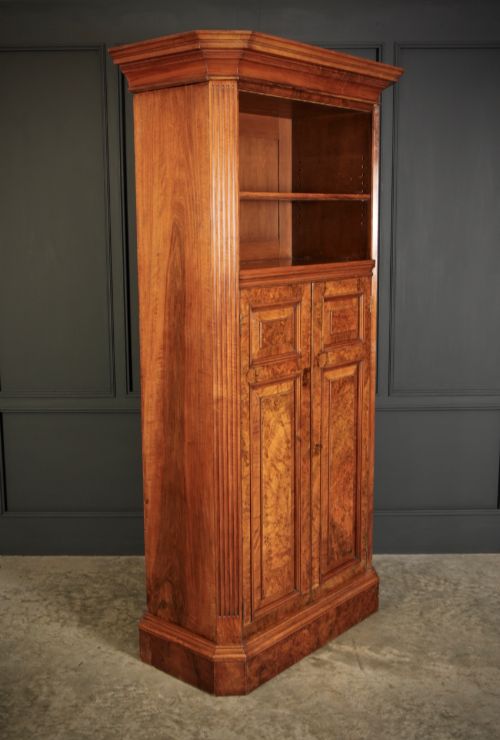
Cabinet makers utilised solid timber, pine, and mahogany as foundational carcasses, applying figured walnut and burr walnut veneers to external surfaces. This technique created rich decorative grain patterns across the breakfronts and panelled sides.
Constructors integrated brass hardware for shelf supports and hinges, alongside ormolu mounts on select nineteenth-century continental examples. Glazed doors and carved solid wood details appear on larger library cabinets and specific display variants.
Materials recorded across the archive include solid walnut, burr walnut veneer, mahogany, pine, and cast brass.
What varies in quality
The distinction between standard utility furniture and superior cabinet work rests in the selection of the timber veneer and the precision of the joinery. Figured and burr walnut surfaces exhibit deliberate book-matching and depth of grain that lesser pieces lack.
Construction details such as solid timber backs, finely cut dovetails on internal drawers, and robust brass mechanisms for adjustable shelving elevate certain nineteenth and twentieth-century examples above standard production.
Johnstone and Jeanes·Heal's·Maple and Co.
The Walnut Library Shelves Glossary
- Burr walnut
- A veneer sliced from the wart-like growths on walnut trees, prized for its swirling, intricate grain patterns. It frequently covers the front panels of Victorian library bookcases.
- Breakfront
- A piece of furniture where the central section projects forward from the flanking outer sections. This architectural arrangement creates depth and shadow across large library units.
- Ormolu
- Gilded bronze ornamentation applied to the corners and friezes of fine nineteenth-century cabinets. It provides a metallic contrast to dark timber surfaces.
- Etagere
- A set of open shelves for displaying small objects or books, supported by delicate slender columns. These diminutive pieces date across the Victorian and Edwardian periods.
- Adjustable shelves
- Shelves resting on movable supports that allow the user to alter internal vertical spacing. This mechanism appears frequently in open bookcases from the nineteenth century onward.
Walnut Library Shelves: Frequently Asked Questions
How do I adjust the shelves?
Most period bookcases utilise wooden track systems, brass pegs, or metal ratchets set into the interior sides. You simply lift the shelf to clear the supports and relocate it into adjacent slots.
Older mechanisms may require gentle handling if the timber has settled over decades of use.
Are these shelves strong enough for heavy books?
Victorian and Edwardian library shelves utilise solid timber cores and sturdy veneered construction designed to hold substantial volumes. The inclusion of adjustable timber or pine boards provides adequate load-bearing capacity for standard libraries.
Large folio volumes require careful placement on lower, deeper base shelves.
How do I clean burr walnut?
Maintain the surface by dusting with a soft, dry cloth along the grain of the wood. Avoid modern aerosol polishes, which leave silicones and build up residues over time.
Apply a traditional beeswax sparingly once or twice a year to nourish the veneer and preserve the lustre.
Can I place them in direct sunlight?
Walnut veneer is sensitive to ultraviolet light and prolonged exposure causes the warm brown tones to fade unevenly. Position your bookcase away from south-facing windows to protect the natural grain.
Rotating the books periodically also prevents uneven shading on the backboards.