



Walnut Framed Footstool
A walnut framed footstool brings nineteenth-century comfort and carved timber presence to a fireside or window seat.
Walnut Framed Footstool
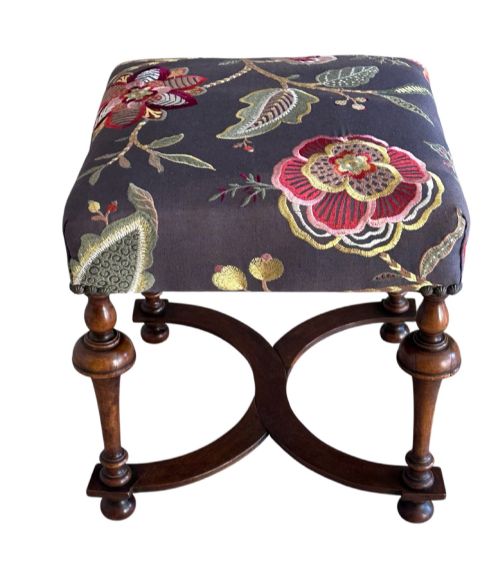
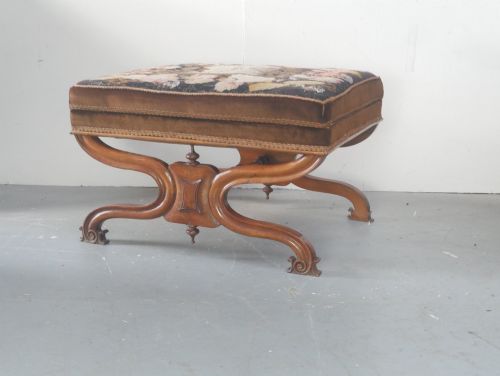
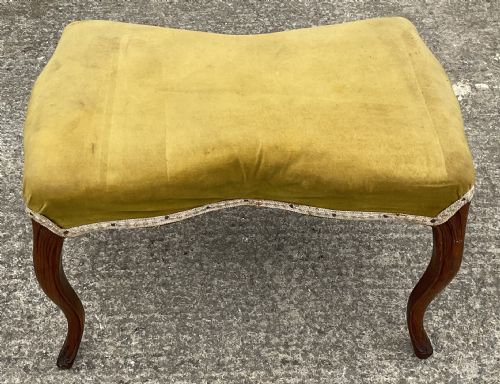
A walnut framed footstool serves as a low seat or rest, drawing on nineteenth-century forms ranging from compact dressing stools to larger window seats. Buyers searching for a walnut framed footstool encounter Victorian pieces alongside revival styles spanning the mid to late nineteenth century into the early twentieth century.
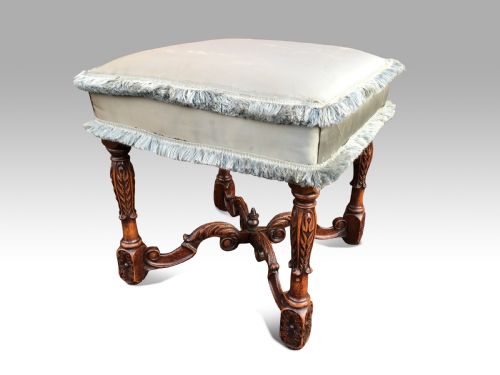
The selection centres on solid timber frames paired with upholstered tops in materials such as velvet, tapestry, leather, and fabric. Scottish Baronial and Renaissance Revival influences appear alongside Queen Anne and eighteenth-century styles.
Makers of the period utilised structural timbers like walnut, occasionally alongside mahogany, supporting elaborate carvings or X-frame geometries. These forms accommodate diverse domestic settings, functioning equally well as dressing stools or fireside footstools.
How they were made
Makers constructed these frames predominantly from walnut, selected for its rich grain and capability to hold sharp relief carving. Joinery methods included sturdy mortise and tenon joints to bear the weight of X-frame configurations and heavily carved window seats.
Upholstered surfaces relied on textiles such as velvet, tapestry, and leather stretched over padded foundations. Brass details occasionally secured the upholstery edges or reinforced structural joints on the timber frames.
Walnut Framed Footstool Retail Price Guide 2026
Typical asking prices for walnut framed footstool among the pieces listed under this phrase on Sellingantiques today, from the lower quarter to the upper quarter. They describe what is for sale here now, not the wider market.
Listings span the Victorian era from 1850 through to 1910, predominantly utilising walnut alongside textile and leather upholstery.
What varies in quality
The crispness of the timber carving dictates the visual distinction of the piece, with deep relief work on Scottish Baronial or Renaissance Revival frames demanding considerable skill from the cabinetmaker. Subtleties in the turning of X-frames and the integration of figural elements, such as carved hunting dog heads, separate standard production from superior examples.
The choice and execution of the upholstery material heavily influence the overall character, where heavy tapestries, fine velvets, and worked leather elevate the presentation of a nineteenth-century frame.
The Walnut Framed Footstool Glossary
- X-frame
- A structural form utilising two intersecting legs shaped like an X to support the seat. This design has roots in classical furniture and experienced revivals during the nineteenth century.
- Scottish Baronial
- A nineteenth-century revival style incorporating robust forms and heavy detailing inspired by medieval Scottish architecture. It often manifests in large, substantial seating furniture.
- Renaissance Revival
- An eclectic nineteenth-century design movement drawing inspiration from sixteenth-century European motifs. Pieces in this style frequently feature dense ornamentation and rich timber work.
- Tapestry
- A form of heavy textile woven with pictorial or decorative designs, commonly utilised for historical upholstery. It provides durable surface texture on period stools.
- Window Seat
- An elongated stool designed specifically to fit within the recess of a window. These pieces often feature carved frames and upholstered tops suited for prolonged seating.
Walnut Framed Footstool: Frequently Asked Questions
Where were walnut footstools placed?
These pieces sat primarily in principal rooms such as drawing rooms, libraries, and bedrooms. Window seats occupied recessed bays, while smaller footstools rested beside fireside armchairs.
Their compact proportions allowed them to move easily about the floor as functional furnishings for domestic comfort.
How do I date a walnut framed stool?
Dating relies on stylistic clues, timber choice, and construction methods characteristic of the nineteenth century. Pieces referencing the Victorian era or specific revivals like Queen Anne typically date from the mid-nineteenth to early twentieth century.
Details such as X-frame geometry and carved motifs help narrow the period of manufacture.
What textiles cover these stools?
Original and replacement upholstery spans velvet, woven tapestry, leather, and decorative fabric. Each material reflects the tastes of the Victorian period and the specific function of the seat.
Durability varied according to the room the stool was destined to inhabit.
Are X-frame stools sturdy?
The intersecting timber legs provide inherent structural stability when joined correctly. Master cabinetmakers utilised precise joinery to ensure the central pivot and leg junctions bore downward weight effectively.
This construction method supported both compact dressing stools and larger window seating.