

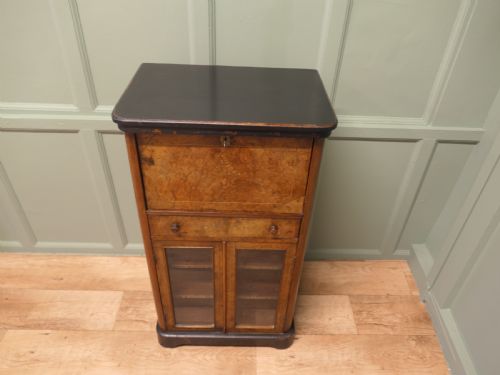


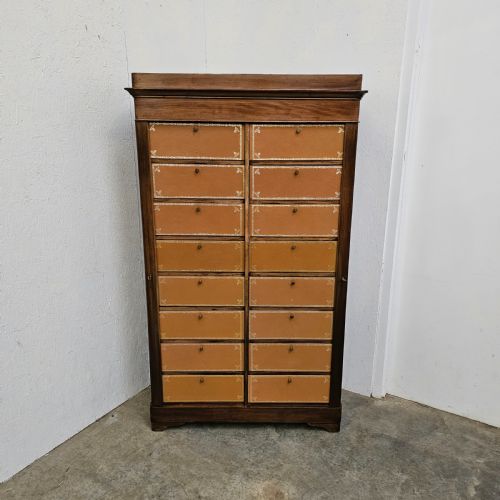


Walnut File Cabinet
A walnut file cabinet organises papers with rich timber grain and period charm, from narrow Wellington chests to expansive banks of drawers.
Walnut File Cabinet
When you search for a walnut file cabinet, you are looking at multi-drawer storage furniture designed to hold papers, documents or small collections. These pieces range from Victorian music filing cabinets and Edwardian chests to French banks of drawers and narrow Wellington chests.
The origins span the nineteenth century, the Victorian era, the Edwardian period, and Belle Epoque French workshops. Each version offers a distinct configuration of drawers tailored for sorting paperwork or storing items in domestic and commercial spaces.
How they were made
Cabinet makers utilised solid walnut, burr walnut and figured walnut veneers over secondary timbers to create rich, varied grain patterns across the drawer fronts and panels. Satin birch and mahogany appear alongside the walnut body in specific period examples.
Functional hardware formed an integral part of the construction, with brass handles, scalloped brass pulls and leather accents fitted to drawers and cartonniers. Polished finishes protected the timber while highlighting the natural figure of the wood.
Walnut File Cabinet Retail Price Guide 2026
Typical asking prices for walnut file cabinet among the pieces listed under this phrase on Sellingantiques today, from the lower quarter to the upper quarter. They describe what is for sale here now, not the wider market.
Materials recorded on this site include burr walnut, figured walnut, satin birch, brass hardware and leather inserts.
What varies in quality
The selection of timber veneer determines much of the visual merit, with highly figured burr walnut and matched walnut surfaces creating greater depth than plain timber. The choice of secondary woods and the precision in drawer construction separate standard utility pieces from finer cabinet work.
Hardware details and proportion influence the character of each piece, from simple brass pulls to elaborate scalloped brass handles and integrated leather detailing. The overall balance of the proportions, whether a narrow tall silhouette or a wide bank of drawers, reflects the original maker's intent.
The Walnut File Cabinet Glossary
- Walnut file cabinet
- A piece of furniture with multiple drawers designed for storing documents, papers or small items, constructed primarily in walnut timber.
- Burr walnut
- Timber taken from the growth outgrowth of a walnut tree, prized for its swirling, highly decorative grain patterns on cabinet fronts.
- Wellington chest
- A tall, narrow chest of drawers secured by a hinged locking side stile that fastens over the drawer edges.
- Cartonniere
- A French desk accessory or cabinet containing stationary files, pigeonholes or drawers, often finished with leather elements.
- Bank of drawers
- A multi-drawer cabinetry unit designed for heavy sorting or filing use in shops, offices or collectors rooms.
- Graduated drawers
- A series of drawers arranged vertically where the depth increases progressively from top to bottom.
Walnut File Cabinet: Frequently Asked Questions
What fits inside a walnut file cabinet?
These cabinets suit the storage of paperwork, letters, documents and small collectables across their various drawer sizes. Narrow Wellington chests and music filing cabinets accommodate slender records, while larger banks of drawers hold bulkier papers.
The specific capacity depends on the drawer depth and internal dimensions, which vary between domestic chests, shop drawers and tall collectors cabinets.
How do I care for walnut timber?
Walnut furniture benefits from placement away from direct heat sources and strong sunlight to prevent the timber and veneer from drying out. Regular dusting with a soft, dry cloth maintains the polished surface without the need for heavy chemical polishes.
Conditioning oils or wax can be applied sparingly if the wood appears dry, following the direction of the grain.
How do I date a walnut file cabinet?
Dating relies on observing construction methods, timber choices, handle styles and overall proportions relative to historical periods like the Victorian and Edwardian eras. Pieces from the nineteenth century often display hand-cut dovetails and specific brass hardware designs.
French pieces from the Belle Epoque or nineteenth century carry distinct regional characteristics in their drawer arrangement and leather details.
Where were these cabinets used originally?
Walnut file cabinets served in studies, offices, shops and music rooms as practical furniture for organising documents, sheet music or retail stock. Tall filing chests and banks of drawers kept paperwork accessible in professional environments.
Collectors cabinets and jewellers cabinets fulfilled a specialised role for displaying or sorting delicate items in private homes and commercial establishments.