





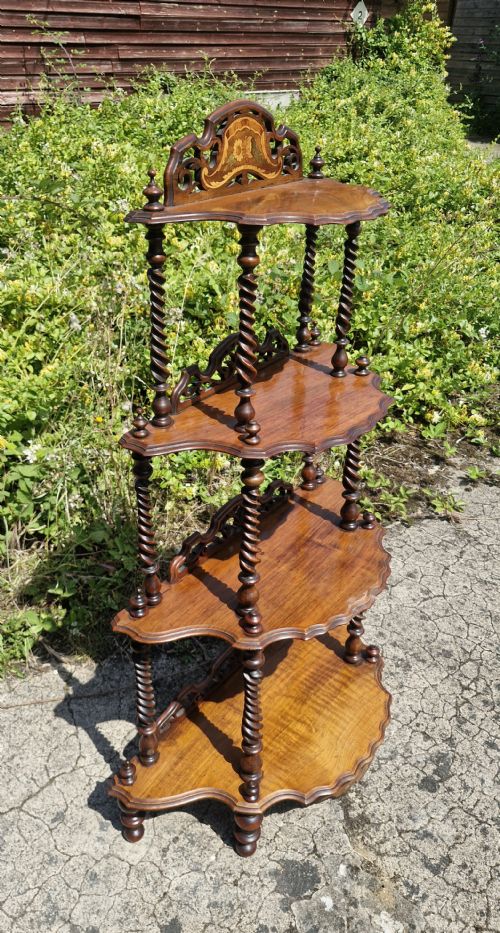


Walnut Etagere Unit
These walnut etagere unit pieces are tiered display stands and shelving units designed to hold small decorative objects.
Walnut Etagere Unit
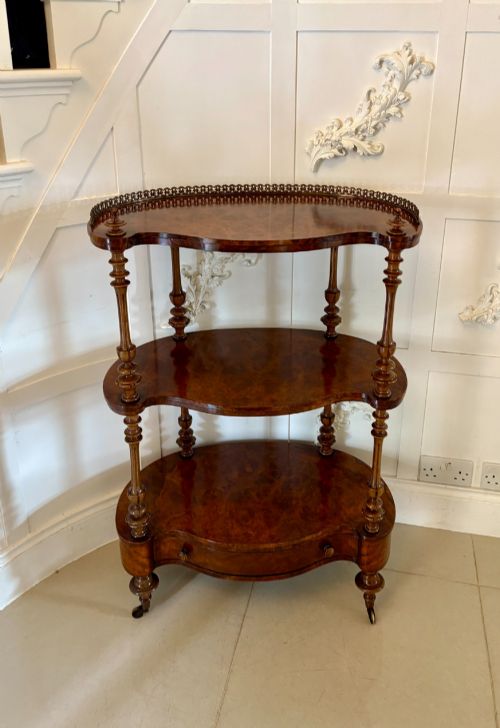
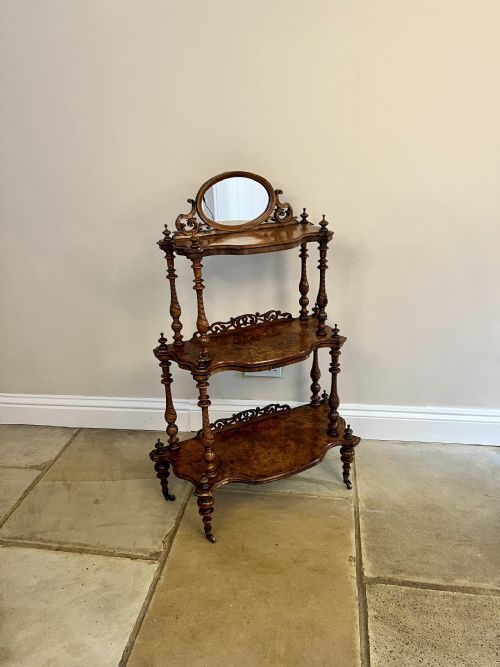
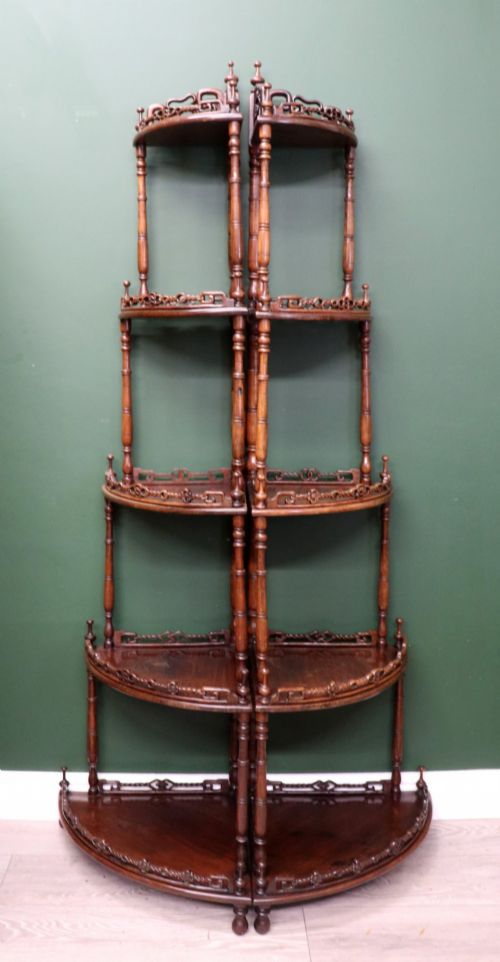
A walnut etagere unit takes the form of multi-tiered shelving stands, corner whatnots, and console tables designed for display and storage in nineteenth-century interiors. These pieces appear most frequently in Victorian and Edwardian iterations, spanning from the mid-nineteenth century up to nineteen-ten.
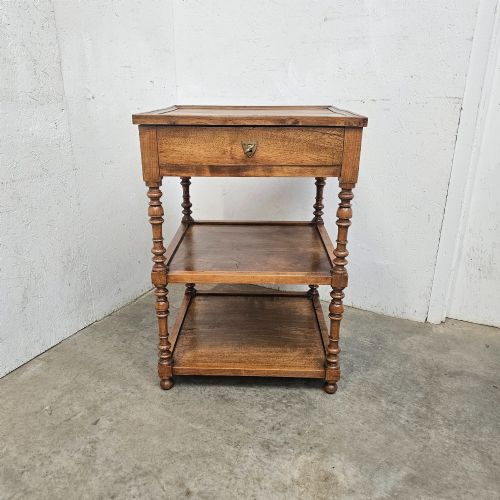
The objects serve as freestanding display furniture or wall-mounted shelving, utilising multiple tiers supported by turned legs, barley twist columns, or corner brackets. Forms range from demi-lune console tables and music cabinets to tall multi-tier display shelves with serpentine shapes.
How they were made
Maker construction relies heavily upon walnut and burr walnut timbers, frequently paired with mahogany or enhanced through marquetry inlay and brass fittings. Structural elements utilise turned woodwork, hollow barley twist supports, and hand-carved detailing.
Surfaces incorporate glass, mirror glass, and porcelain components to complement the timber framework. French styles introduce distinct turned legs and wall-mounting configurations alongside traditional English standing formats.
Walnut Etagere Unit Retail Price Guide 2026
Typical asking prices for walnut etagere unit among the pieces listed under this phrase on Sellingantiques today, from the lower quarter to the upper quarter. They describe what is for sale here now, not the wider market.
Materials documented across the inventory include brass, mirror glass, porcelain, and mahogany alongside primary walnut timbers.
What varies in quality
Quality differences emerge in the selection and application of burr walnut timber and the precision of the marquetry inlay across the tiers. Pieces with serpentine shaping or complex multi-tier configurations demonstrate higher levels of cabinet-making skill.
The refinement of turned wooden supports, such as hollow barley twist columns, distinguishes standard production items from finer display furniture.
The Walnut Etagere Unit Glossary
- Etagere
- A piece of furniture consisting of a set of open shelves for displaying small objects or ornaments. These units often feature multiple tiers supported by slender columns.
- Whatnot
- A multi-shelved open cabinet or stand used for storing or displaying books, ornaments, and bric-a-brac. The term originated in the nineteenth century.
- Burr Walnut
- Wood taken from a walnut tree growth containing swirling grain patterns that create decorative visual effects. This material is prized for fine cabinet fronts and table tops.
- Marquetry
- Decorative woodwork in which pieces of finely tinted wood and other materials are fitted into a veneer to form geometric or floral designs. It appears across Victorian furniture surfaces.
- Barley Twist
- A spiral turning resembling a traditional loaf of bread, used to shape wooden furniture legs and support columns. This technique is prominent on nineteenth-century stands.
Walnut Etagere Unit: Frequently Asked Questions
What is an etagere?
An etagere is an open-shelved display unit designed for holding decorative items, books, and ornaments. These pieces provide vertical storage without enclosing the objects.
They function well in principal reception rooms or hallways where visible display space is required.
How do I style a whatnot?
A whatnot accommodates small decorative objects, porcelain, and books across its multiple open shelves. Grouping items by scale helps balance the vertical tiers.
Placement in corners or against living room walls allows the tiered structure to function effectively.
What is the difference between an etagere and a whatnot?
An etagere generally emphasises display tiers for decorative objects, while a whatnot often incorporates specialised compartments, music storage, or corner designs. Both terms describe multi-shelved nineteenth-century furniture.
Construction methods and timber choices remain similar across both categories.
Are these units suitable for small rooms?
Corner whatnots and diminutive etageres fit efficiently into restricted floor areas by utilising vertical space. Wall-mounted shelves remove the footprint entirely.
Open shelving ensures the furniture maintains a light visual presence in compact interiors.