



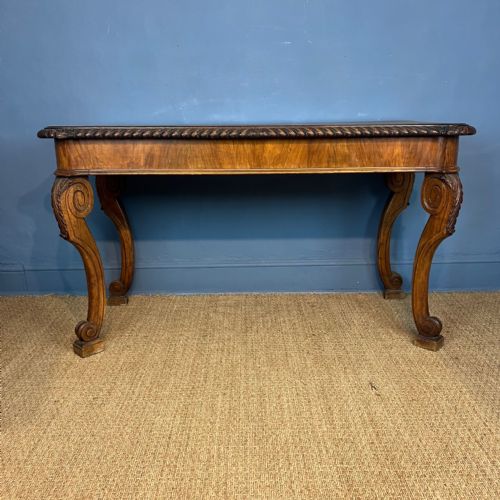


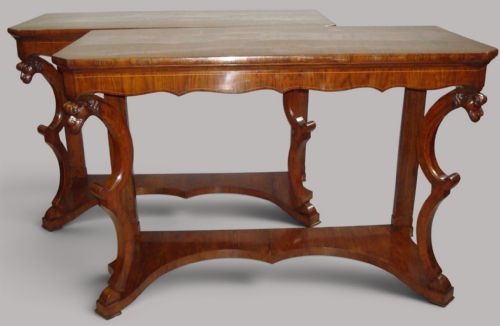


Walnut Entryway Furniture
Walnut entryway furniture brings warmth and architectural presence to a hall, offering practical seating, surfaces, and storage forged in rich hardwoods.
Walnut Entryway Furniture
Walnut entryway furniture encompasses console tables, hall stands, benches, and chairs designed for domestic halls and reception spaces. These pieces combine utility with formal presence, serving as the immediate impression of a home interior.
The selections span from the eighteenth century through the Edwardian period, incorporating Victorian, Renaissance Revival, French Empire, and Spanish Country styles. Console tables and hall stands dominate the forms, frequently integrating brass, marble, and glass elements.
Makers and regional workshops from Britain, France, Italy, Ireland, and Scotland produced these functional forms in solid walnut, marquetry, and parcel gilt finishes. The range accommodates both grand architectural settings and smaller domestic corridors.
How they were made
Carpenters utilised solid walnut and walnut veneers over secondary timbers like pine, shaping structural components through traditional joinery. Parcel gilt accents and carved ornamentation were applied by hand to surfaces on console tables and benches.
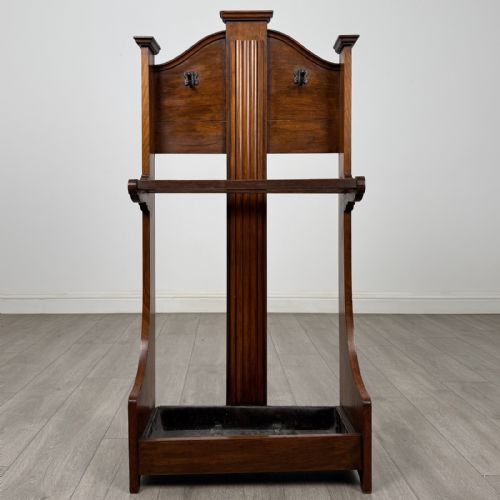
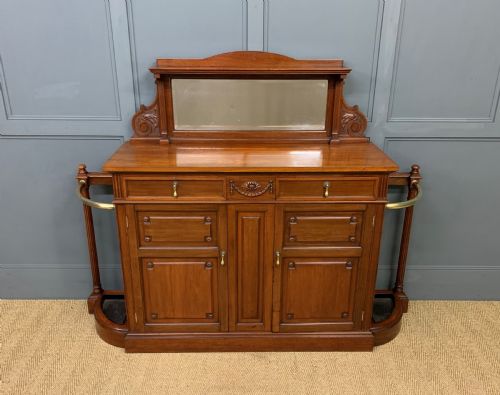
Marble tops were integrated into console tables, secured to wooden frames to provide durable working surfaces for halls. Glass and cast iron components appear in functional umbrella stands and hall stands alongside brass coat hooks and fittings.
Walnut Entryway Furniture Retail Price Guide 2026
Typical asking prices for walnut entryway furniture among the pieces listed under this phrase on Sellingantiques today, from the lower quarter to the upper quarter. They describe what is for sale here now, not the wider market.
Listings feature walnut entryway pieces spanning the eighteenth century through the Edwardian era, incorporating marble, brass, and cast iron elements.
What varies in quality
Quality rests in the depth of the walnut grain, the crispness of carved detail, and the integrity of structural joins across benches and console tables. Pieces with integrated marble slabs or complex marquetry demonstrate higher ambition in design and execution.
Proportion and scale dictate the success of a hall stand or console table within an interior, separating utilitarian workshop output from master cabinet work. Original hardware, such as brass hooks and mounts, preserves the intended aesthetic of the period.
Shoolbred & Co.
The Walnut Entryway Furniture Glossary
- Console table
- A table designed to stand against a wall, frequently supported by wall brackets or front legs. These surfaces often feature marble tops and parcel gilt decoration.
- Hall stand
- A tall freestanding item incorporating coat hooks, an umbrella stand, and sometimes a mirror or small seat. They serve multiple organizational functions in an entryway.
- Settle
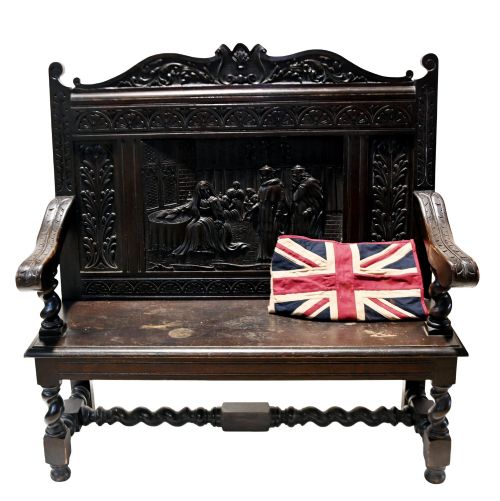
- A wooden bench with high backs and solid arms, often featuring enclosed storage beneath the seat. They provide heavy seating for draughty halls.
- Marquetry
- The art of applying pieces of veneer to a structure to form decorative patterns. This technique decorates French and continental console surfaces.
- Parcel gilt
- A surface treatment where selected portions of an object are covered in gold leaf. This technique highlights carved details on walnut furniture.
Walnut Entryway Furniture: Frequently Asked Questions
How do I choose the right console table for my hall?
Measure your available wall space and corridor width carefully before selecting a console table. Consider whether you require a marble top for durability or a wooden surface for warmth.
Match the stylistic period of the table, such as French Empire or Italian Neoclassical, to the surrounding architecture of your entryway.
Where were walnut benches used in historical homes?
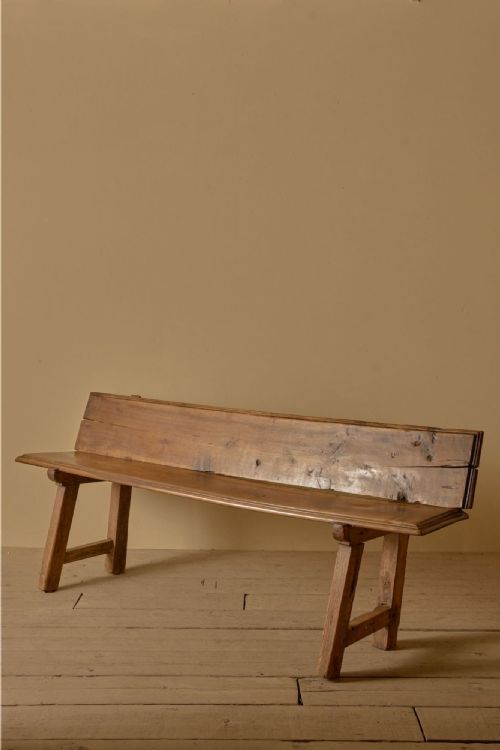
Walnut benches and settles were positioned in entrance halls and reception rooms to provide seating for callers waiting admittance. Irish and Spanish variants often included under-seat storage for shoes.
Their robust construction in solid walnut allowed them to withstand heavy daily use near the front door.
How do I care for antique walnut furniture?
Maintain walnut surfaces by keeping them away from direct heat sources and strong sunlight, which can dry out the timber. Dust regularly with a soft, dry cloth rather than applying heavy silicone polishes.
Preserve marble tops by wiping spills immediately to prevent staining on porous stone inserts.