
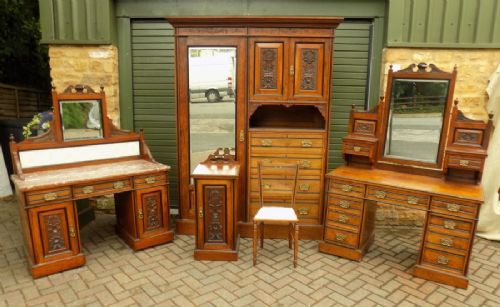


Walnut Duchess Vanity
A walnut duchess vanity brings Victorian bedroom grandeur home with its sweeping mirrors and rich burr figure.
Walnut Duchess Vanity
When you search for a walnut duchess vanity, you are looking at Victorian bedroom furniture designed for morning grooming and display. These pieces typically combine a large pivoting mirror with a central table surface and supporting drawers.
The versions you are most likely to meet on this page hail from the nineteenth century, specifically dating between eighteen fifty and eighteen ninety. They span the classic Victorian era and touch upon the Aesthetic Movement.
Forms range from grand pedestal dressing tables to large toilet mirrors and complete bedroom suites. Each piece reflects the high Victorian preference for decorative woodwork in domestic spaces.
How they were made
Cabinet makers utilised burr walnut veneers to create striking swirling grain patterns across the primary surfaces. Solid walnut provided the structural frames and shaped supports for these substantial bedroom items.
Fitted interiors incorporated brass hardware for drawer pulls and handles, alongside heavy mirror glass secured in adjustable wooden frames. Marble inserts occasionally topped the supporting surfaces in specific configurations.
Victorian dressing tables often concealed tiny velvet lined compartments for secret love letters and hairpin stashes.
What varies in quality
The distinction between standard examples and superior pieces rests in the selection of the burr walnut veneer and the ambition of the carving. Richer figuring and deeper, more intricate woodwork elevate a dressing table far above plain utility.
Proportion and scale also dictate the hierarchy, where larger pedestal forms and pieces showing distinct Aesthetic Movement influences demonstrate greater design ambition. The integration of original mirror glass and intact brass fixtures completes the higher tier.
The Walnut Duchess Vanity Glossary
- Burr Walnut
- A distinct wood veneer harvested from the warted growths on walnut trees, prized for its swirling knotty patterns. It forms the primary decorative surface on these Victorian pieces.
- Duchess Dressing Table
- A large nineteenth century dressing table featuring a grand mirror attached at the rear, often flanked by smaller trinket drawers. This form was a centrepiece of the Victorian bedroom.
- Toilet Mirror
- A smaller tabletop mirror frame designed to sit atop a chest of drawers or dedicated stand. These pieces pivot on side screws to adjust the viewing angle.
- Aesthetic Movement
- A late nineteenth century design style that emphasised visual beauty over narrative meaning, drawing inspiration from various historic and global traditions. Pieces from this movement show lighter, more refined lines.
Walnut Duchess Vanity: Frequently Asked Questions
How do I date a walnut vanity?
Examine the construction methods, drawer linings, and overall style cues such as Victorian proportions or Aesthetic Movement details. The presence of specific hardware and mirror backing also helps narrow the decade.
Compare the piece against known nineteenth century examples to confirm whether it originates from the mid or late Victorian period.
Were these used in bedrooms?
These vanity pieces served as the primary station for morning grooming, hair styling, and the application of cosmetics in the nineteenth century bedroom. They provided private storage for personal items and jewellery.
Affluent households placed them in master bedrooms as both functional furniture and statements of domestic refinement.
What is burr walnut?
Burr walnut is a decorative wood veneer cut from the deformed growths on walnut trees, yielding intense, swirling grain patterns. Cabinet makers applied it to the most visible surfaces of fine furniture.
This material creates a rich, textured appearance that defines the luxury of high Victorian case pieces.
How should I clean the wood?
Maintain the surface by dusting gently with a soft, dry cloth to prevent dirt accumulation on the delicate veneer. Avoid modern chemical polishes that can degrade the historic finish over time.
Apply a traditional beeswax sparingly if the timber appears dry, buffing it gently to preserve the natural lustre.