
Walnut Bookcase Unit
A walnut bookcase unit brings figured timber and adjustable shelving together, offering a practical home for a library.
Walnut Bookcase Unit
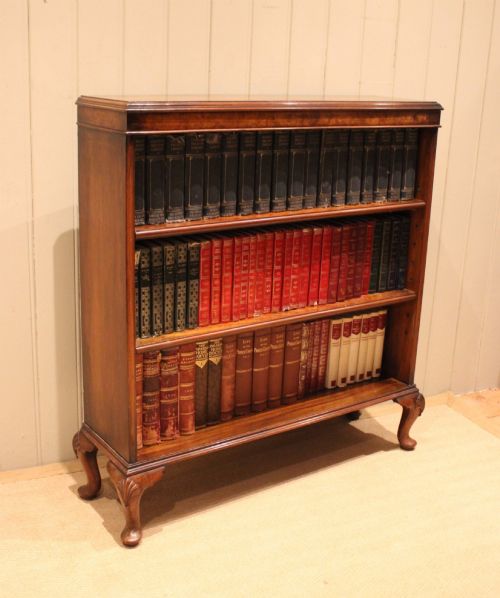
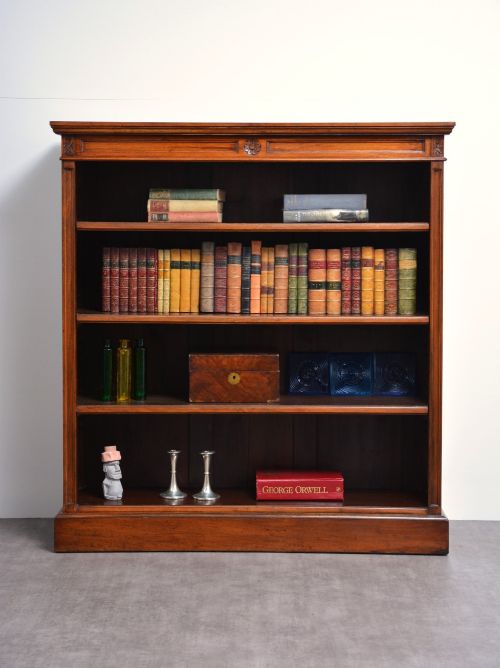
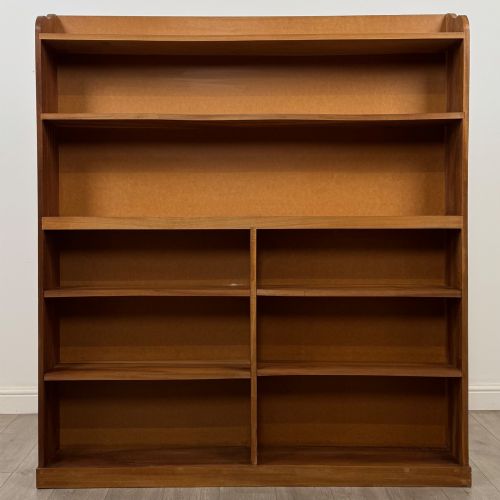
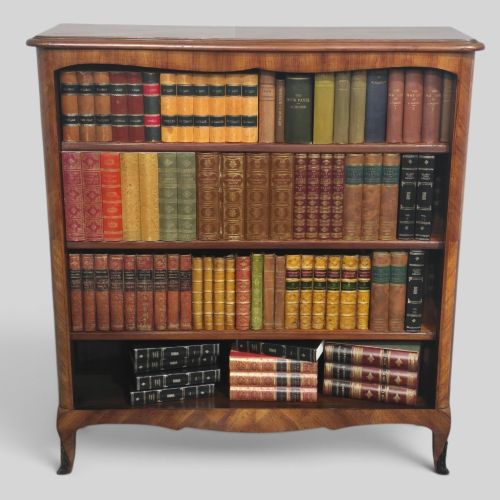
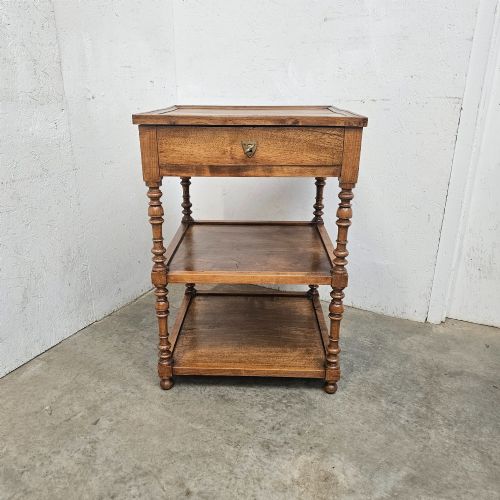
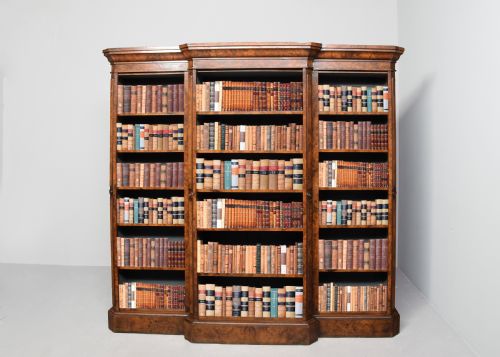
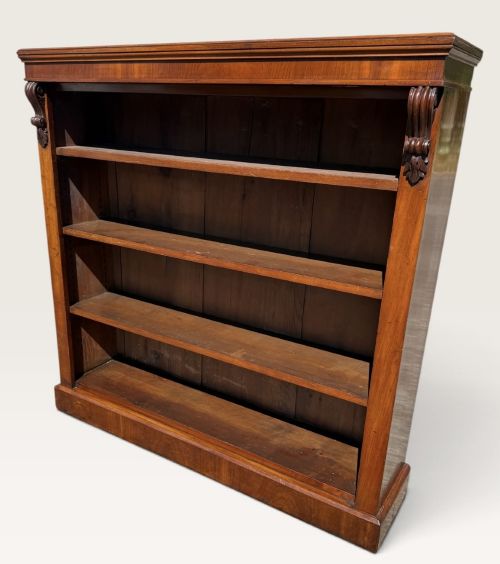
A walnut bookcase unit is a functional storage piece designed to hold books and display objects while introducing rich brown timber to a room. When searching for a walnut bookcase unit, buyers typically encounter open shelving formats, breakfront configurations, and tiered whatnots dating from the nineteenth and twentieth centuries.
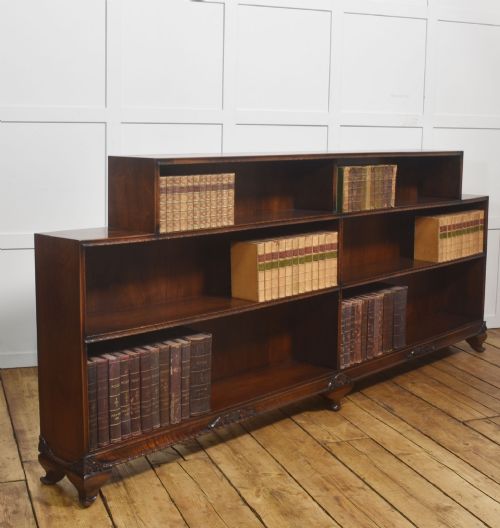
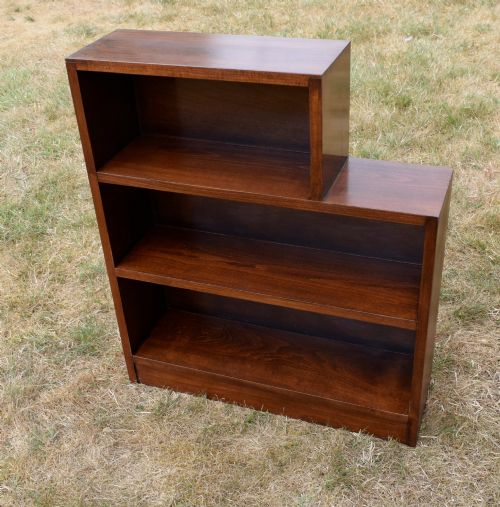
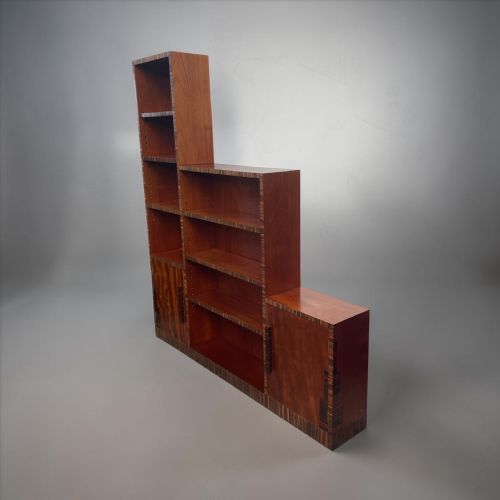
The selection ranges from compact low cabinets and bedside units to large multi-section breakfront libraries and stepped Art Deco designs. Victorian and Edwardian examples sit alongside Queen Anne style revivals and streamline twentieth-century pieces, spanning periods from eighteen-forty to nineteen-thirty.
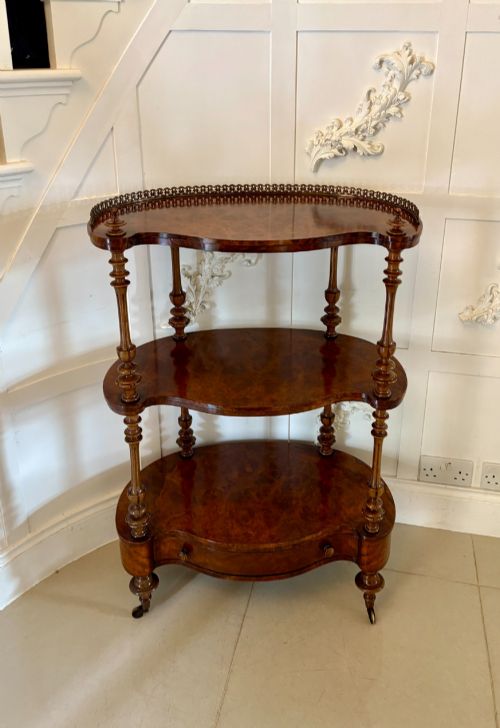
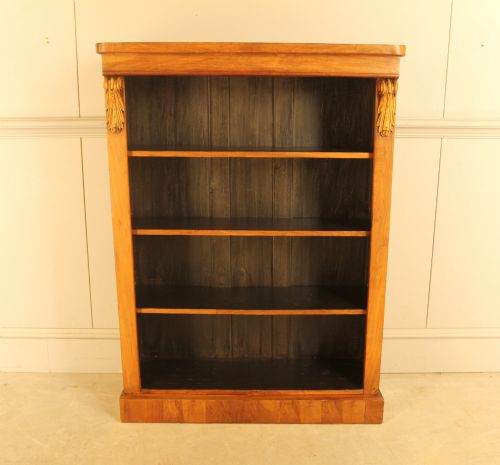
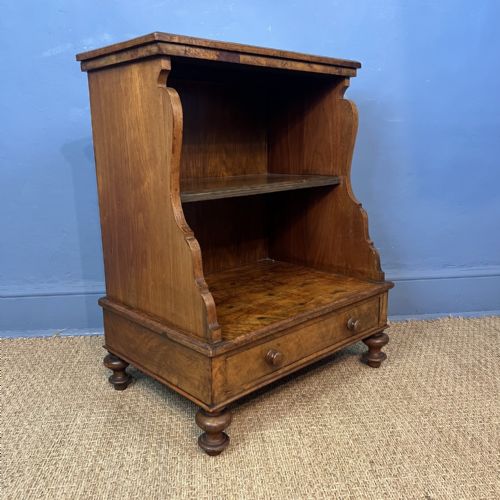
Open bookcases predominate, often featuring adjustable shelves supported by timber or brass fittings. Alongside traditional upright shelving, the category embraces etageres, corner cabinets, and combined sideboard dresser bookcases that integrate display space with enclosed storage.
How they were made
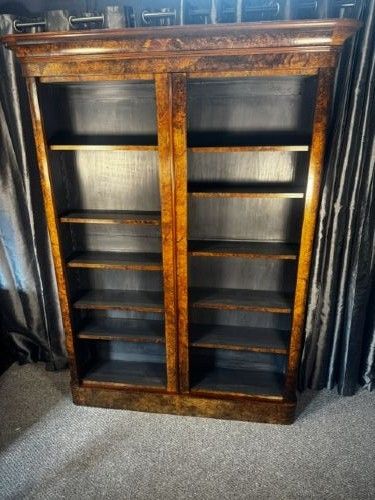
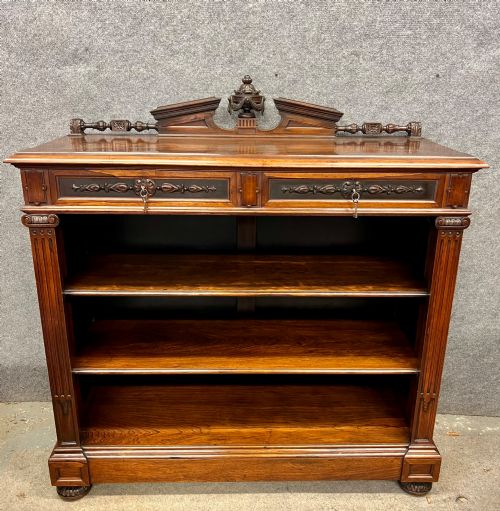
Cabinet makers utilised solid walnut, pine, hardwood, and timber carcases enriched with decorative burr walnut and figured walnut veneers to create striking grain patterns across the front surfaces. Glass doors, ormolu mounts, and marquetry inlay appear on select display cabinets and larger breakfront libraries.
Construction techniques evolved from nineteenth-century handcrafted breakfront frames with adjustable wooden shelving to twentieth-century Art Deco stepped structures and streamlined forms. Turned legs, serpentine shapes, and layered cascading shelves demonstrate the joinery skills of Victorian, Edwardian, and later makers.
Listings feature walnut, burr walnut, glass, brass, and pine across Victorian, Edwardian, and Art Deco periods.
What varies in quality
Quality rests upon the choice of veneer and the rhythm of the grain across the front, where symmetrical burr walnut or figured walnut elevates a piece far above plain timber carcases. The depth of the colour and the crispness of any marquetry inlay or ormolu mounts dictate visual distinction.
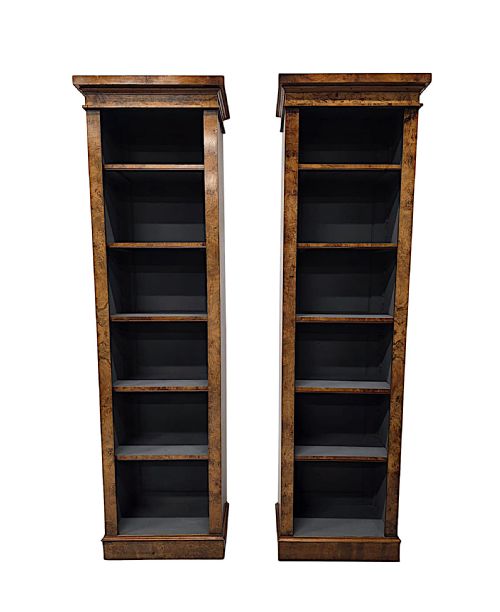
Structural ambition separates standard shelving from superior examples, such as multi-section breakfront designs with finely integrated drawers and robust adjustable shelf mechanisms. The harmony of the proportions, from slim pairs of bookshelves to large stepped units, defines the standing of the piece.
Maurice Adams·Epstein
The Walnut Bookcase Unit Glossary
- Burr walnut
- Timber taken from the warted excrescence of a walnut tree, yielding highly decorative swirling grain patterns. It is sliced into veneer and applied to prominent surfaces.
- Breakfront
- A cabinet design where the central section projects forward from the flanking wings. This creates architectural depth and visual weight.
- Etagere
- A piece of furniture consisting of a set of open shelves for displaying small objects. These units often feature slender upright supports and multi-tiered platforms.
- Ormolu
- Gilded bronze or brass applied as decorative mounts to furniture frames. It provides metallic contrast against dark walnut surfaces.
- Marquetry
- Decorative veneer work formed by fitted pieces of various woods arranged to create pictures or geometric patterns. It appears on finer Victorian display cabinets.
Walnut Bookcase Unit: Frequently Asked Questions
What periods do these bookcases cover?
The pieces span from the mid-nineteenth century through the Victorian and Edwardian eras up to nineteen-thirty Art Deco designs. Earlier examples often feature breakfront configurations and classical revival styles.
Later twentieth-century versions introduce stepped profiles and streamlined forms while retaining walnut veneers and open shelving.
Are the shelves adjustable?
Many of the open bookcases and library units feature adjustable shelves to accommodate books of varying heights. This flexibility was standard across nineteenth-century breakfronts and open bookcases.
Fixed shelves appear more frequently on specific display cabinets and etageres where structural tiers serve decorative display purposes.
How do I style a walnut bookcase unit?
A walnut bookcase unit works well in studies, living rooms, and libraries where warm timber tones complement traditional or modern interiors. The open shelves allow for a balance of book collections and decorative objects.
Matching pairs of slim bookshelves can frame a fireplace or doorway to create a balanced architectural feature in a room.
What is the difference between a whatnot and a bookcase?
A bookcase is primarily built for storing and organising books on horizontal shelves, often behind glass or within an open frame. A whatnot is a multi-tiered piece designed specifically for displaying ornaments and small collectibles.
Some hybrid Victorian pieces combine lower bookcase storage with upper etagere shelves for dual functionality.