

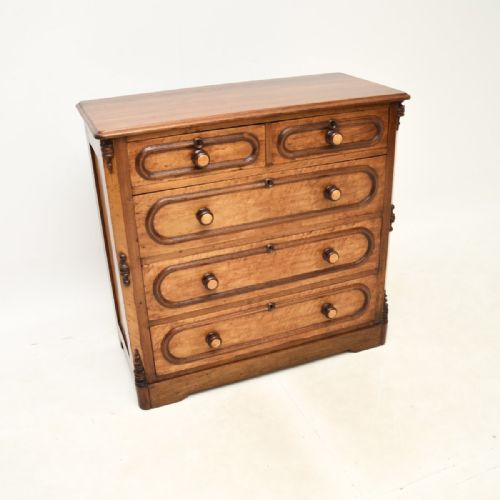
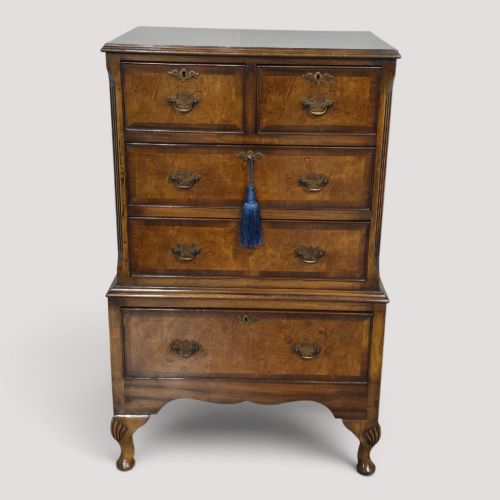
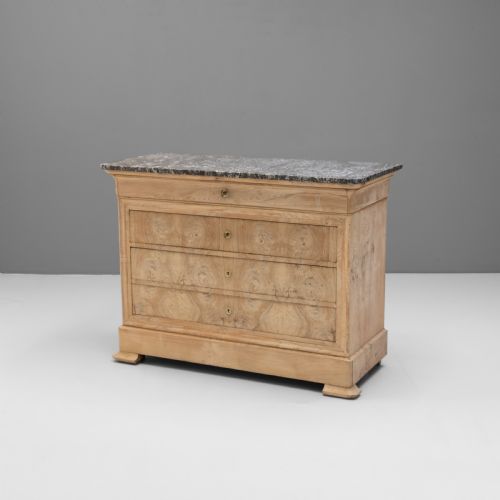
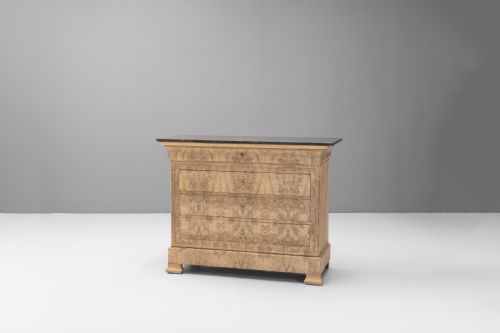
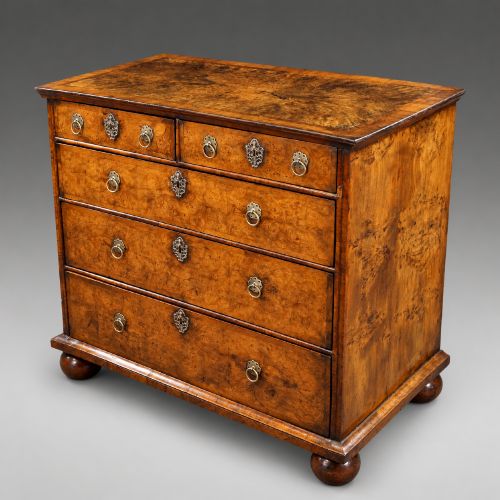
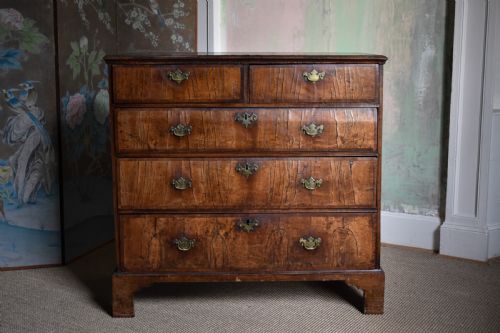
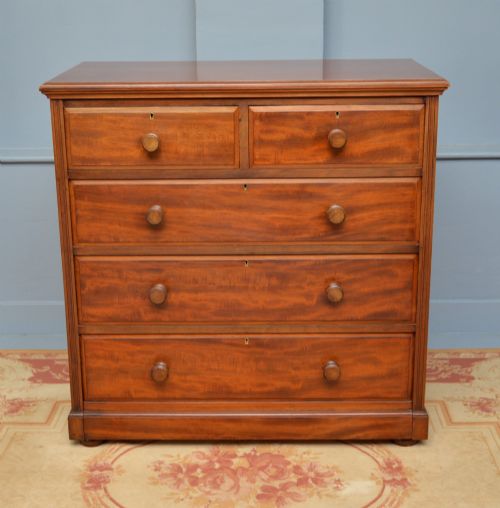
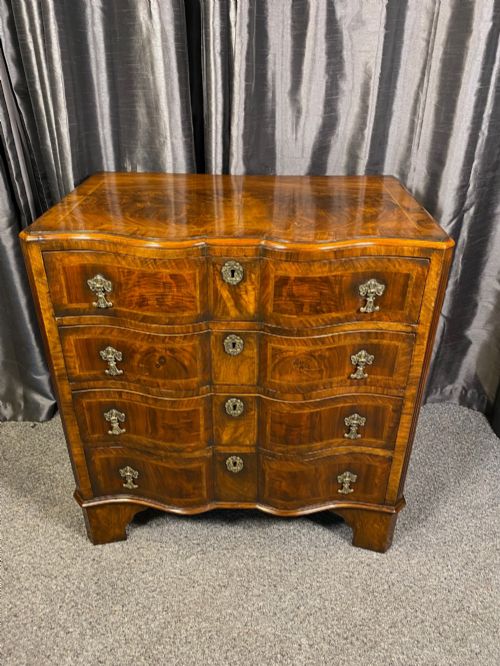
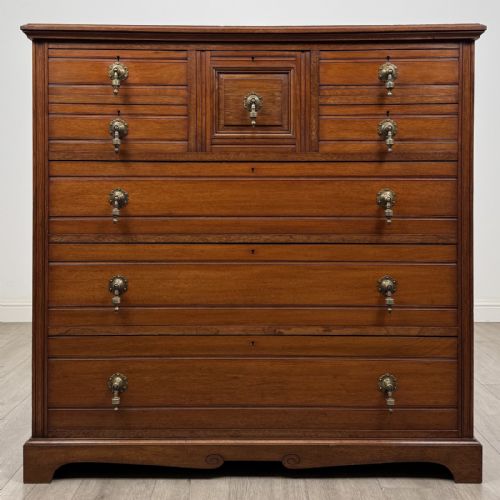
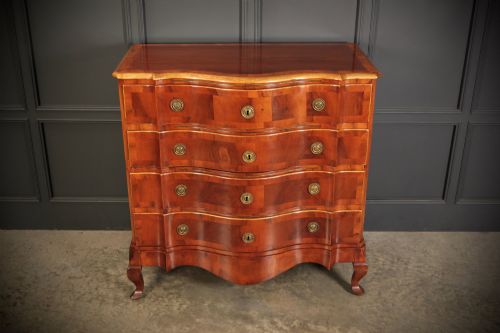
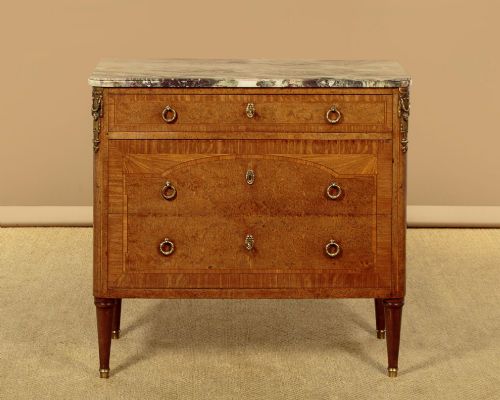
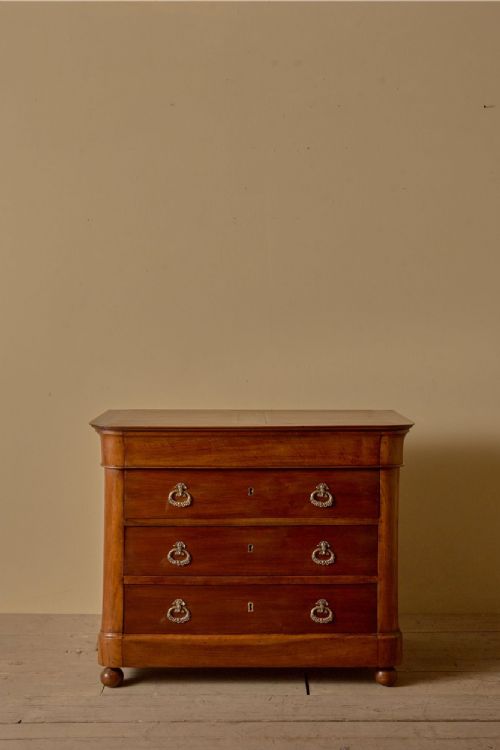
Walnut Bedroom Commode
A walnut bedroom commode brings rich timber grain and classic proportions to a sleeping space, offering deep drawer storage with enduring character.
Walnut Bedroom Commode
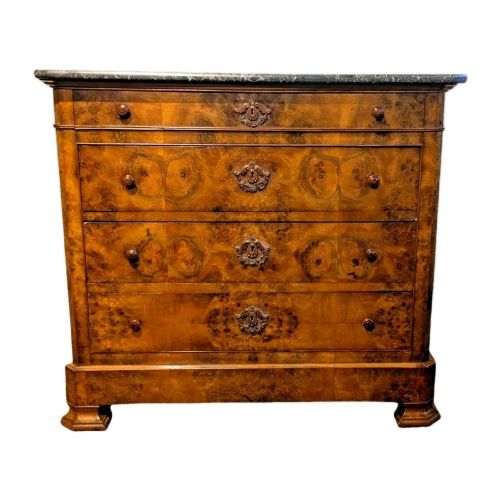
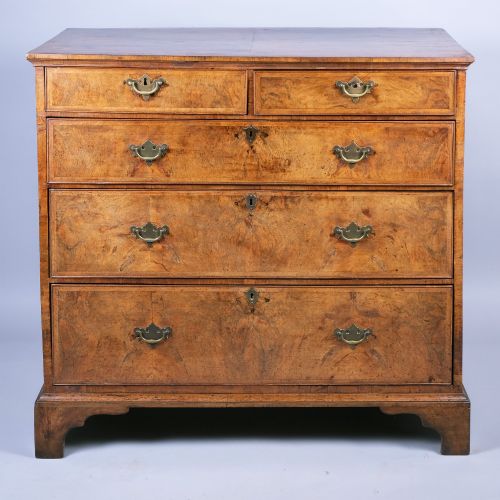
Origins range across English, French, and Swedish workshops, displaying regional preferences for bow-fronted profiles, marble tops, or bachelors' folding desks. Whether styled in the manner of Queen Anne, George I, or Louis Philippe, these examples serve as the focal point of a traditional or eclectic interior.
How they were made
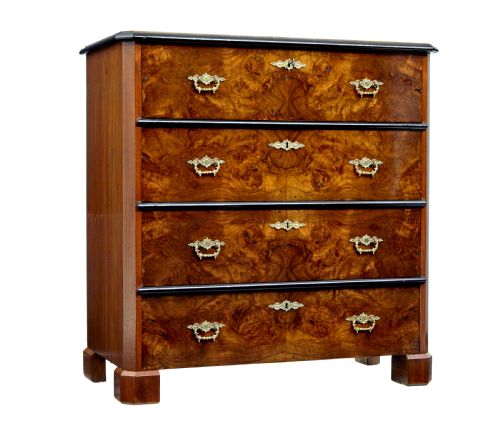
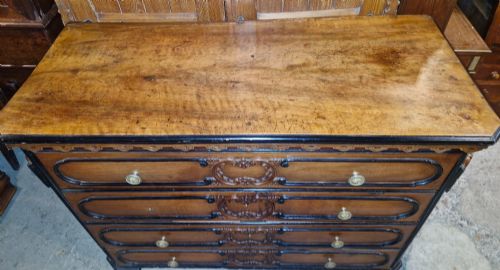
Cabinetmakers utilised primary structural timbers such as oak alongside choice walnut veneers to create decorative surface patterns, often employing cross-banding to frame drawer fronts. Figure and grain direction received careful attention during the selection of burr timber, ensuring symmetrical movement across the face of the commode.
Construction methods involved traditional joinery, complemented by cast brass handles, escutcheons, and occasionally ormolu mounts on continental pieces. Marble tops appeared on specific French-influenced commodes, providing a durable and cool surface above the timber drawers.
Walnut Bedroom Commode Retail Price Guide 2026
Typical asking prices for walnut bedroom commode among the pieces listed under this phrase on Sellingantiques today, from the lower quarter to the upper quarter. They describe what is for sale here now, not the wider market.
Current listings feature pieces spanning the 17th, 18th, 19th, and 20th centuries, utilising materials such as oak, marble, and brass alongside walnut veneer.
What varies in quality
The degree of sophistication in the timber selection separates everyday examples from the finest items, particularly in the richness of the burr figuring and the precision of the cross-banding. Hand-cut dovetails and the retention of original brass hardware indicate superior workshop standards during the construction process.
Proportion and silhouette dictate overall elegance, where gentle serpentine curves or crisp architectural moulding reflect the skill of the original maker. The integrity of the veneer surface and the depth of the finish over the walnut grain determine the visual impact of the commode.
The Walnut Bedroom Commode Glossary
- Burr walnut
- A specialised timber cut from the wart-like growths on walnut trees, yielding highly ornamental swirling grain patterns. Cabinetmakers prized this material for veneering primary display surfaces.
- Cross-banding
- A decorative border technique where narrow strips of veneer are laid perpendicular to the grain of the main panel. This method frames the drawer fronts of finer commodes.
- Serpentine
- A curved shape characterised by a convex centre flanked by concave ends, creating a flowing front profile. This silhouette appears frequently on eighteenth and twentieth-century commodes.
- Bachelors chest
- A compact drawer unit featuring a folding top surface intended for writing or dressing. These pieces combine the function of a small commode with a compact desk.
- Marquetry
- The art of applying pieces of veneer to a structure to form decorative patterns and pictorial designs. French provincial and revival commodes frequently display this skill.
Walnut Bedroom Commode: Frequently Asked Questions
How do I date an old walnut commode?
Examine the construction methods of the drawers, including the cut of the dovetails and the timber used for the secondary linings such as oak. Hardware fixings and the style of the feet also provide reliable clues to the period.
Changes in furniture fashion through the Georgian, Victorian, and later revival eras left distinct stylistic markers on the veneer patterns and overall silhouette of each piece.
Are these commodes suitable for everyday bedroom use?
These pieces function well as practical bedside storage or primary drawer units for clothing in a modern home. The deep drawers and sturdy timber construction accommodate daily requirements.
Care should be taken to avoid placing excessive moisture directly on the wood surface, utilising coasters or protective mats where necessary.
What is the difference between a chest of drawers and a commode?
While both terms describe low storage furniture with multiple drawers, commode often denotes continental European pieces or serpentine fronts with marble tops. English examples from the eighteenth century onward are more commonly designated as chests of drawers.
Both categories fulfill similar storage functions within a bedroom setting.
How should I care for antique walnut veneer?
Maintain the finish by dusting with a soft, dry cloth and applying traditional beeswax sparingly to nourish the timber. Keep the furniture away from direct heat sources and strong sunlight to prevent veneer lifting.
Stable indoor humidity levels protect both the solid walnut framework and the delicate decorative surface layers from splitting.