
Wall Mounted Hat Pegs
Wall mounted hat pegs are practical hallway fixings designed to hold outerwear, and you are most likely to find solid wood and brass examples here.
Wall Mounted Hat Pegs
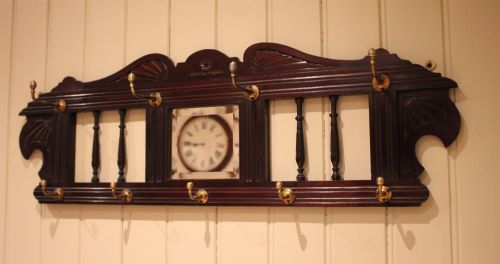
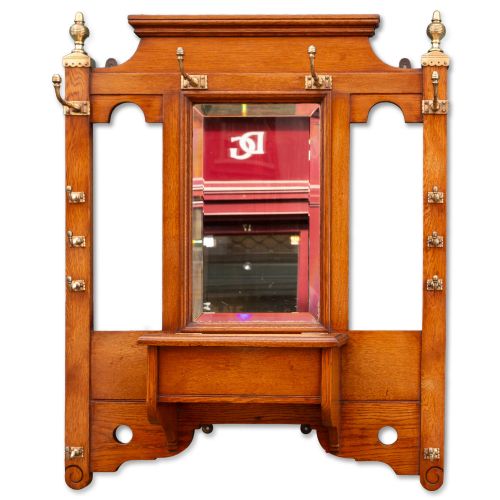
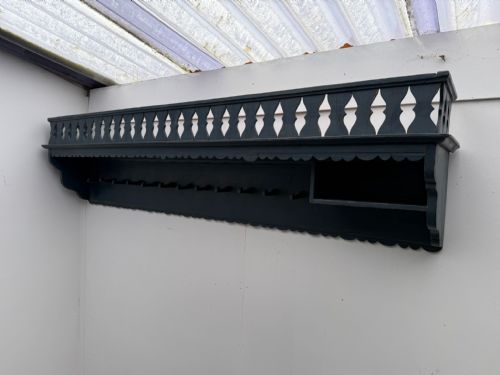
Wall mounted hat pegs serve practical storage needs in hallways, cloakrooms and reception spaces, keeping garments organised against interior walls. These pieces range from simple rows of hooks on timber backboards to elaborate stands incorporating mirrors, shelves and barometer attachments.
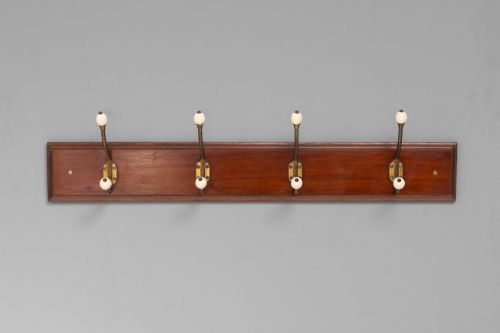
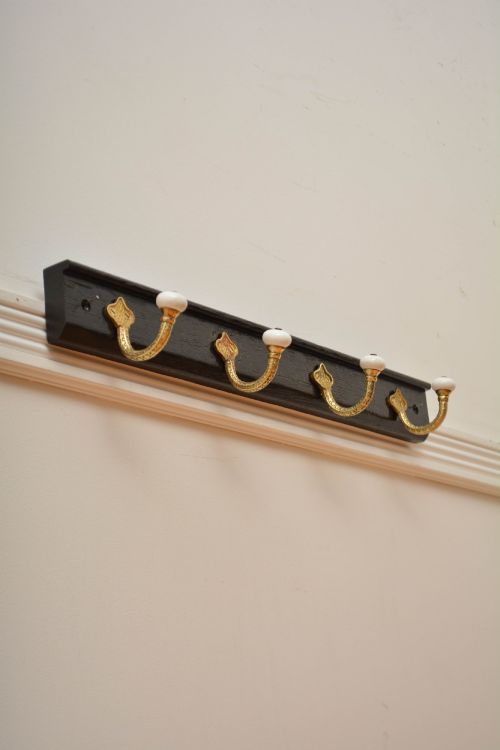
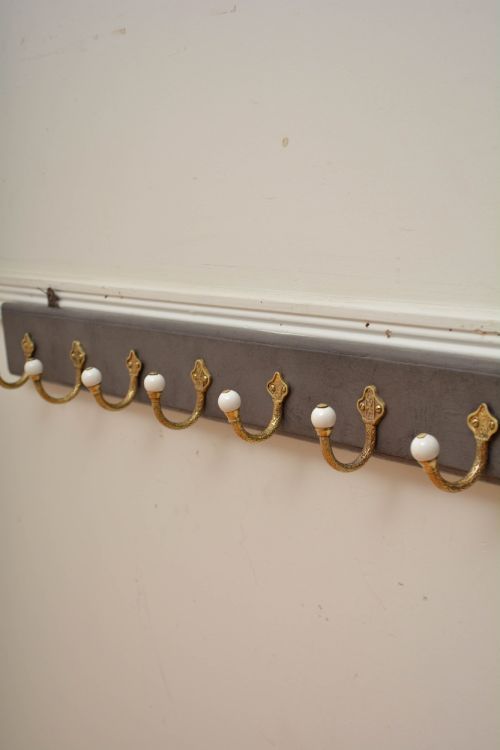
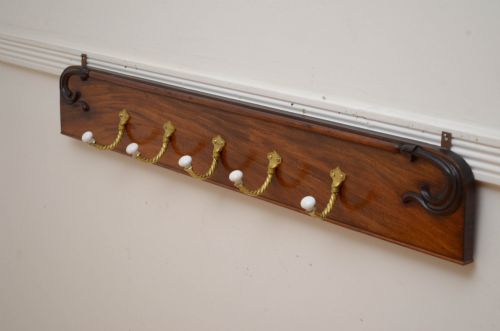
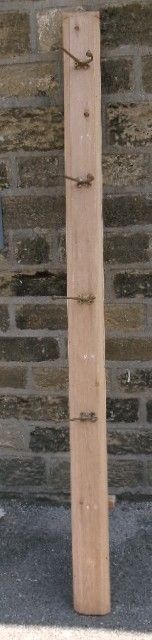
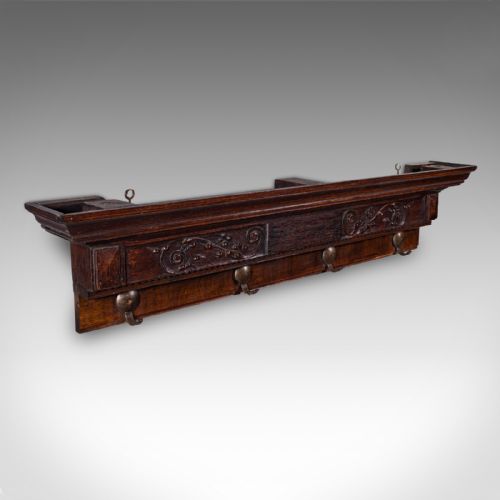
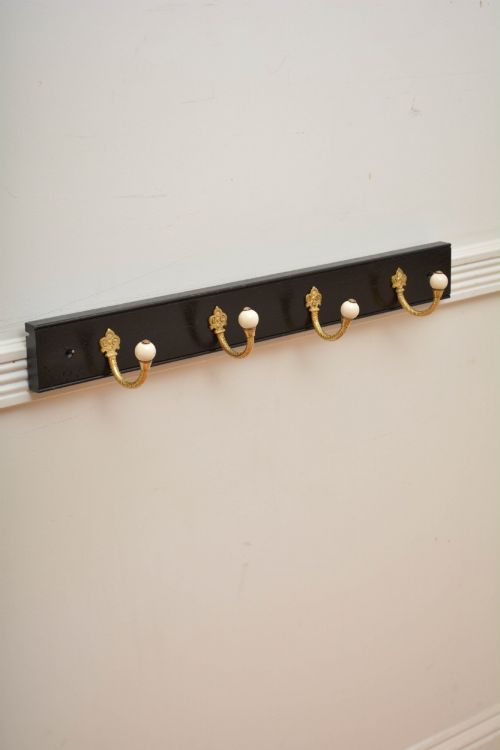
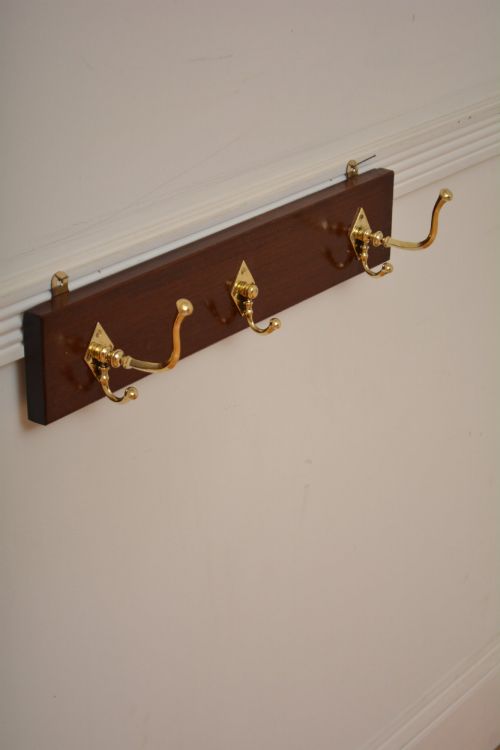
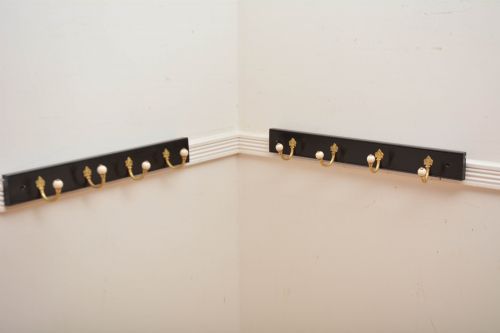
The version you are most likely to meet on this page is a Victorian or Edwardian timber backboard fitted with brass, ceramic or cast metal hooks. Woods such as mahogany, oak, walnut and pine form the structural backings, often shaped or ebonised to suit the period taste.
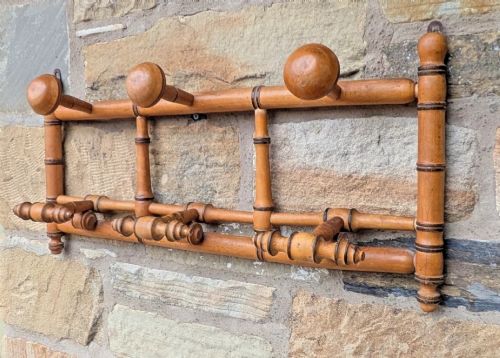
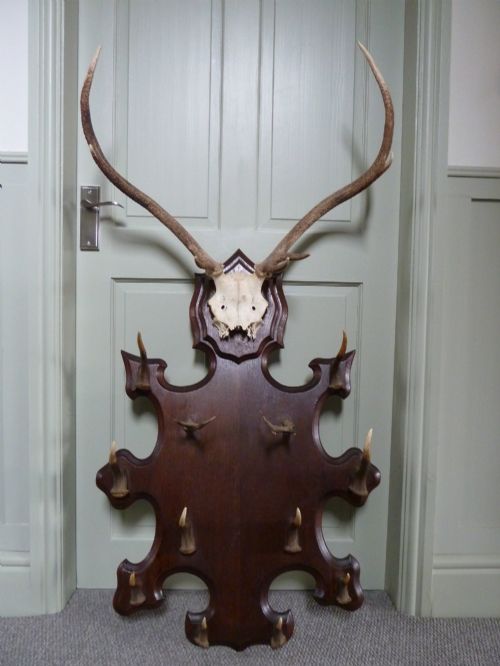
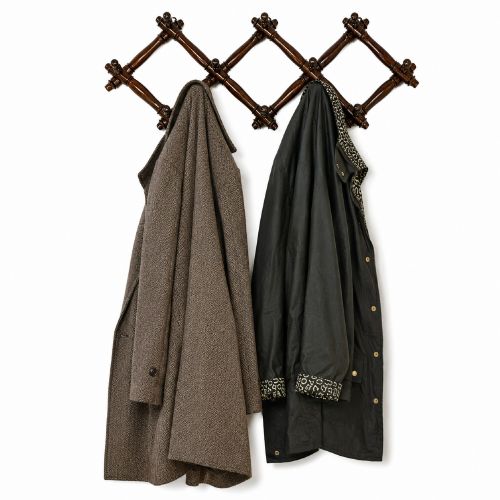
Beyond standard domestic rows, variations include French faux bamboo designs, wrought iron Art Deco configurations and rustic stags horn or Black Forest carved animal heads. Each style reflects the interior requirements of its era, from country house utility to decorative reception hall display.
Materials and construction
Timber backboards provide the structural foundation, utilising hardwoods like mahogany, oak and walnut alongside softer pines and beech, sometimes finished with ebonising or paint. Workshops joined or turned these woods to create mounting plates and extending frames designed to bear heavy garments.
Metal components introduce durability through cast brass, bronze, iron and wrought elements that form the individual hooks and mounting plates. Ceramic inserts frequently tip the hook ends or provide decorative centres, secured directly into the timber or metal framework.
Specialised construction techniques appear in bentwood examples, where heat-bent beech forms curved rails and hooks, and in carved taxidermy mounts featuring horn or wooden animal heads. These diverse methods combine rigid wall-fixing systems with tactile materials built for daily domestic use.
Keep your hats safe under the watchful glass eye of a Black Forest carved chamois goat's head.
Quality differences
The standard of materials separates simpler utility pieces from finer decorative examples, seen in the weight and casting quality of the brass or bronze hooks. Solid hardwoods like mahogany and figured oak with hand-carved details indicate higher workshop ambition than plain pine backboards.
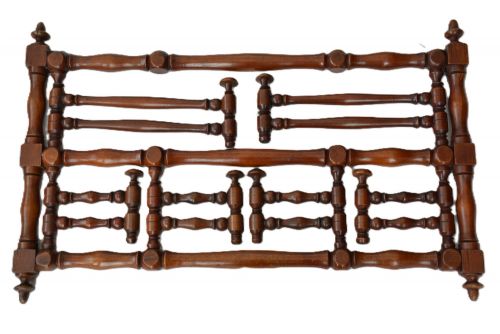
Integration of additional domestic functions elevates certain pieces, such as the inclusion of bevelled mirrors, small shelves or integrated barometers. The complexity of the hardware, from extending folding mechanisms to finely turned rope twists, demonstrates superior craftsmanship.
The Wall Mounted Hat Pegs Glossary
- Backboard
- The horizontal timber plank or panel to which individual hooks are attached for wall mounting. It distributes the weight of hanging garments across multiple fixing points.
- Ebonised
- Timber treated with a dark finish to imitate expensive ebony wood. This treatment was particularly popular during the Victorian period for accentuating brass and ceramic fittings.
- Bentwood
- Wood heated and bent into curved shapes, most commonly associated with beech furniture and coat racks. The technique creates sturdy, lightweight frames without traditional joinery.
- Faux bamboo
- Wood turned and carved to resemble natural bamboo stalks. This decorative style appeared frequently in French interior fittings.
- Aesthetic movement
- A late nineteenth century design style emphasising visual beauty over narrative function. Pieces from this movement often combine ebonised timber with contrasting brass hardware.
Wall Mounted Hat Pegs: Frequently Asked Questions
How are wall mounted hat pegs fixed?
Most pieces feature pre-drilled screw holes through the wooden backboard or mounting plates for direct wall attachment. Fixings should align with wall studs or utilise appropriate wall anchors to support the weight of heavy coats and hats.
Ensuring secure installation prevents the board from pulling away under daily domestic use, particularly on longer rows with multiple hooks.
What is the difference between Victorian and Edwardian racks?
Victorian examples often utilise heavier timbers, ebonised finishes and decorative cast brass paired with ceramic inserts. They frequently exhibit darker woods like mahogany and walnut.
Edwardian versions tend toward lighter golden oaks and simpler functional arrangements suited to reception halls and cloakrooms.
Can these hold heavy winter coats?
Sturdier variants built from solid mahogany, oak or iron with robust backplates easily support heavy winter outerwear. The strength depends primarily on the solidity of the timber backboard and the quality of the wall fixings.
Lighter bentwood or delicate decorative French brackets are better suited to lighter garments and hats.
What materials are the hooks made from?
Hooks commonly feature cast brass, bronze, iron or wrought metal, frequently combined with porcelain or ceramic ends. Some specialised styles incorporate natural animal horn or carved wood.
These materials were chosen for both functional durability and decorative contrast against the wooden backboards.