




Vintage Writing Tools
Vintage writing tools bring desk organisation and classical style to a room, ranging from leather-topped partner desks to fitted pen boxes.
Vintage Writing Tools
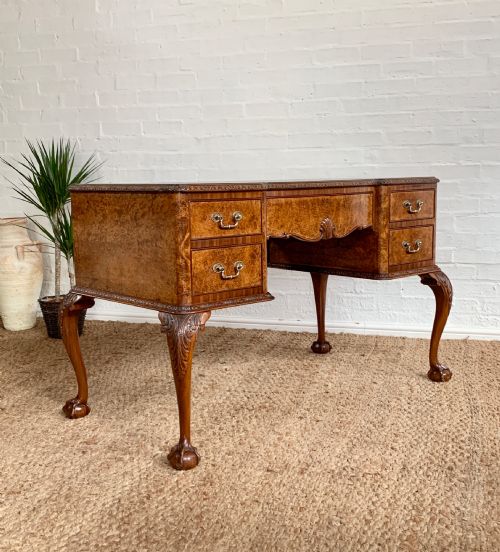
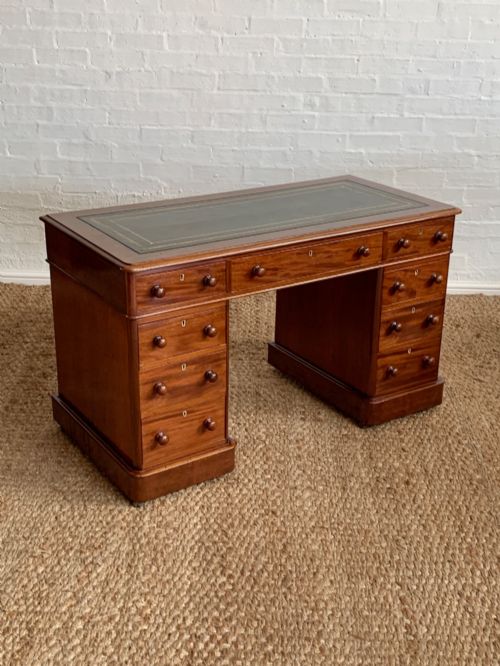
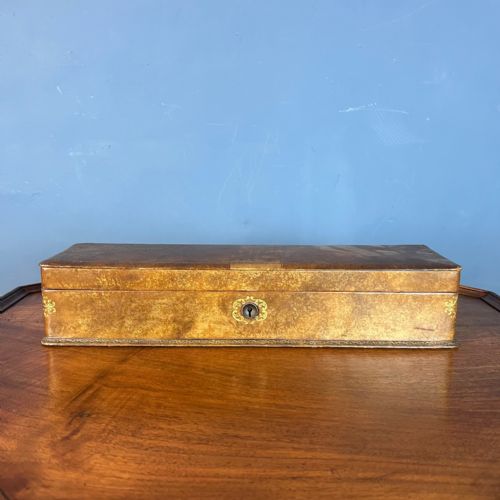
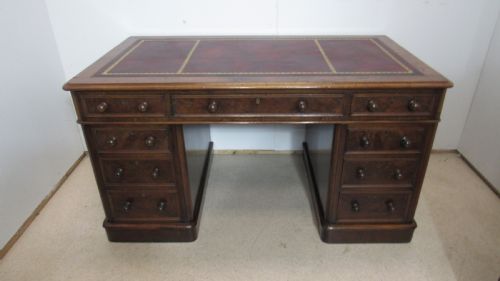
Vintage writing tools encompass a broad range of desk accessories and furniture designed for correspondence and study. Buyers searching for vintage writing tools encounter large pedestal desks, smaller writing tables, and specialised items such as pen boxes, rulers, sealing wax holders, and technical drawing sets.
The pieces span several periods, most notably the Victorian and Edwardian eras, alongside early twentieth-century examples up to the 1930s. Forms vary from massive freestanding partner desks to compact ladies' tables and decorative calligraphy ink blocks.
Stylistic influences include traditional Georgian and Queen Anne revivals, robust Arts and Crafts designs, and Japanese Meiji period calligraphy supplies. Walnut, mahogany, and oak dominate the furniture, whilst smaller accessories incorporate silver, brass, leather, and cardboard.
How they were made
Carpenters and cabinetmakers utilised dense timbers such as mahogany, walnut, burr walnut, and oak to construct desks and boxes. Many desk surfaces feature inset leather panels finished with decorative gold tooling.
Smaller implements and accessories combine polished brass, solid silver, and carved wood. Specialised items like calligraphy ink blocks and technical drawing sets demonstrate precise manufacturing in specialised workshops.
Vintage Writing Tools Retail Price Guide 2026
Typical asking prices for vintage writing tools among the pieces listed under this phrase on Sellingantiques today, from the lower quarter to the upper quarter. They describe what is for sale here now, not the wider market.
Object types range from large pedestal desks and partner desks to technical drawing sets and sealing wax holders.
What varies in quality
The grade of timber and the complexity of the cabinetry distinguish standard furniture from exceptional examples. Figured veneers, burr walnut selections, and substantial mahogany framing elevate a piece significantly.
Execution of detail matters greatly, from the crispness of brass hardware and silver hallmarks to the precision of the gold tooling on leather writing surfaces. Complete sets retain higher integrity than partial or assembled groupings.
Maple & Co
The Vintage Writing Tools Glossary
- Pedestal desk
- A heavy freestanding desk supported by two banks of drawers beneath the work surface. These large pieces often feature tooled leather inserts.
- Partner desk
- A large double-sided pedestal desk designed for two people to work opposite each other. They incorporate drawers and cupboards on both faces.
- Kneehole desk
- A smaller desk featuring a central recess for the user's legs, flanked by single or double columns of drawers. Edwardian and later examples frequently utilise oak or walnut.
- Sealing wax holder
- A desk accessory designed to hold sticks of sealing wax alongside related tools. These items frequently appear in silver during the Edwardian period.
- Calligraphy ink blocks
- Solid pigment blocks used for writing and drawing, often originating from Japanese Meiji period traditions. They are frequently housed in decorative sets.
Vintage Writing Tools: Frequently Asked Questions
What is a pedestal desk?
A pedestal desk is a large freestanding desk supported by two columns of drawers, typically topped with a leather writing surface.
These pieces provide substantial storage and a commanding presence in a study or library.
How do I identify a Victorian desk?
Victorian desks are identified by their heavy timbers, predominantly mahogany and walnut, alongside traditional construction methods and period hardware.
Many feature characteristic details such as tooled leather writing surfaces and panelled pedestals dating between the mid and late nineteenth century.
What are desk accessories used for?
Desk accessories such as blotters, pen boxes, and sealing wax holders were practical tools for correspondence, documentation, and sealing letters before modern envelopes.
Today, they serve both as functional desk items and decorative historical objects for a study.