

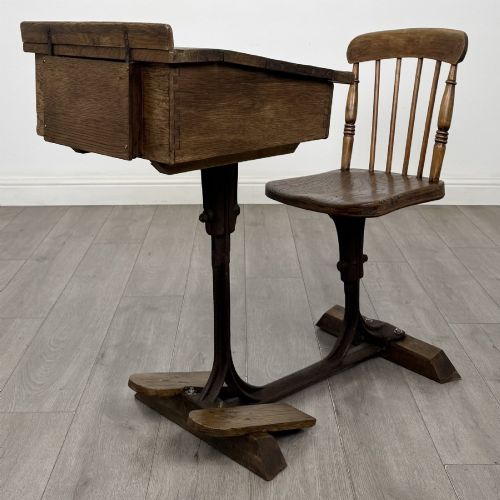


Vintage Writing Desk Chairs
Vintage writing desk chairs bring solid timber frames and supportive seats to a study, offering genuine period character for daily work.
Vintage Writing Desk Chairs
Vintage writing desk chairs encompass sturdy seating designed for study and library use across multiple centuries, including Georgian, Victorian, and Edwardian eras. Buyers searching for vintage writing desk chairs will frequently encounter mahogany and oak corner chairs, library armchairs, and matching desk sets.
The selections recorded on this page range from mid-eighteenth-century George II mahogany corner armchairs up to 1900 Edwardian inlaid designs. Armchairs, corner chairs, and caned bergères dominate the forms available for working at traditional desks.
Origins stretch from the sophisticated mahogany workshops of the Georgian period through the robust oak interpretations of the nineteenth century. These seats served scholars, clerks, and landowners who required stable posture during long hours of correspondence.
How they were made
Cabinetmakers constructed these frames primarily from dense timber such as mahogany and oak, often enriching surfaces with satinwood inlay and marquetry. Joinery relied on traditional mortise and tenon methods to ensure the structural strength needed for heavy daily use.
Upholstery techniques combined sturdy internal webbing or canvas with supple leather, oxblood hides, or woven cane panels. Brass castors and decorative brass tacks frequently finished the lower framework and secured the edges of leather pads.
Vintage Writing Desk Chairs Retail Price Guide 2026
Typical asking prices for vintage writing desk chairs among the pieces listed under this phrase on Sellingantiques today, from the lower quarter to the upper quarter. They describe what is for sale here now, not the wider market.
Some nineteenth-century readers apparently needed a reclining leather armchair complete with a built-in writing slope just to get through their morning post.
What varies in quality
The distinction between standard examples and superior pieces lies in the crispness of timber carving and the subtlety of wood figuring. Finer specimens display meticulous hand-cut inlay, harmonious proportions, and untouched timber patination accumulated over centuries.
Structural integrity also separates grades, with top-tier chairs retaining rigid joints and original cane or leather work rather than modern replacements. The complexity of the frame, such as curved corner designs or reclining mechanisms, indicates the original maker's ambition and skill.
The Vintage Writing Desk Chairs Glossary
- Corner chair
- A seat designed to fit into the corner of a room, featuring a diagonal front leg and a continuous curved backrest supported by turned spindles.
- Bergère
- An enclosed upholstered armchair with cane sides and back panels, popular in Regency and later library settings.
- Marquetry
- Decorative veneer work created by fitting together small pieces of different coloured woods to form geometric or floral patterns.
- Satinwood inlay
- Contrasting blonde timber inserted into recesses within darker woods like mahogany to create delicate borders and motifs.
- William IV
- A transitional British design period spanning the 1830s, known for heavy, robust proportions and classical revival ornamentation.
Vintage Writing Desk Chairs: Frequently Asked Questions
What defines a vintage writing desk chair?
These pieces are historic seating options built from timber such as mahogany and oak, specifically shaped for study and library environments. They provide supportive backrests and sturdy frames suitable for pairing with antique desks.
Examples span from Georgian corner chairs to Edwardian inlaid models, reflecting changing domestic tastes across three centuries.
How were these chairs used originally?
Owners placed them in studies, libraries, and home offices to support reading, letter writing, and estate management. Their robust construction allowed users to sit comfortably for extended periods during administrative tasks.
Many designs featured pivoting or corner configurations that aided movement within confined study spaces.
How do I live with a vintage desk chair?
Integrate them into modern home offices by pairing the historic timber tones with contemporary writing tables for a balanced workspace. Regular conditioning of leather seats and gentle dusting of timber keeps the materials stable in heated rooms.
Ensure floor surfaces are protected beneath castors to prevent indentation on domestic flooring.
How do I tell different periods apart?
Georgian and Regency pieces often show lighter mahogany framing with refined carving, whereas Victorian and Edwardian examples lean towards heavier oak structures and distinct inlay. Examining the timber grain and joinery style reveals the approximate decade of manufacture.
Stylistic cues like curved corner frames point toward earlier eighteenth-century origins.