



Vintage Woven Tub Armchair
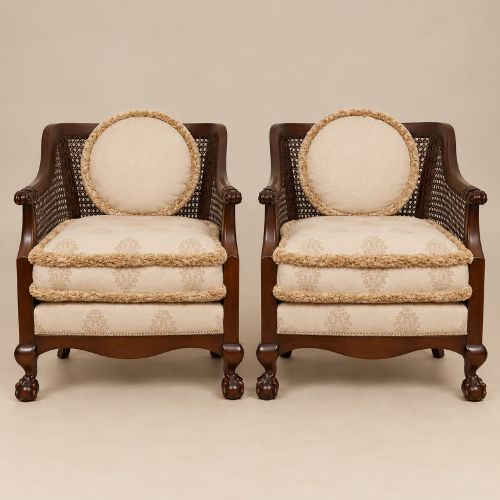
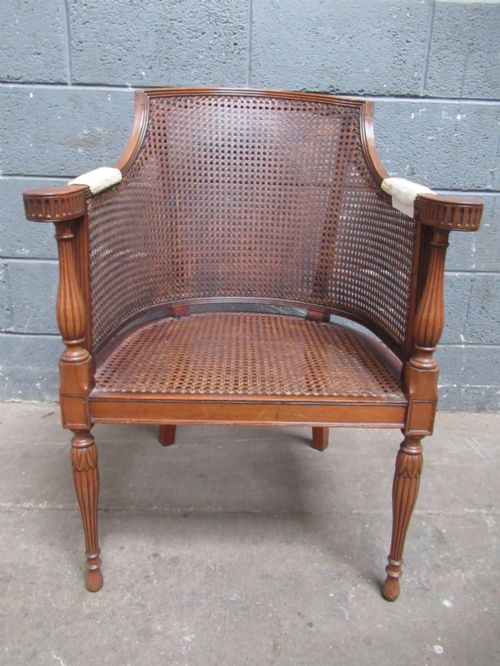
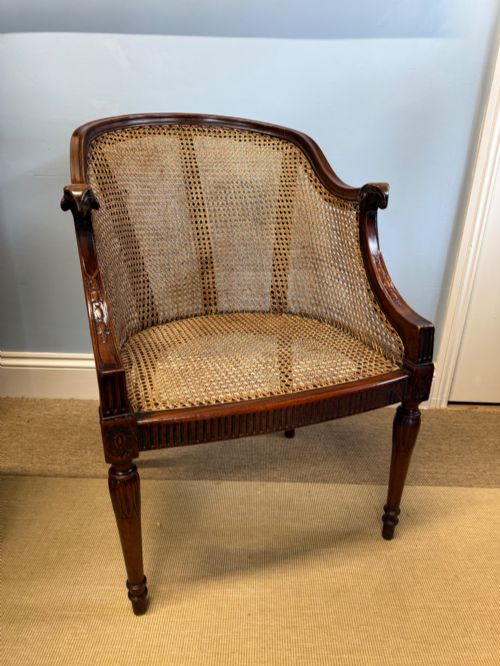
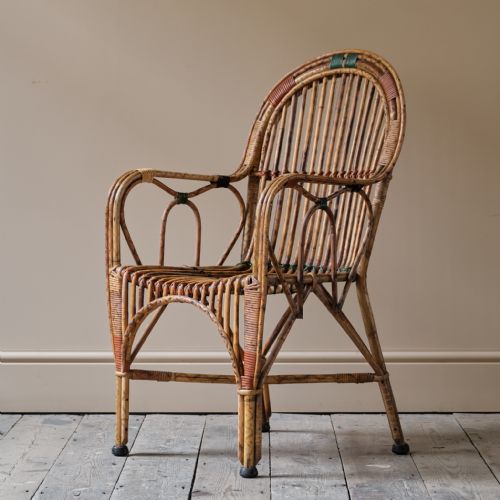
These vintage woven tub armchair examples bring together organic textures and enclosing curves, offering tactile comfort that anchors any seating arrangement.
Vintage Woven Tub Armchair
A vintage woven tub armchair combines a rounded enclosing back with woven seating elements, creating a distinct curved silhouette suited to both interior and garden spaces. When you search for a vintage woven tub armchair, you encounter pieces spanning from the Edwardian era through the nineteen-forties, taking forms such as Lloyd Loom garden furniture, classic bergères, and Arts and Crafts wicker designs.
The materials recorded in these pieces include cane, rattan, wicker, and kraft paper, framed by timbers like mahogany, oak, and teak, alongside steel wire and painted finishes. Styles range widely across this selection, touching upon Arts and Crafts, Art Deco, Jacobean Revival, Louis XV Revival, and Mid-Century Rustic expressions.
Materials and construction methods
Construction relies heavily on pliable natural materials such as cane, rattan, and wicker, woven tightly across structural frames to form supportive backs and seats. These woven elements are frequently paired with solid timber frameworks including mahogany, oak, teak, and general painted timber.
Specialised techniques distinguish specific makers, such as the patented twisted kraft paper weave utilised by Lloyd Loom or the robust wicker construction championed by Dryad and Co. Frames are shaped into curved tub profiles, sometimes incorporating steel wire for added rigidity or employing traditional joinery alongside woven surfaces.
Vintage Woven Tub Armchair Retail Price Guide 2026
Typical asking prices for vintage woven tub armchair among the pieces listed under this phrase on Sellingantiques today, from the lower quarter to the upper quarter. They describe what is for sale here now, not the wider market.
Some chairs incorporate steel wire hidden inside twisted paper, proving that industrial innovation sometimes hides inside a relaxed garden seat.
Assessing quality in woven seating
Quality rests upon the tightness and structural integrity of the weave, whether dealing with fine cane, robust rattan, or twisted kraft paper. Finer examples maintain uniform tension across the curved tub back and seat without slackness or snapping in the strands.
The sophistication of the underlying frame also dictates the tier of the piece, moving from standard commercial frames to substantial mahogany, oak, or teak structures with carved details. Furthermore, attribution to notable workshops like Dryad or Lloyd Loom elevates the standing of an armchair through documented craftsmanship and material pedigree.
Dryad & Co·Dryad of Leicester
The Vintage Woven Tub Armchair Glossary
- Tub armchair
- An upholstered or woven chair featuring a low, rounded back that continues directly into arms. This enclosing shape provides comfortable side support.
- Bergère
- A classically styled armchair with an enclosed upholstered or caned back and sides, usually featuring an exposed wooden frame. It often includes a loose squab cushion for the seat.
- Lloyd Loom
- A process invented by Marshall Burns Lloyd involving twisted kraft paper spun around a steel wire core, then woven into furniture. This material proved durable and smooth to the touch.
- Rattan
- A climbing palm native to tropical regions, utilised whole for structural frames or split for weaving. Its flexibility makes it ideal for curved chair backs.
- Arts and Crafts
- A design movement valuing traditional craftsmanship, simple forms, and natural materials. Furniture from this ethos prioritises visible construction and honest use of wicker and timber.
Vintage Woven Tub Armchair: Frequently Asked Questions
What is a vintage woven tub armchair?
A vintage woven tub armchair is an occasional or garden seat featuring a rounded, enclosing backrest paired with woven materials like cane, rattan, wicker, or kraft paper. These pieces date primarily from the early twentieth century, spanning Edwardian, Art Deco, and nineteen-thirties periods.
They combine organic textures with supportive curved frames, making them versatile for living rooms, conservatories, and garden rooms. The style bridges formal revival designs and rustic craftsmanship.
How do I care for cane and rattan?
Natural woven materials require moderate humidity to prevent the fibres from becoming brittle and snapping under pressure. Regular dusting with a soft brush keeps the weave clean and free from trapped debris.
Occasional light wiping with a damp cloth can help maintain flexibility in cane and rattan. Avoiding direct heat sources ensures the natural fibres retain their strength over time.
How are Lloyd Loom chairs different?
Lloyd Loom furniture uses a patented technique where cellulose kraft paper is twisted around a steel wire core before being woven. This innovation creates a smooth, snag-free surface that resists splintering unlike traditional wicker.
Introduced in the early twentieth century, these chairs are often finished with durable painted coatings. They offer a distinct tactile experience compared to natural rattan or cane.
Can these armchairs be used outdoors?
Certain variations, such as garden room or veranda furniture from the nineteen-thirties, were designed for semi-sheltered outdoor settings. However, most vintage woven pieces are best suited for indoor use or covered conservatories.
Exposure to rain and extreme temperature fluctuations can damage the natural timber frames and woven strands. Checking the specific material build helps determine the ideal placement in the home.