

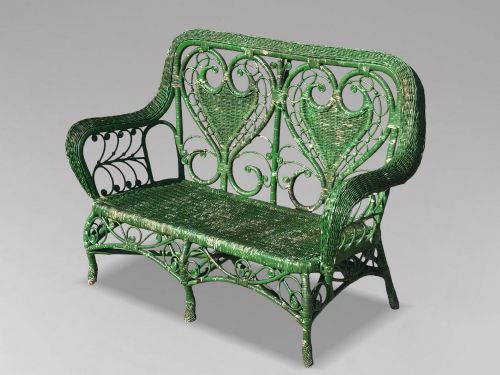

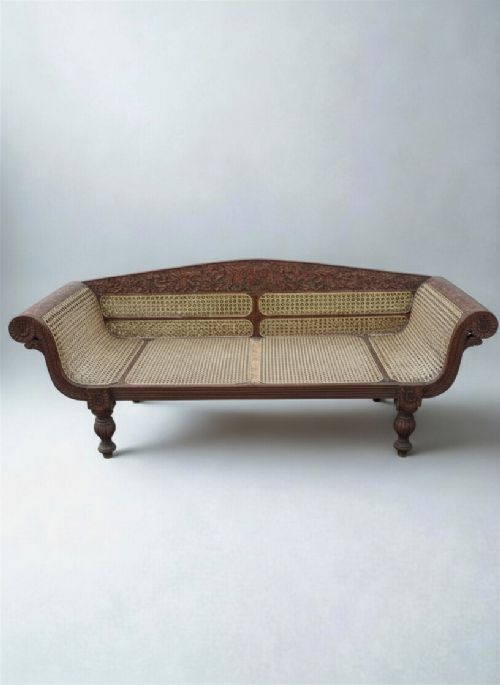


Vintage Woven Bench
These vintage woven bench examples bring tactile warmth to an interior through natural cane and rattan surfaces.
Vintage Woven Bench
A vintage woven bench combines structural timber frames with flexible plant-fibre seating surfaces, serving multiple domestic roles. These pieces appear in forms ranging from long footstools to daybeds and settees.
The selections span the nineteenth century through to the nineteen-twenties, incorporating diverse regional interpretations. Buyers most frequently encounter variations utilising cane and rattan paired with hardwoods.
Stylistic influences stretch from Regency and Louis XVI revival designs to Anglo-Indian and colonial campaign aesthetics. Each format prioritises lightweight permeability over heavy upholstery, maintaining an airy profile within a room.
How they were made
Construction relies upon durable timber frames fashioned from teak, mahogany, oak, walnut, or beech. Artisans shaped these woods through traditional joinery to support tensioned seating elements.
The distinctive woven surfaces utilise cane and rattan strips threaded by hand through frame apertures. This technique creates a resilient, breathable mesh that distributes weight evenly across the seat.
Vintage Woven Bench Retail Price Guide 2026
Typical asking prices for vintage woven bench among the pieces listed under this phrase on Sellingantiques today, from the lower quarter to the upper quarter. They describe what is for sale here now, not the wider market.
Some nineteenth-century makers cleverly doubled these benches as magazine tables by lowering the woven platform.
What varies in quality
The refinement of the timber carving and the tightness of the weave dictate the calibre of a piece. Hand-carved details in styles such as Louis XVI revival show greater articulation than simpler vernacular frameworks.
The integrity of the plant-fibre webbing determines longevity, where even tension and intact strands signify superior execution. Finer examples balance robust hardwood joinery with delicate, precise cane work.
The Vintage Woven Bench Glossary
- Cane
- Split rattan peel utilised for woven seating surfaces and decorative panels. It offers flexibility and strength.
- Canapé
- A French term for an upholstered or caned settee or sofa. These pieces often feature decorative wooden frames.
- Daybed
- A long seat designed for reclining, functioning as both a chair and a bed. They frequently incorporate woven cane platforms.
- Rattan
- A climbing palm used extensively for basketry and woven furniture. The material provides durable structural flexibility.
- Regency Style
- A design period characterised by classical motifs and elegant proportions. Pieces from this tradition often display refined structural lines.
Vintage Woven Bench: Frequently Asked Questions
Where should I place a vintage woven bench?
These pieces suit living rooms, hallways, and bedrooms where an airy profile is advantageous. Their breathable surfaces work well at the foot of a bed or beneath a window.
Because the woven panels provide visual lightness, they prevent smaller spaces from feeling crowded. They also complement both traditional and contemporary interiors through their natural texture.
How do I care for cane seating?
Maintain the material by dusting regularly with a soft brush and keeping it away from direct heat sources. Cane requires slight moisture to remain flexible and prevent snapping.
Periodically wiping the underside with a damp cloth helps retain the elasticity of the plant fibres. Avoid placing heavy, concentrated loads on delicate woven surfaces.
What is the difference between a daybed and a settee?
A daybed is built primarily for reclining, featuring a lengthened proportion intended for resting the whole body. Settees are upright seats designed for multiple people to sit together.
Both forms frequently employ woven cane panels for their backs and seats to maintain lightness. The framing style usually distinguishes the intended posture of the piece.
How can I identify nineteenth-century pieces?
Nineteenth-century examples typically display hand-turned timber components and traditional joinery methods unique to that era. The patination of woods like teak, mahogany, and oak develops a deep lustre over time.
Stylistic markers such as Anglo-Indian turnings or Louis XVI revival carvings also point towards nineteenth-century production. Inspecting the underside often reveals older construction techniques.