

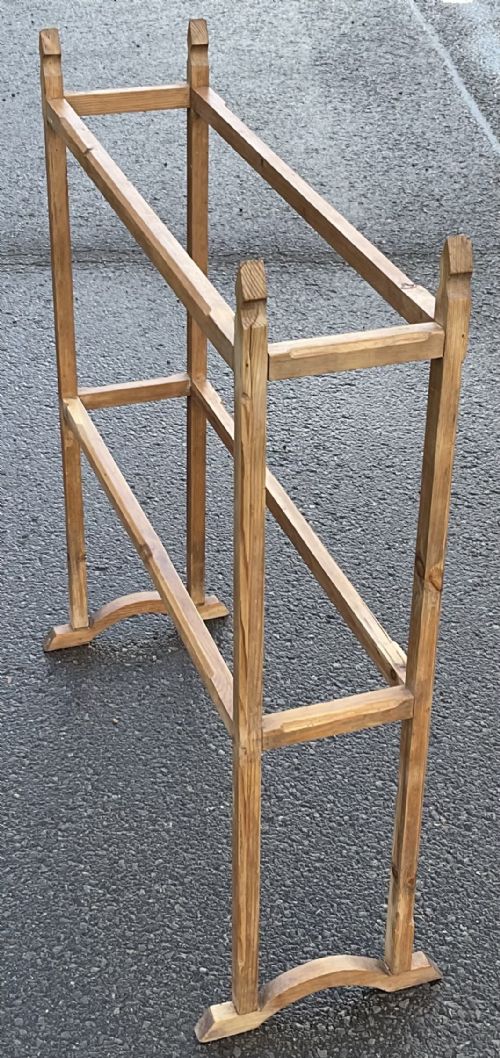


Vintage Wooden Quilt Rack
These vintage wooden quilt rack pieces are practical laundry and textile stands that keep blankets neat and accessible.
Vintage Wooden Quilt Rack
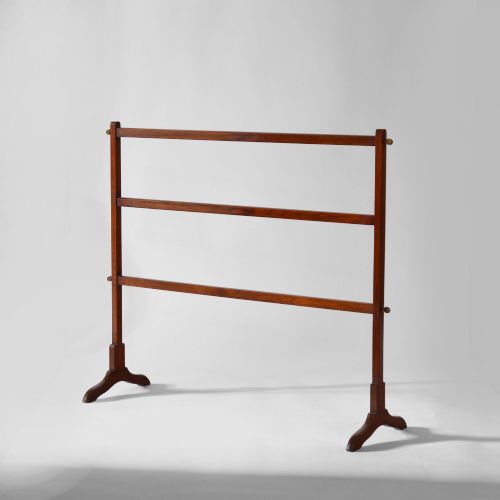
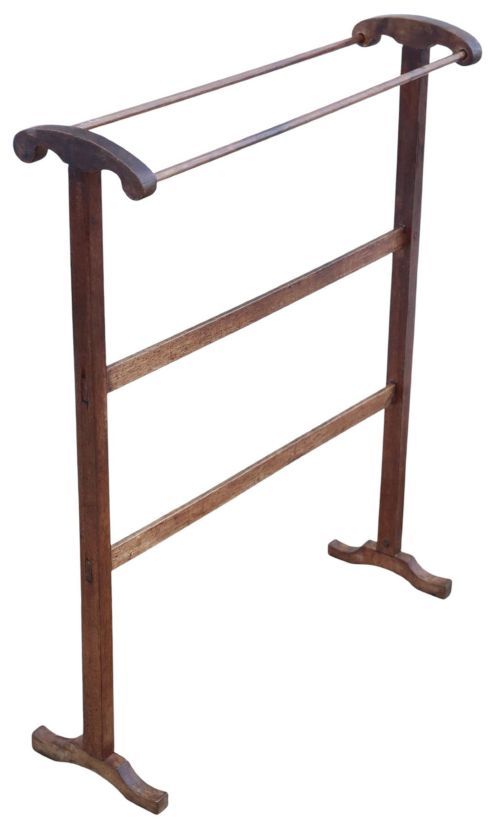
A vintage wooden quilt rack is primarily found here under the guise of functional towel rail stands and floor-standing rails. These items originate predominantly from the Edwardian and Victorian eras, alongside select Regency and nineteenth-century examples.
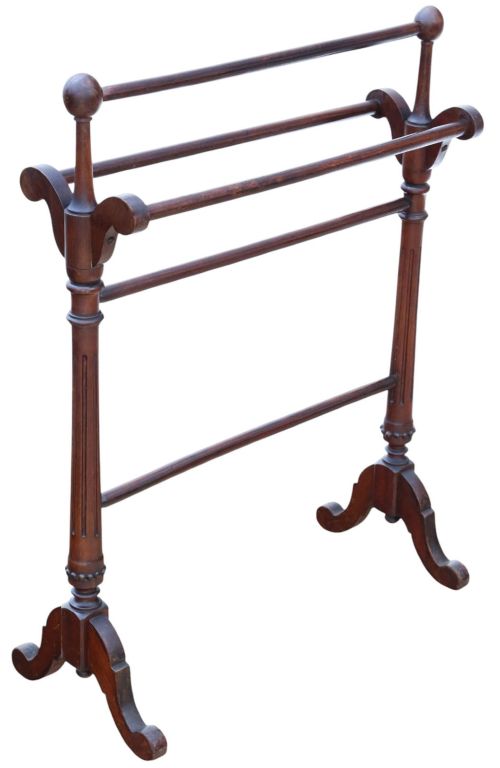
The inventory on this page spans simple pine structures to elaborate mahogany frames with multiple horizontal bars. Buyers encounter freestanding pieces designed to hold textiles securely in bedrooms and dressing rooms.
Most examples rely on traditional timber construction methods typical of British cabinetmaking from the late nineteenth and early twentieth centuries. They serve both a utilitarian laundry purpose and a decorative role for displaying quilts.
How they were made
Carpenters utilised solid timbers such as mahogany, oak, and pine to build the main uprights and horizontal rails. Hardwood frames provide the necessary stability for freestanding textile stands without excessive bulk.
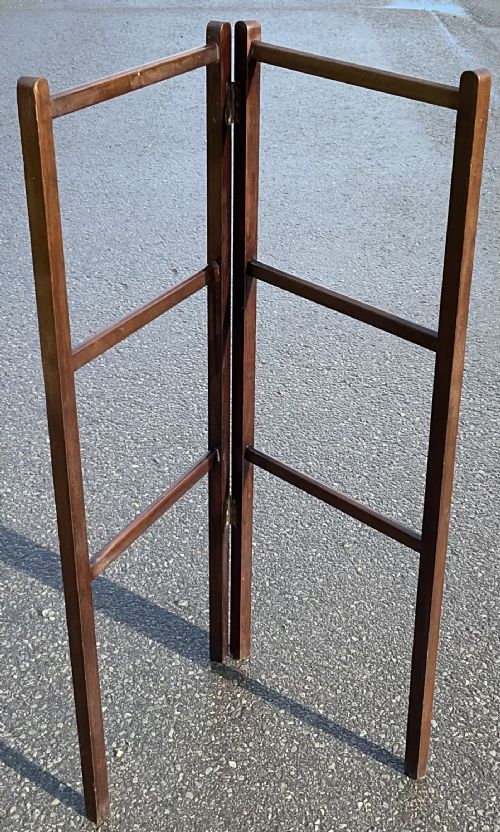
Detailed craftsmanship appears in select Edwardian and Regency pieces through satinwood inlay and boxwood stringing along the uprights. Brass fittings occasionally secure folding mechanisms or joints on multi-bar designs.
Vintage Wooden Quilt Rack Retail Price Guide 2026
Typical asking prices for vintage wooden quilt rack among the pieces listed under this phrase on Sellingantiques today, from the lower quarter to the upper quarter. They describe what is for sale here now, not the wider market.
Listings feature woods including mahogany, oak, pine, boxwood, and satinwood inlay across pieces dated from the nineteenth century to nineteen ten.
What varies in quality
Quality rests upon the choice of timber and the presence of decorative cabinetwork rather than mere utility. Plain pine utility rails sit at the simpler end of the scale, whilst polished mahogany stands with satinwood inlay represent finer production.
Construction rigidity and the number of functional bars also dictate standard. Five-bar folding configurations and substantial turned supports distinguish superior examples from basic domestic items.
The Vintage Wooden Quilt Rack Glossary
- Satinwood inlay
- A contrasting timber veneer inserted into the primary wood surface for decorative effect. It creates pale geometric or floral patterns on Edwardian furniture.
- Boxwood
- A dense, pale hardwood frequently utilised for fine stringing and inlay work. It provides a sharp visual contrast against darker woods like mahogany.
- Regency
- An English design period spanning the early nineteenth century defined by classical restraint and refined proportions. Pieces from this era often display elegant curved lines.
- Edwardian
- A stylistic period covering the early years of the twentieth century up to the First World War. Furniture from this time typically exhibits lighter proportions and subtle inlay.
Vintage Wooden Quilt Rack: Frequently Asked Questions
What are vintage wooden quilt racks used for?
These pieces serve as freestanding rails designed to hold and display quilts, blankets, and household linens. They keep textiles organised and aired in bedrooms or bathrooms.
Their sturdy wooden frames allow owners to drape heavy fabrics safely without sagging. Many buyers repurpose period towel rail stands specifically for quilt display.
How do I identify an Edwardian quilt rack?
Edwardian pieces usually date from around nineteen hundred to nineteen ten, featuring lighter timbers and occasional decorative inlay. They often utilise mahogany or pine in straightforward, functional silhouettes.
Look for characteristics such as multiple horizontal bars and slender upright supports typical of the early twentieth century. These details distinguish them from heavier Victorian designs.
Are these racks suitable for heavy quilts?
Most standing wooden rails handle substantial textiles provided the frame remains structurally sound. Hardwood versions in mahogany or oak offer superior strength for daily use.
Multi-bar configurations distribute weight evenly across the structure. Buyers should check the stability of the feet and joints before loading heavy fabrics.