



Vintage Wooden Cask
These vintage wooden cask pieces are practical storage vessels and barware that bring rustic character and period warmth to a room.
Vintage Wooden Cask
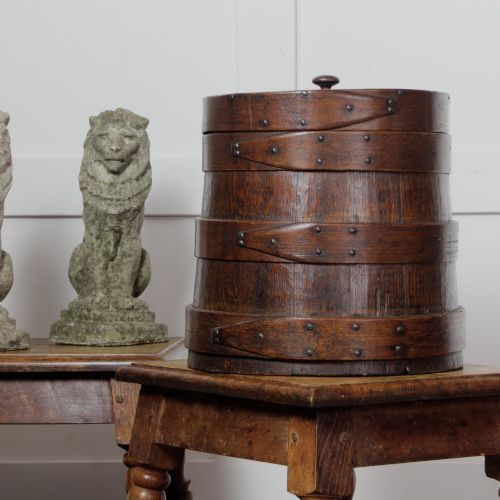
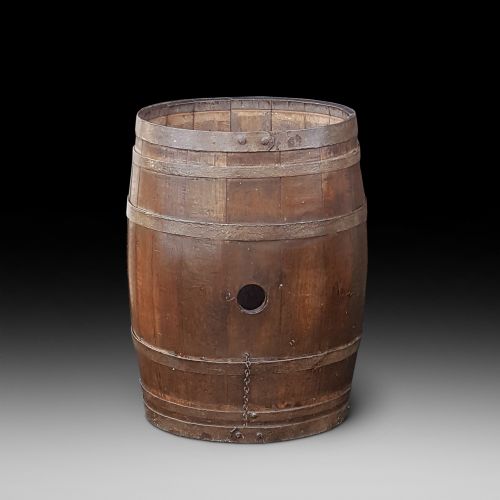
When you search for vintage wooden cask, you are looking at functional vessels shaped by coopers for storage, drink and display. The pieces on this page span Georgian grain bins, Victorian stick stands and smaller bar top barrels made for spirits like sherry, whiskey, gin and brandy.
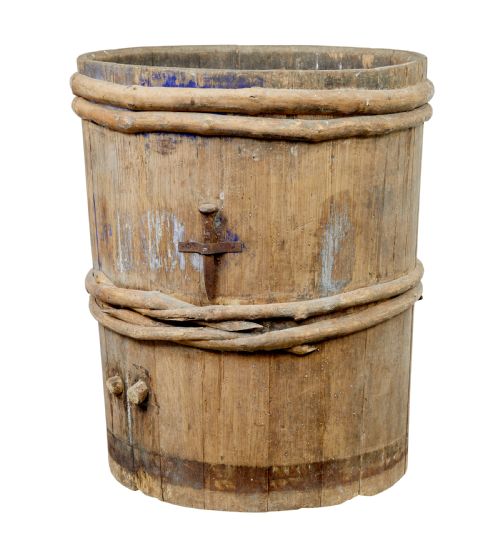
The most common forms you will meet are sturdy oak barrels bound in iron or brass, alongside painted pine examples from Scandinavia and large cone shaped storage items. Their origins stretch across British and European domestic and trade settings, moving from utilitarian cellars and pubs into interior display.
Periods represented range from the Georgian era through the Victorian years and into the early twentieth century, showing how functional container forms evolved from kitchen and tavern utility into decorative objects.
How they were made
Construction relies heavily on traditional cooperage, where shaped timber staves of oak, pine or mahogany are fitted together to form tapering or cylindrical vessels. These staves are held firmly in place by tension from outer hoops fashioned from iron, brass, copper or wood.
Many of these containers utilise durable hardwoods like oak to withstand heavy daily use in grain storage or spirit ageing, while others feature applied paint finishes typical of Scandinavian country workshops.
Vintage Wooden Cask Retail Price Guide 2026
Typical asking prices for vintage wooden cask among the pieces listed under this phrase on Sellingantiques today, from the lower quarter to the upper quarter. They describe what is for sale here now, not the wider market.
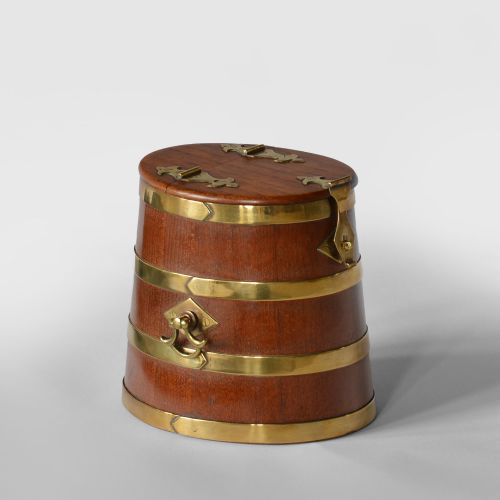
One tiny naval rum barrel managed to travel through time without losing its brass bindings or its seafaring character.
What varies in quality
Quality in these pieces rests on the precision of the cooper's jointing and the integrity of the timber staves. Tightly fitted staves and well-secured metal or wooden hoops demonstrate superior craftsmanship compared to loose or hastily assembled vessels.
The choice of materials also elevates a piece, with fine brass bindings and rich timber grains such as figured oak or mahogany marking out objects intended for display rooms rather than back-of-house storage.
RUBIO
The Vintage Wooden Cask Glossary
- Coopered
- Made by a cooper using curved wooden staves bound together with hoops. This technique forms the watertight and structural body of barrels and casks.
- Stave
- A narrow strip of wood with bevelled edges that forms the sides of a cask or barrel. Several staves are joined together to create the curved vessel.
- Hoop
- A circular band of iron, brass, copper or wood fitted tightly around the staves to hold them in place. These bands provide the necessary tension for the vessel.
- Stick Stand
- A vertical holder designed for walking sticks and umbrellas, often adapted from barrel forms in the Victorian period. These items utilise the deep cavity of a small cask for hallway utility.
- Grain Bin
- A large storage container built to hold dry agricultural produce such as flour or grain. Early examples are often constructed from heavy oak with panelled sides.
Vintage Wooden Cask: Frequently Asked Questions
How do I date a wooden cask?
Dating relies on examining the timber species, the material of the metal bindings and the overall construction style. Georgian and early nineteenth-century pieces often display heavy oak framing and hand-forged iron elements.
Later Victorian and early twentieth-century examples frequently incorporate brass bindings or specific painted finishes typical of Scandinavian country traditions.
Are these casks waterproof?
While originally designed to hold liquids or dry goods securely, the watertight nature of older wooden casks varies depending on how the timber has settled and dried over the decades.
Many surviving examples function primarily as decorative objects, stick stands or dry storage vessels rather than active liquid containers.
How should I clean a wooden barrel?
Maintenance generally involves gentle dusting and occasional waxing or oiling to nourish the exposed timber staves and protect the metal hoops from corrosion.
Harsh chemical cleaners and excessive moisture should be avoided to preserve the natural grain and historic patina of the wood.