





Vintage Walnut Whatnot
These vintage walnut whatnot pieces are tiered open shelves and cabinets designed to display prized ornaments, bringing rich timber grains and multi-level utility to any room.
Vintage Walnut Whatnot
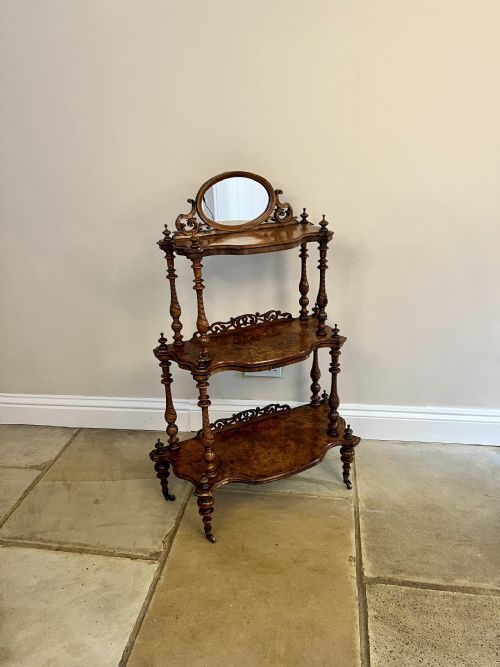
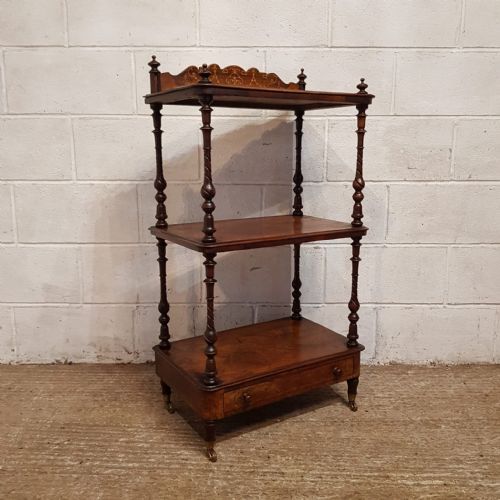
A vintage walnut whatnot takes the form of multi-tiered open shelving, corner units, or enclosed cabinets designed to hold small decorative objects and books. The pieces appearing here span the Victorian, Edwardian, and French Napoleon III periods, showcasing distinct architectural shapes ranging from simple three-tier stands to elaborate five-tier displays.
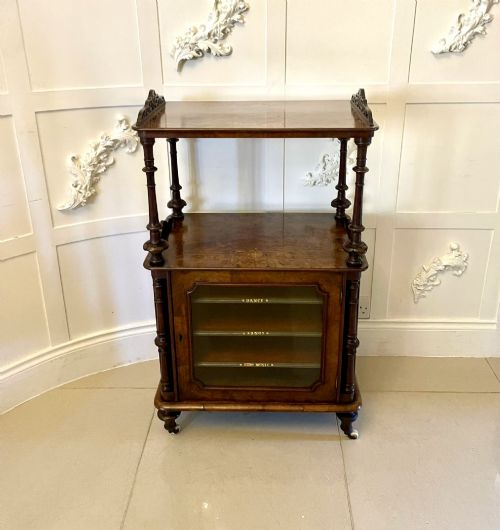
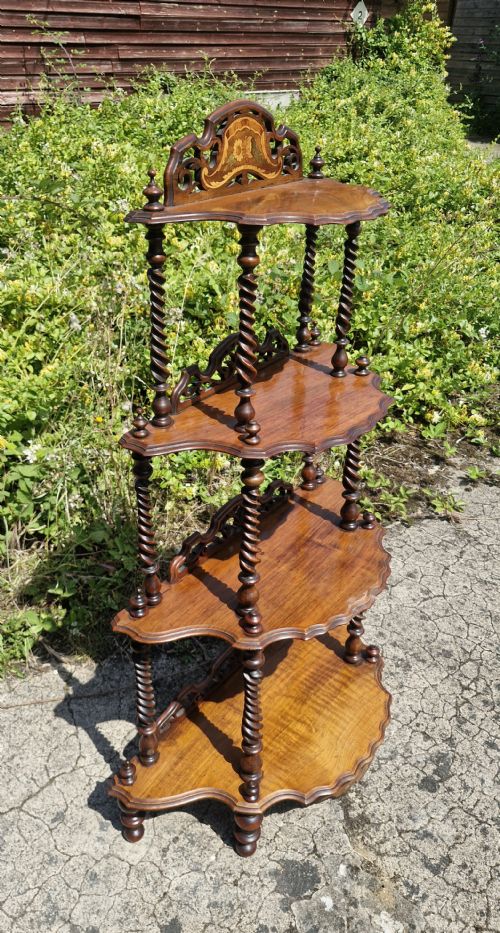
Most examples encountered on this page belong to the Victorian era, utilising burr walnut veneers and standing on slender upright supports. Buyers also find corner shelves, music cabinets with integrated canterbury sections, and French etageres featuring marquetry and ormolu mounts.
The primary function of these items remains display and storage, combining functional shelving with decorative woodwork. Originating as practical furniture for parlours and drawing rooms, they continue to serve as versatile display stands in modern interiors.
How they were made
Cabinet makers constructed these pieces primarily from solid walnut and decorative burr walnut veneers, applying wood inlay and marquetry patterns to flat surfaces. Fretwork panels, turned supports, and glazed doors give structural definition to the multi-tier shelving units.
Metal components such as brass fittings, ormolu mounts, and mirrored glass integrate into the French and English designs. Individual tiers connect securely to upright columns, while corner models adapt the shelving geometry to fit room angles.
Vintage Walnut Whatnot Retail Price Guide 2026
Typical asking prices for vintage walnut whatnot among the pieces listed under this phrase on Sellingantiques today, from the lower quarter to the upper quarter. They describe what is for sale here now, not the wider market.
Available forms include multi-tier standing shelves, corner units, music cabinets with canterbury sections, and glazed display cupboards.
What varies in quality
Quality in these pieces rests upon the selection and matching of the burr walnut veneer across the main surfaces and tiers. Finer examples display meticulous wood inlay, delicate pierced fretwork, and well-executed ormolu mounts rather than plain timber.
The Vintage Walnut Whatnot Glossary
- Whatnot
- A piece of furniture consisting of a series of open shelves for displaying ornaments or books. These units typically feature three to five tiers supported by slender uprights.
- Burr Walnut
- A specialised wood veneer taken from the growth excrescences of walnut trees. This material yields complex, swirling grain patterns highly prized in Victorian cabinet making.
- Etagere
- A French piece of furniture consisting of a set of open shelves for displaying small objects. They frequently incorporate ormolu mounts and marquetry inlay.
- Canterbury
- A low stand with partitions used originally for holding sheet music or loose papers. Several examples combine this compartment with traditional whatnot shelving.
- Marquetry
- Decorative woodwork where pieces of wood veneer are fitted into a ground to form ornamental patterns. This technique appears on French and Edwardian walnut cabinets.
- Ormolu
- Gilded bronze ornamentation applied to the mounts of furniture. It serves as a decorative accent on French Napoleon III and Belle Epoque pieces.
Vintage Walnut Whatnot: Frequently Asked Questions
What were whatnots used for originally?
These tiered stands were designed in the nineteenth century to hold ornaments, decorative plates, and books in drawing rooms. Their open shelves allowed owners to exhibit small collections and curiosities.
Over time, specialised versions evolved to incorporate enclosed display cupboards, music storage compartments, and corner configurations to suit different domestic spaces.
How do I identify a Victorian walnut whatnot?
Victorian examples typically feature rich burr walnut veneers, turned upright supports, and occasionally pierced fretwork galleries along the shelf edges. They often utilise multi-tier formats standing upon small feet or castors.
Stylistic markers range from simple architectural shelving to ornate Rococo Revival curves, reflecting the design preferences of the mid to late nineteenth century.
Where do French and English models differ?
English pieces tend to focus on sturdy timber construction, utilising burr walnut grain, corner brackets, and carved fretwork panels. They emphasise practical tier arrangements and cabinet combinations.
French models, including etageres and Napoleon III designs, frequently incorporate contrasting marquetry wood inlay, gilded ormolu mounts, and mirrored glass backs to heighten visual lightness.
How do I live with a multi-tier whatnot?
These stands fit well into corners, alcoves, or against flat walls where vertical display space is needed without a heavy footprint. The open shelves accommodate small plants, ceramics, and framed photographs.
Positioning them away from direct sunlight protects the walnut timber and delicate burr veneers from fading over time while maintaining their structural stability.