






Vintage Velvet Footstool
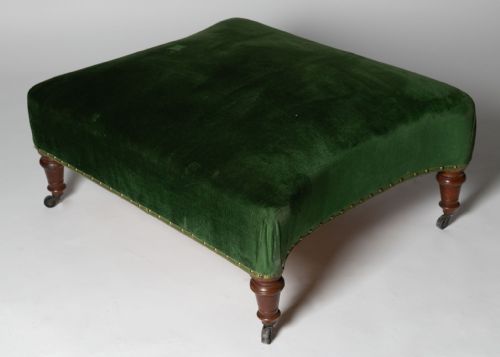
A vintage velvet footstool brings tactile softness and period character to a room, offering a low seat or rest for tired feet.
Vintage Velvet Footstool
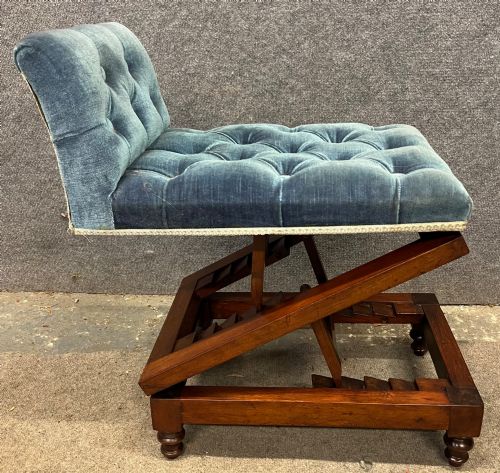
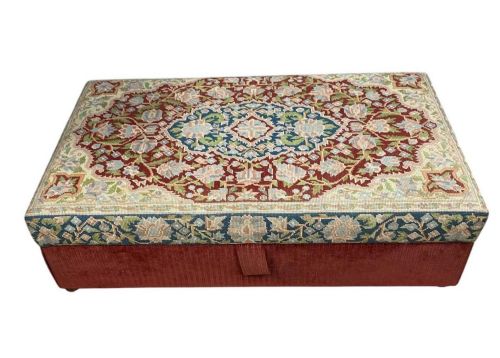
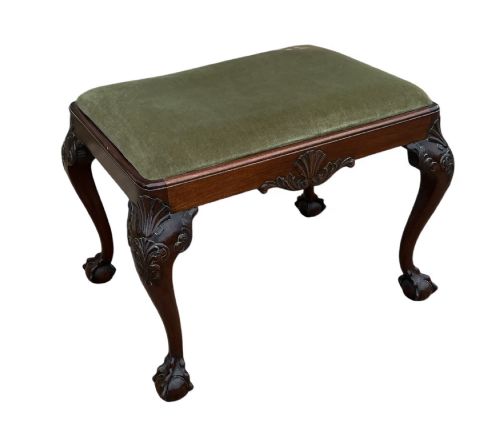
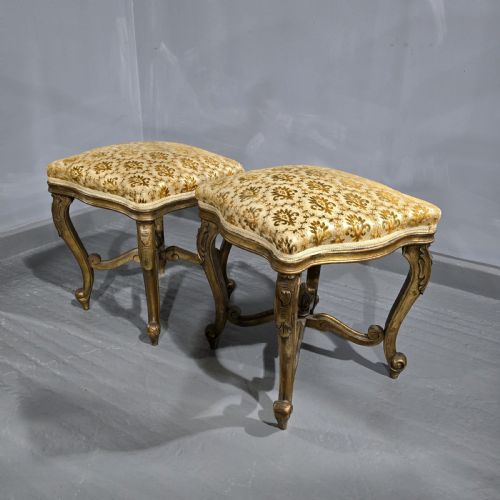
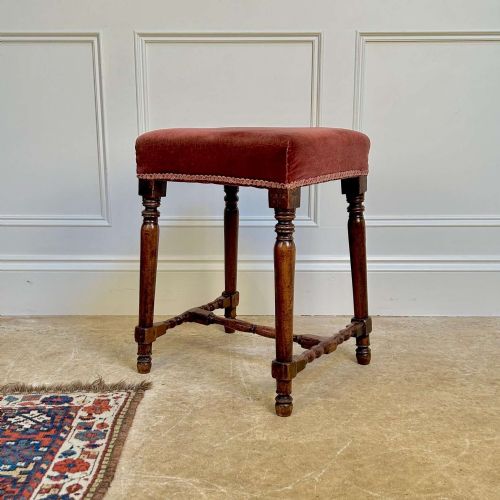
When searching for a vintage velvet footstool, collectors encounter pieces spanning the nineteenth century, Victorian era, Regency period, and Edwardian times. These domestic furnishings take various forms, including dressing table stools, piano stools, large ottomans, and salon seats.
The materials paired with velvet on this page include mahogany, walnut, rosewood, oak, giltwood, and brass. Makers often utilised traditional timbers to build sturdy frames that supported upholstered tops covered in plush textiles or needlepoint.
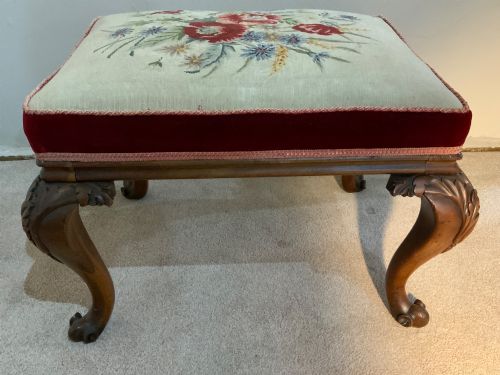
The most common examples met here belong to the Victorian period, frequently featuring mahogany or walnut frames with turned or cabriole legs. These versatile pieces served multiple rooms, from formal drawing rooms to private dressing chambers.
What varies in quality
The distinction between standard examples and exceptional pieces rests in the carving work and timber selection. Master craftsmen devoted greater attention to shaping cabriole legs, gilding surfaces, and applying intricate needlepoint or buttoned velvet upholstery.
Proportion and structural integrity also separate fine examples from ordinary utility items. Pieces originating from notable workshops or featuring specific stylistic revivals, such as Chippendale or Louis XV influences, demonstrate superior design execution.
Vintage Velvet Footstool Retail Price Guide 2026
Typical asking prices for vintage velvet footstool among the pieces listed under this phrase on Sellingantiques today, from the lower quarter to the upper quarter. They describe what is for sale here now, not the wider market.
Victorian footstools occasionally hid secret storage compartments beneath their buttoned velvet tops, perfect for stashing midnight knitting.
Hallett & Sons·James Shoolbred
The Vintage Velvet Footstool Glossary
- Cabriole leg
- A furniture leg that curves outward and then tapers inward, inspired by animal limbs. This form appears frequently on Victorian and eighteenth-century revival seating.
- Ottoman
- A low, upholstered seat or footstool without a back or arms. Larger versions often incorporate internal storage compartments beneath the hinged top.
- Giltwood
- Wood that has been coated with a thin layer of gold leaf or gilt paint. It is commonly found on decorative nineteenth-century salon and drawing room stools.
- Needlepoint
- Embroidery stitched onto a canvas mesh ground, frequently utilised to cover Victorian footstools and dressing seats. It provides a durable and colourful alternative to plain textiles.
- X-framed
- A structural design where intersecting legs form the letter X beneath the seat. This ancient form reappears in nineteenth-century rosewood and mahogany stools.
Vintage Velvet Footstool: Frequently Asked Questions
How do I identify a Victorian footstool?
Victorian footstools often feature dense timbers like walnut and mahogany, frequently shaped into cabriole legs or paired with buttoned velvet upholstery.
Makers of this era also produced low salon stools and dressing seats with carved wooden frames that reflected earlier historical revivals.
Where were piano stools used?
Piano stools served musicians in nineteenth-century parlours and drawing rooms, providing a stable, often circular seat near the instrument.
Their compact proportions allowed them to tuck neatly beneath keyboard instruments when not in use.
What is a Scottish Baronial stool?
A Scottish Baronial stool is a substantial nineteenth-century seating form reflecting northern architectural revivals and robust regional craftsmanship.
These heavier pieces often utilised solid timber frames designed to withstand demanding domestic use in large country houses.
How do I care for antique velvet?
Antique velvet requires gentle handling to preserve the pile of the textile and prevent flattening over time. Keeping these surfaces away from direct sunlight protects the original depth of the fabric colour.