







Vintage Vanity Table Jars
Vintage vanity table jars sit upon dressing surfaces to hold creams, powders, and scents, uniting silver, glass, and ceramic in domestic utility.
Vintage Vanity Table Jars
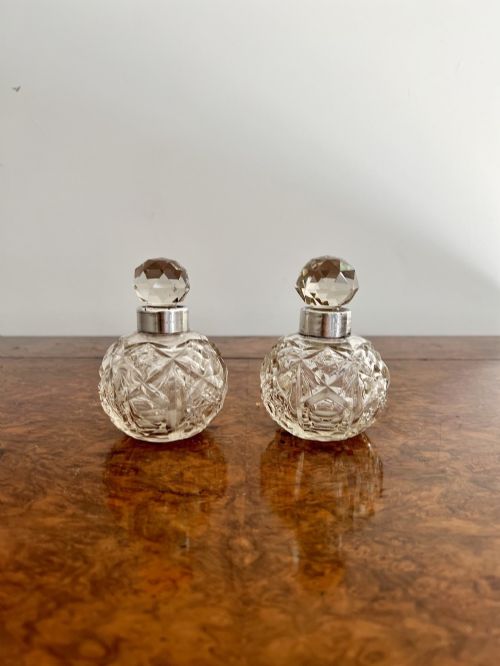
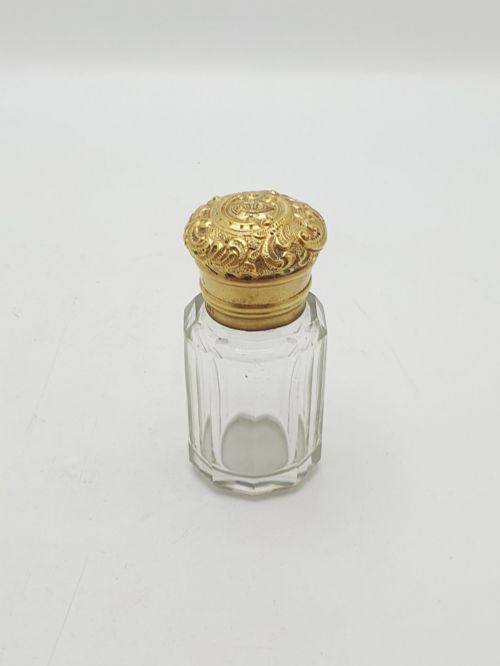
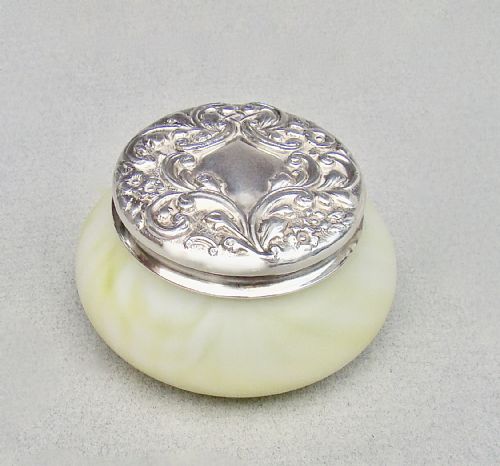
Vintage vanity table jars encompass small containers used on dressing tables to store cosmetics, pins, and perfumes. Buyers searching for vintage vanity table jars encounter vessels ranging from Edwardian silver-mounted glass to Art Deco ceramic powder bowls and porcelain jars.
The assortment spans diverse eras, beginning with Regency travelling cases and Victorian cut glass scent bottles, moving through Edwardian trinket boxes, and culminating in 1930s enamel and ceramic pieces.
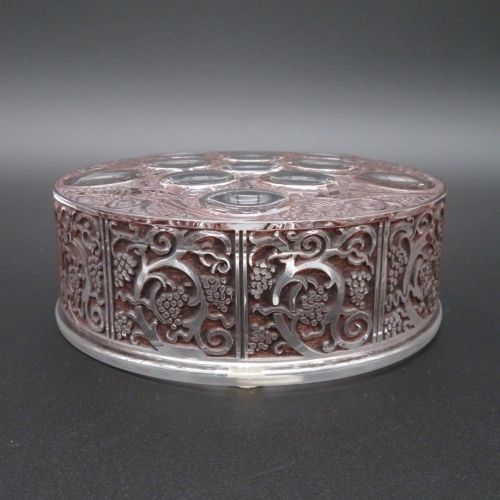
Forms include powder boxes, rouge pots, cologne bottles, and lidded trinket boxes. Many items combine glass bases with metal lids, while others utilise pottery or porcelain for the entire vessel.
Materials and construction methods
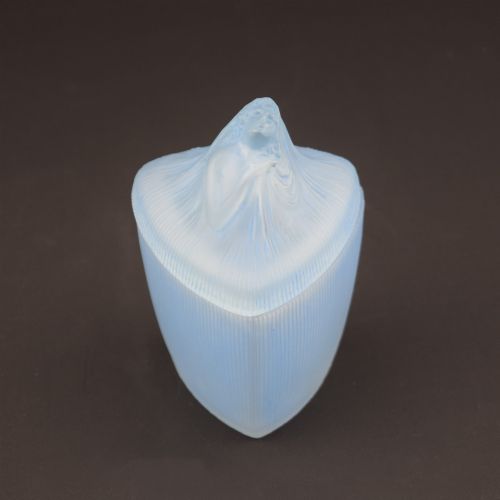
Makers shaped glass by cutting, moulding, or blowing, creating clear, coloured, satin, and overlay varieties. Cut glass and crystal provide heavy, faceted bodies that catch light on the dressing surface.
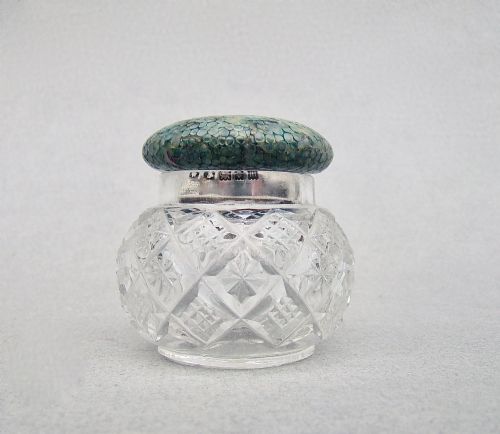
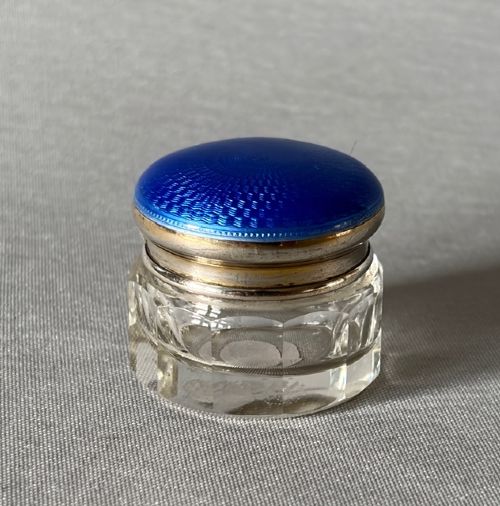
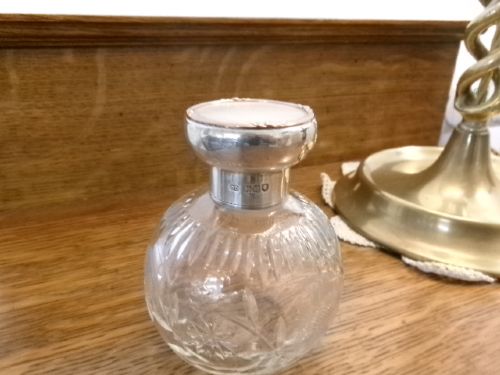
Metalwork mounts, collars, and lids utilise sterling silver, brass, and gilt silver, often bearing hallmarks from assay offices in London and Birmingham. Enamel decoration, particularly guilloche work, adds colour and pattern to silver tops.
Ceramic pieces incorporate porcelain, earthenware, and glazed finishes, frequently moulded into figural forms such as half-doll flapper girls for powder boxes and puff stands.
Vintage Vanity Table Jars Retail Price Guide 2026
Typical asking prices for vintage vanity table jars among the pieces listed under this phrase on Sellingantiques today, from the lower quarter to the upper quarter. They describe what is for sale here now, not the wider market.
The listings demonstrate a strong presence of 1930s Art Deco ceramics and glass, alongside Edwardian and Victorian sterling silver-mounted cut glass pieces.
Distinctions in manufacture and preservation
Quality rests in the crispness of the glass cutting, the weight of the silver mount, and the intact preservation of enamel or surface gilding. Finer pieces display precise engine-turned guilloche patterns under translucent enamel without chipping.
The integration between the lid and the base demonstrates workshop skill, where silver collars fit snugly against glass rims without excessive cement or movement. Maker attribution, through clear hallmarks or stamped signatures on porcelain, elevates the standing of an individual piece.
Henry Clifford Davis·A. Bromet and Co·Posen of Frankfurt and Berlin·Barnsley and Co·Adie Brothers Ltd·Fasold and Stuach·Limoges
The Vintage Vanity Table Jars Glossary
- Guilloche enamel
- A decorative technique where metal is engraved with repetitive geometric patterns beneath a translucent layer of coloured enamel. This method appears frequently on Art Deco silver jar lids.
- Cut glass
- Glassware shaped and patterned by abrasive wheels, producing deep facets and sharp edges. It forms the heavy transparent bodies of many Edwardian and Victorian jars.
- Hallmark
- A series of official marks stamped on precious metals indicating the standard of purity, the assay office, and the year of manufacture. British silver lids commonly display these stamps.
- Half doll
- A ceramic figure modelled from the waist up, historically used to adorn the tops of powder puff boxes and tea cosies. These figures are characteristic of 1930s vanity items.
Vintage Vanity Table Jars: Frequently Asked Questions
What is the difference between a vanity jar and a trinket box?
Vanity jars generally feature round or cylindrical glass or ceramic bodies designed to hold loose powders, creams, or liquids with fitted lids. Trinket boxes often have hinged lids and serve to store small personal items such as rings and pins.
While both sit upon dressing surfaces, jars typically focus on cosmetic storage, whereas boxes accommodate general ornamentation.
How do I date a silver-lidded glass jar?
Dating relies primarily on the assay hallmarks stamped into the silver mount or lid. These marks reveal the city of testing, the silver standard, and a specific date letter corresponding to the year of manufacture.
Stylistic indicators such as Neoclassical Revival motifs or Art Deco geometric enamel patterns provide secondary clues to the period of creation.
Are these jars safe for modern cosmetics?
These historical vessels were designed for historical cosmetic formulations such as loose powders, solid perfumes, and vintage creams. Using them for modern liquid products requires care, as many older lids lack modern rubber or plastic seals to prevent leakage.
Gentle cleaning is recommended to preserve interior glazes, glass surfaces, and delicate silver or enamel work.
How should I clean vintage glass and silver?
Glass bodies tolerate warm water and mild soap, but silver mounts and enamel tops require separate attention to avoid damaging the metal or moisture-sensitive adhesives beneath the enamel. Silver polish should be kept away from glass and enamel surfaces.
Soft cloths and gentle wiping protect both the decorative metalwork and the structural integrity of the container.