
Vintage Turned Wood Chair
A vintage turned wood chair brings tactile warmth and enduring vernacular character to any interior through its lathe-shaped spindles and solid timber construction.
Vintage Turned Wood Chair
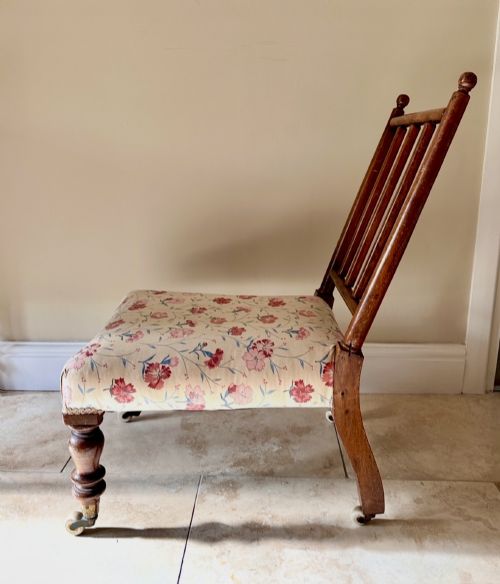
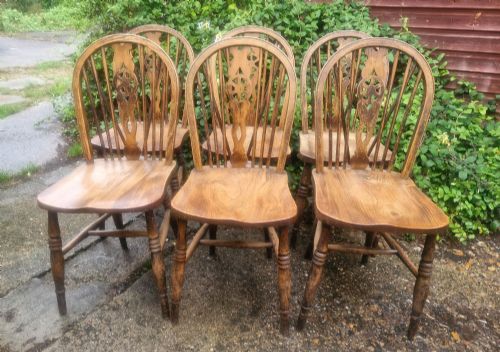
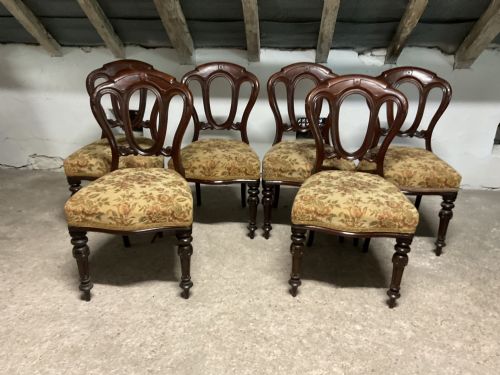
A vintage turned wood chair encompasses a broad selection of seating shaped on a lathe, ranging from traditional Windsor forms to bobbin framed rocking chairs and dining suites. When exploring this selection, buyers frequently encounter pieces originating across the nineteenth and early twentieth centuries, including Victorian and Edwardian examples.
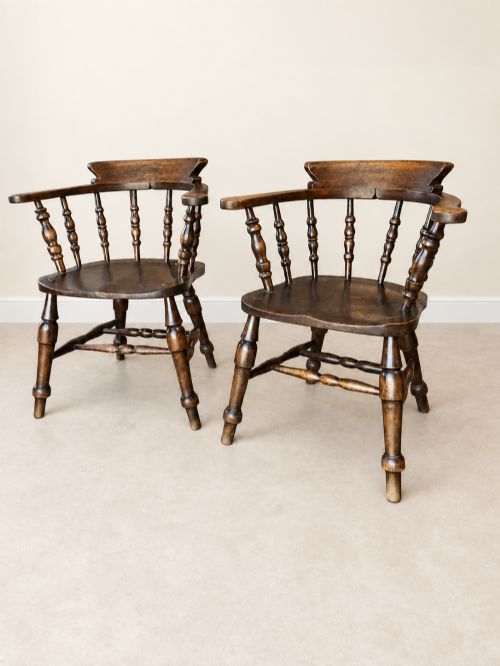
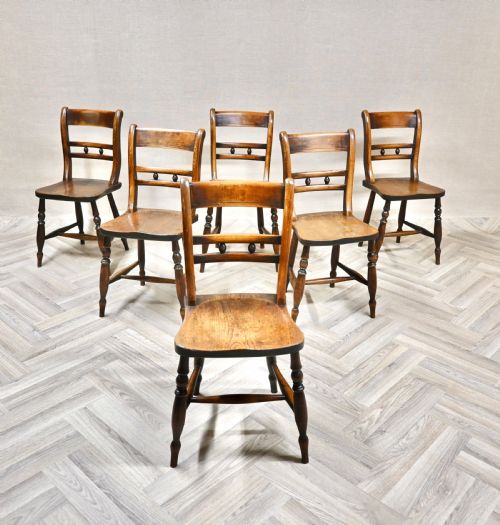
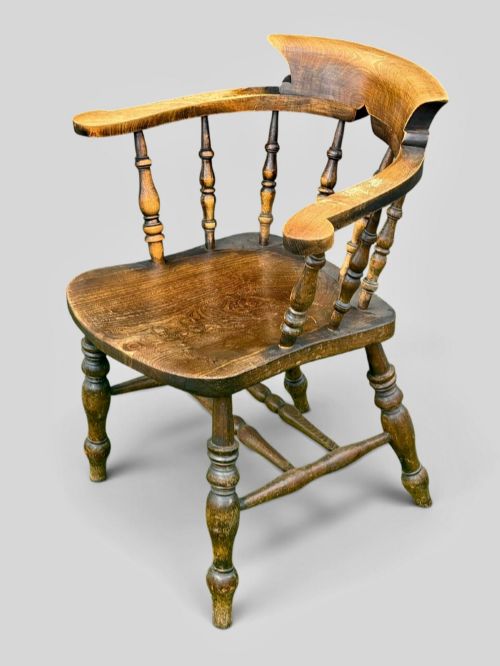
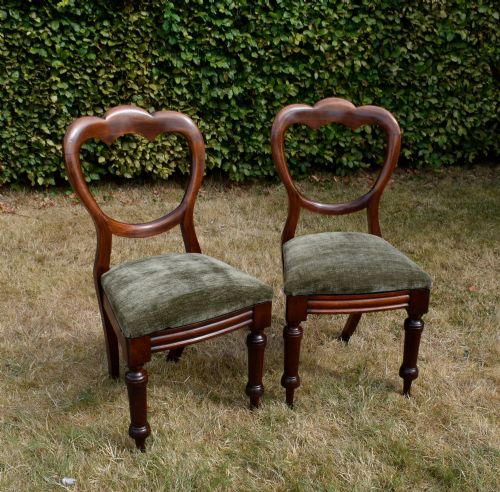
The inventory spans diverse functional forms, from high-back kitchen armchairs and smokers captains chairs to side chairs, corner chairs, and rocking chairs. These pieces reflect regional vernacular traditions, often combining different timbers within a single frame to achieve structural stability and aesthetic contrast.
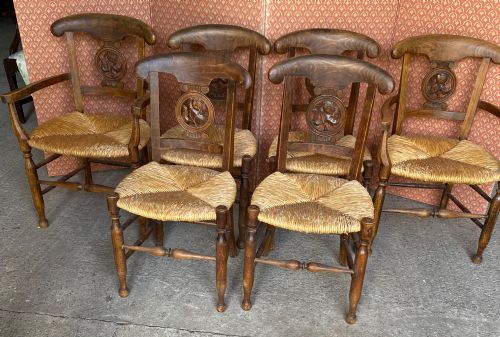
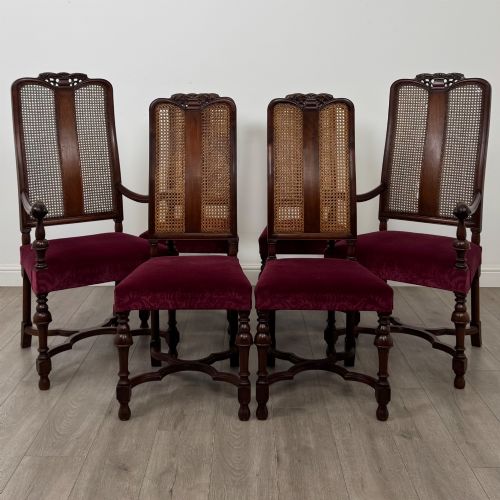
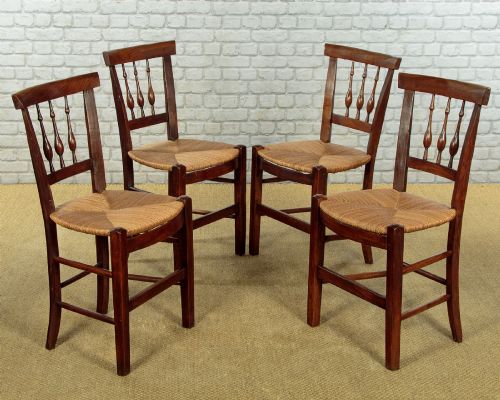
Originating largely from domestic, farmhouse, and provincial contexts, these chairs showcase functional joinery designed for daily utility. The presence of rush seats, cane panels, or solid wood saddle seats further defines the character of the seating available.
Materials and construction methods
Joiners and chairmakers utilised native hardwoods such as ash, elm, beech, oak, and yew, selecting specific timbers for their bending strength, grain pattern, and resilience. Elm frequently provided durable, split-resistant seats, while ash and beech formed flexible spindles and turned structural legs.
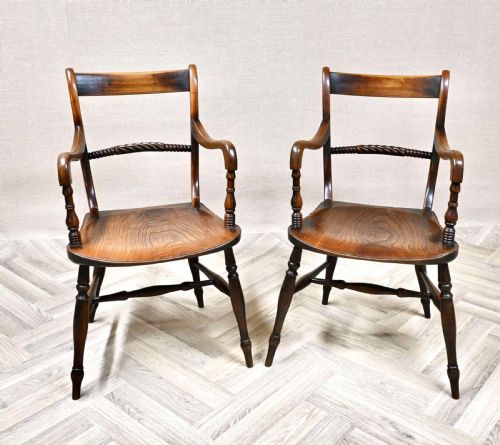
Lathe turning formed the defining characteristic of these chairs, producing bobbin, ropetwist, and spindle components that were joined using traditional pegged mortise and tenon construction. Steam bending shaped components such as hoop backs and arm bow rails, securing the structural integrity of Windsor and bentwood forms.
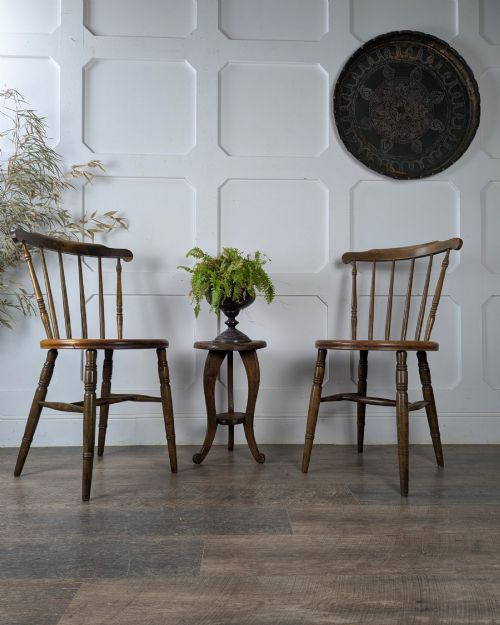
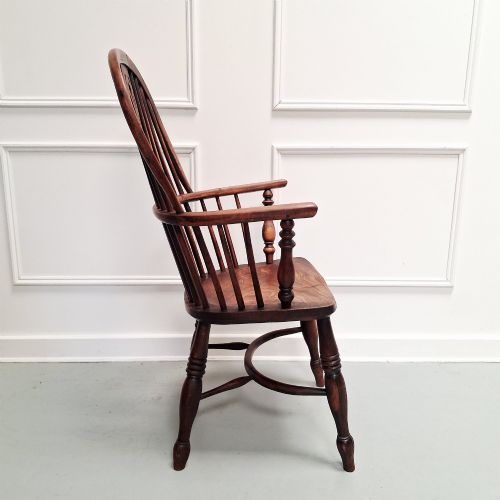
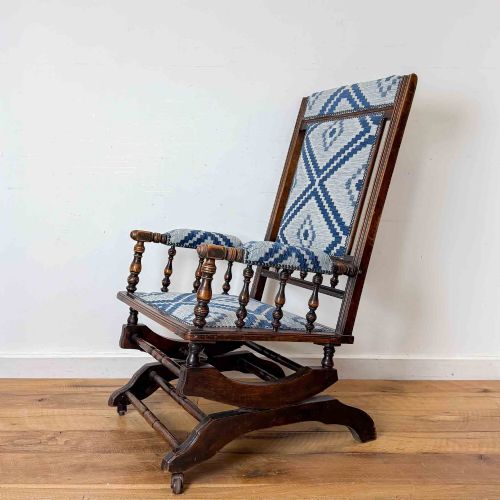
The inventory includes diverse forms such as high-back Windsor armchairs, rocking chairs, and bentwood bistro seating.
Evaluating quality and authenticity
Quality in these chairs rests upon the integrity of the timber, the crispness of the lathe turning, and the survival of original surface patination. Examples displaying harmonious timber matching between the seat and the turned components typically indicate superior workshop practice.
The retention of original structural elements, such as double stretchers, wedged tenons, and authentic rush or wooden seats, distinguishes better preserved examples. Subtle differences in proportion, spindle placement, and the depth of the saddle seat reveal the skill of the original maker.
J Spencer·Mellier And Co·Codina·Thonet
The Vintage Turned Wood Chair Glossary
- Windsor chair
- A chair built with a solid wooden saddle seat into which the back legs and spindle back are wedged directly. This form relies on a heavy seat base for structural strength rather than a conventional frame.
- Bobbin turning
- A form of lathe work producing a series of rounded, bead-like shapes resembling bobbins along the length of a spindle or leg. This decorative technique appears frequently on seventeenth-century revival and nineteenth-century frames.
- Rush seat
- A seating surface woven from dried marsh rushes around a wooden frame. This traditional technique provides a resilient and slightly flexible seat.
- Captain's chair
- A low-backed armchair designed with a continuous curved arm rail supported by numerous small spindles. These chairs typically feature a comfortable recessed wooden seat.
- Stretcher
- A horizontal wooden rod connecting the legs of a chair to provide structural rigidity. Many kitchen and country chairs utilise double stretchers for increased load-bearing strength.
Vintage Turned Wood Chair: Frequently Asked Questions
How do I identify a Windsor chair?
A Windsor chair is distinguished by its heavy solid wooden seat, into which the legs and back spindles are inserted directly rather than joined to a surrounding frame.
Traditional versions feature bowed top rails and distinctive central splats, often constructed from a combination of elm seats and ash or beech spindles.
Are these chairs suitable for daily use?
Most solid wood turned chairs were built for utilitarian domestic environments and remain robust enough for everyday seating when joints are stable.
Checking the tightness of the leg joints and the condition of rush or wooden seats ensures the chair can safely support regular weight.
How should I care for antique wood furniture?
Maintaining these pieces involves keeping them away from direct heat sources and sudden temperature fluctuations that can dry out the timber.
Applying occasional appropriate wax polish helps nourish the grain and preserve the historic patina without sealing the surface.
What is the difference between ash and elm?
Ash offers high elasticity and strength, making it ideal for steam-bent components and slender turned spindles.
Elm provides a dense, interlocking grain that resists splitting, which explains its widespread use for solid carved chair seats.