


Vintage Timber Shelving Unit
These vintage timber shelving unit examples offer sturdy practicality and rich grain, bringing honest storage and character to any room.
Vintage Timber Shelving Unit
A vintage timber shelving unit provides open or enclosed storage across various periods, ranging from nineteenth-century pieces to Edwardian and early twentieth-century designs. Buyers browsing this selection encounter bookcases, wall shelves, display cabinets, and pigeon hole units.
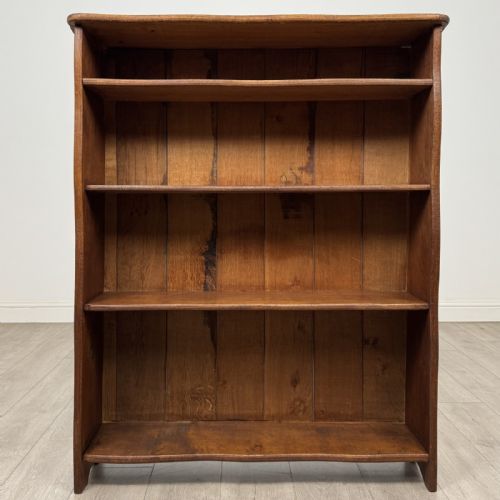
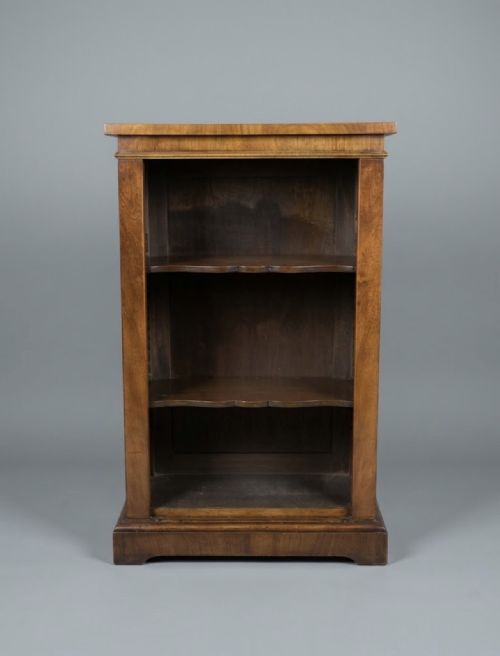
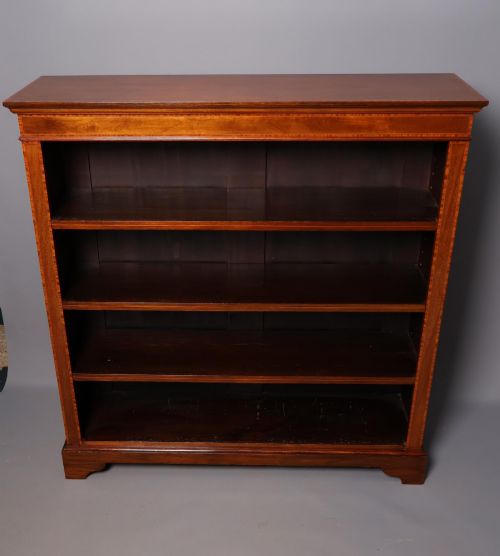
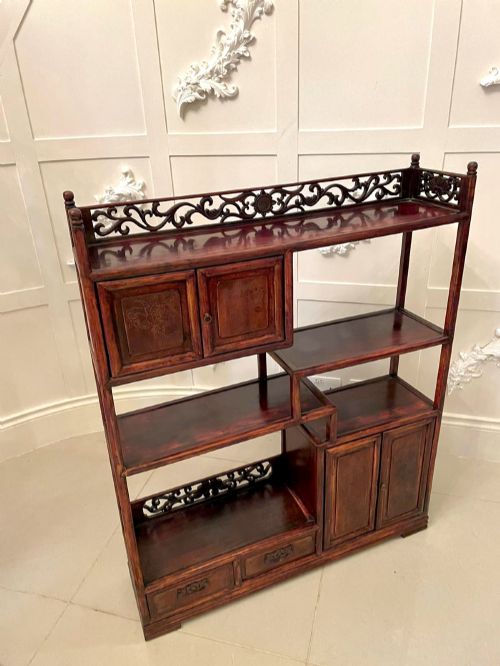
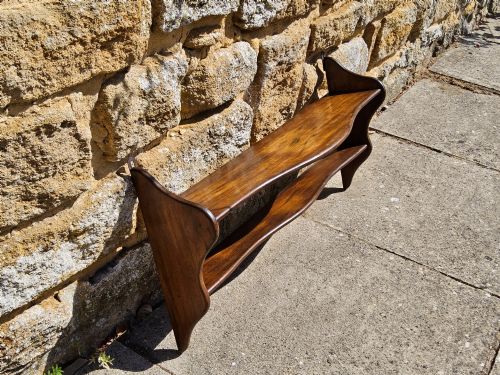
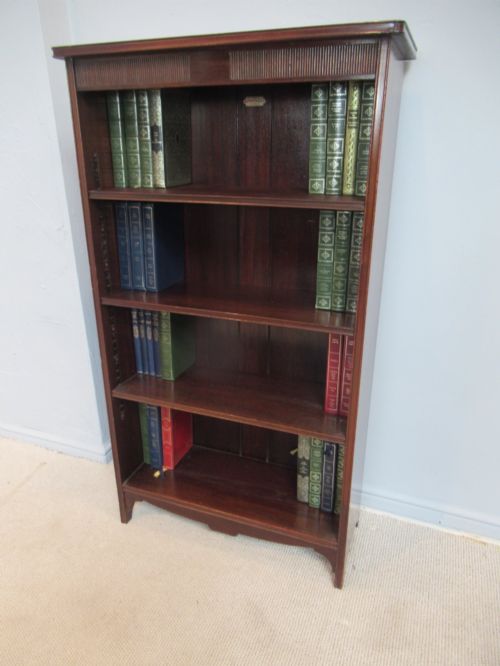
The pieces appearing here include oak open bookcases, mahogany freestanding waterfall shelves, and walnut wall units. Makers constructed these items in diverse styles such as Arts and Crafts, Edwardian, Victorian, and Chinese Qing Style.
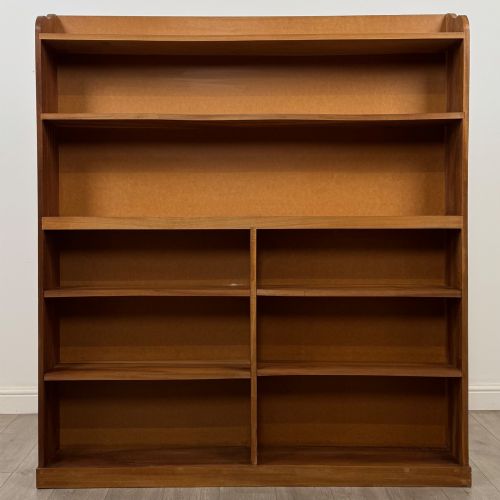
Smaller proportions sit alongside large open bookcases featuring shaped sides or adjustable shelves. These configurations suit modest rooms as well as expansive studies, offering flexible display options for books and objects.
Materials and construction
Cabinet makers utilised hardwoods such as oak, mahogany, walnut, elm, and exotic hardwoods alongside wood veneer and brass fittings. Satinwood inlay frequently enhances mahogany and walnut surfaces, adding fine geometric or floral detail to the timber.
Joinery methods vary from carved elm frames to structured pigeon hole boxes and adjustable shelf mechanisms. Traditional workshop techniques ensure structural stability across open bookcases, display cabinets, and wall-mounted shelves.
Judging quality in timber storage
Quality rests in the selection of the timber grain, the precision of any inlay work, and the integrity of the structural joinery. Fine furniture displays balanced proportions, careful carving, and well-chosen veneers that age gracefully over time.
Secondary elements such as brass hardware, shaped sides, and adjustable shelf systems distinguish finer workshop production from simpler utility pieces. The harmony between material choice and practical design dictates the standing of each piece.
Waring and Gillows
The Vintage Timber Shelving Unit Glossary
- Open bookcase
- A piece of furniture designed for book storage featuring unglazed fronts and fixed or adjustable shelves. These units allow immediate access to volumes while displaying the timber sides and backboards.
- Satinwood inlay
- A decorative technique where lighter satinwood is inserted into contrasting darker timber surfaces like mahogany or walnut. This method creates borders, motifs, and geometric patterns typical of Edwardian and earlier fine cabinet work.
- Waterfall display shelf
- A tiered shelving unit where each successive shelf steps back from the one below. This stepped arrangement creates a cascading effect well suited to displaying small objects and decorative items.
- Pigeon hole cabinet
- A small storage unit divided into numerous rectangular compartments for sorting papers, letters, or small goods. These utilitarian pieces often feature compartmentalised wooden grids.
Vintage Timber Shelving Unit: Frequently Asked Questions
What periods do these timber shelving units cover?
The selections span the nineteenth century, the Edwardian era, and the early decades of the twentieth century, including pieces dated around nineteen-ten, nineteen-twenty, and nineteen-thirty. These eras represent varied aesthetic movements from Victorian tradition to Arts and Crafts.
Each period brings distinct stylistic traits, such as satinwood inlay in Edwardian pieces or carved detailing on nineteenth-century elm and oak furniture.
How do I choose between open bookcases and display cabinets?
Open bookcases provide immediate access and suit everyday book storage, while display cabinets typically feature enclosed doors to protect delicate collections from dust. Your choice depends on whether you wish to display accessible books or house precious ornaments.
Consider the scale of the room and the items you plan to store when selecting between a tall freestanding bookcase, wall shelves, or a cabinet.
What timber types are most common in these pieces?
Oak, mahogany, and walnut appear frequently across the listings, alongside elm, hardwood, and wood veneer. Cabinet makers also incorporated brass hardware and satinwood inlay for decorative contrast.
Each wood offers distinct grain patterns and colour depths, influencing the overall visual weight and character of the shelving unit in an interior setting.
Are the shelves adjustable on these antique units?
Certain larger bookcases and cabinets include adjustable shelf systems, allowing you to alter shelf heights to accommodate books and objects of varying sizes. Other pieces feature fixed or structured partitions.
Checking the specific description for each item reveals whether the shelving configuration can be modified to suit your storage requirements.