

Vintage Tiered Chandelier
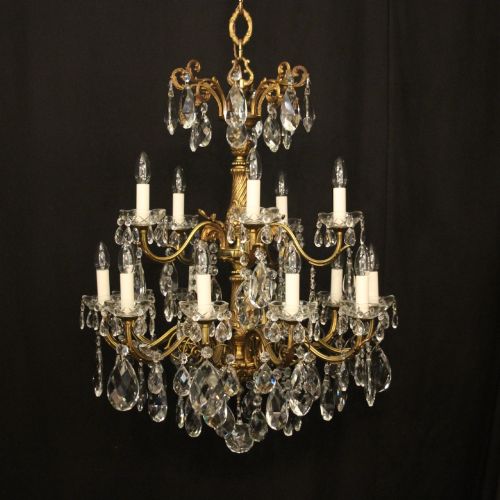
A vintage tiered chandelier brings dramatic vertical presence and layered illumination to a room, drawing the eye upward through cascading rows of crystal and metal.
Vintage Tiered Chandelier
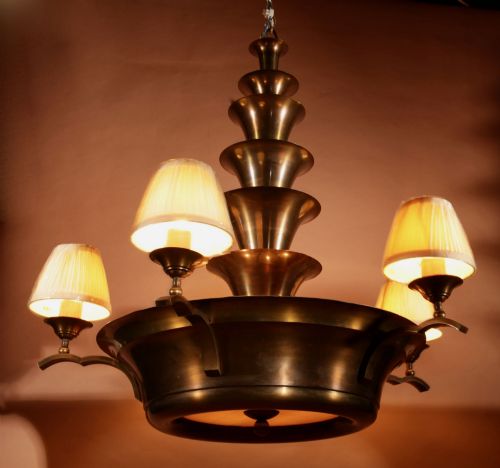
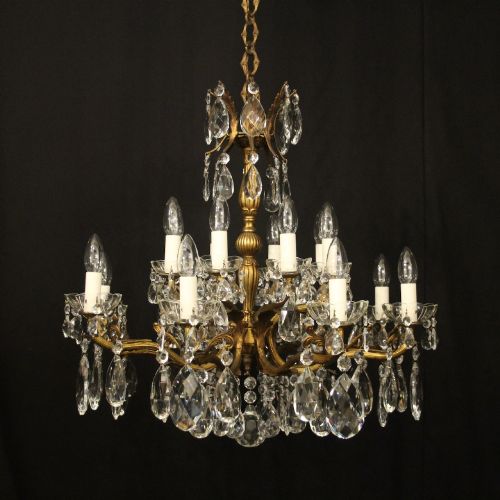
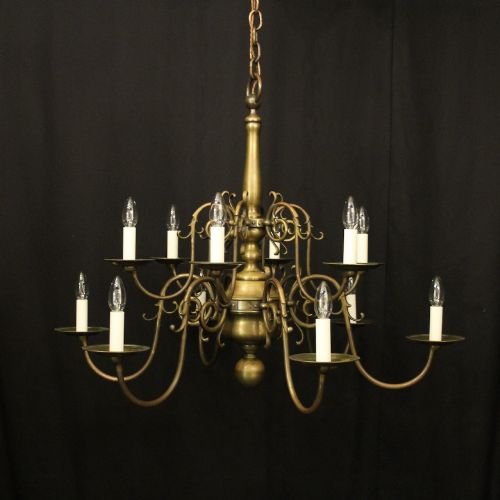
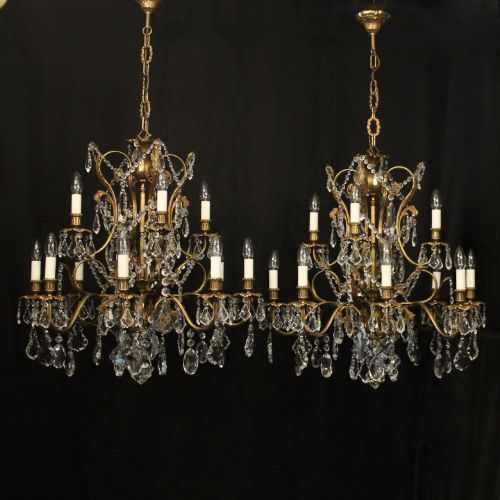
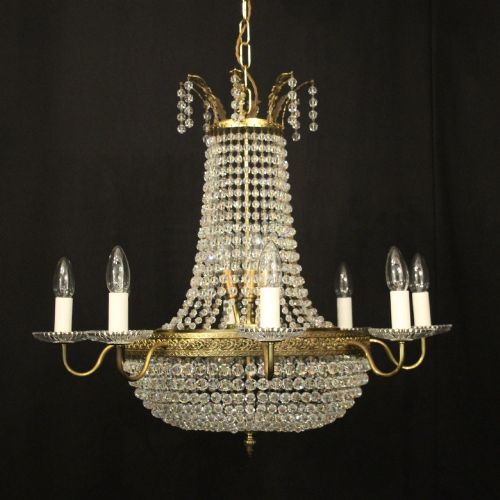
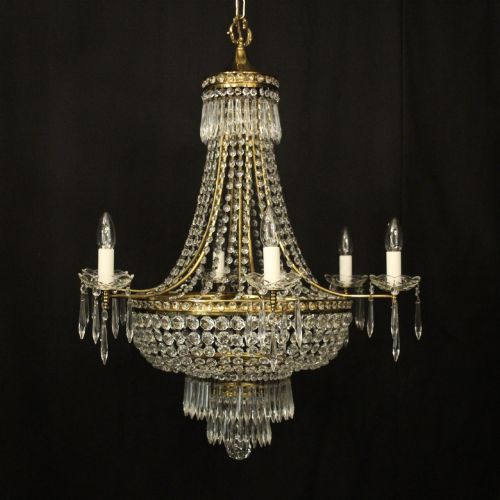
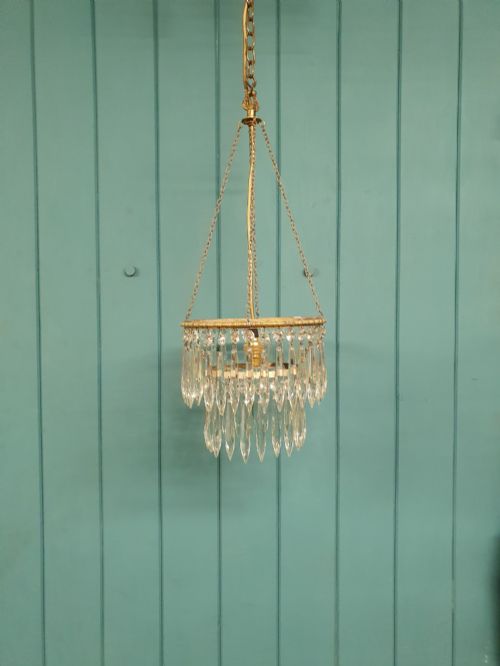
When you search for a vintage tiered chandelier, you encounter multi-level hanging light fixtures designed to dominate large spaces with height and scale. The pieces listed here span periods from the nineteenth century through the 1930s, encompassing Edwardian examples alongside French Empire and Art Deco designs.
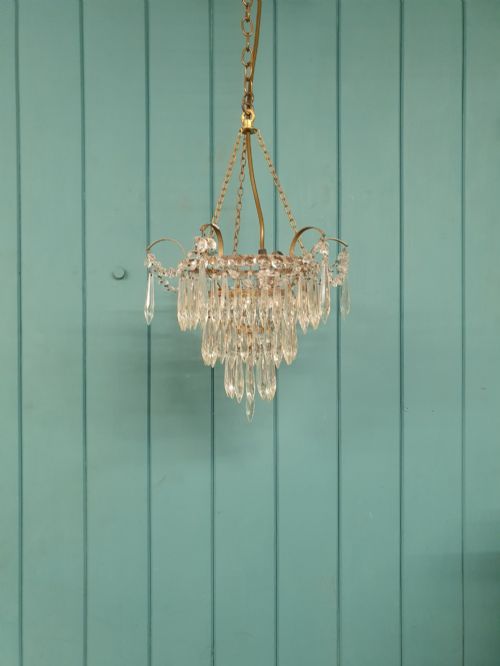
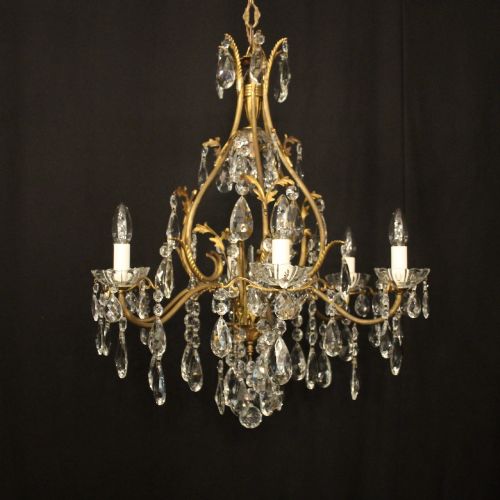
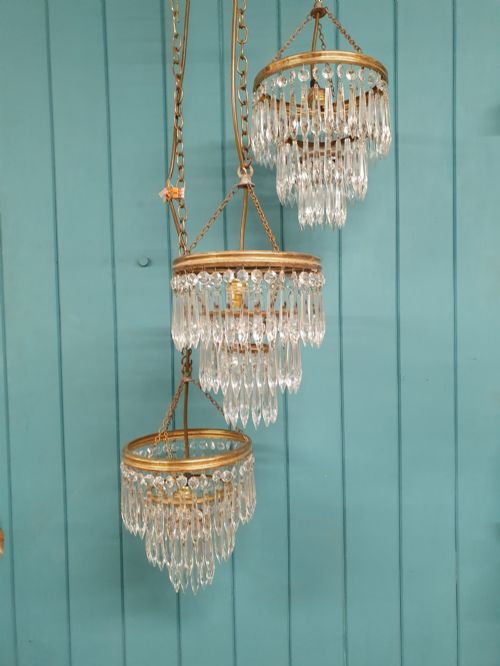
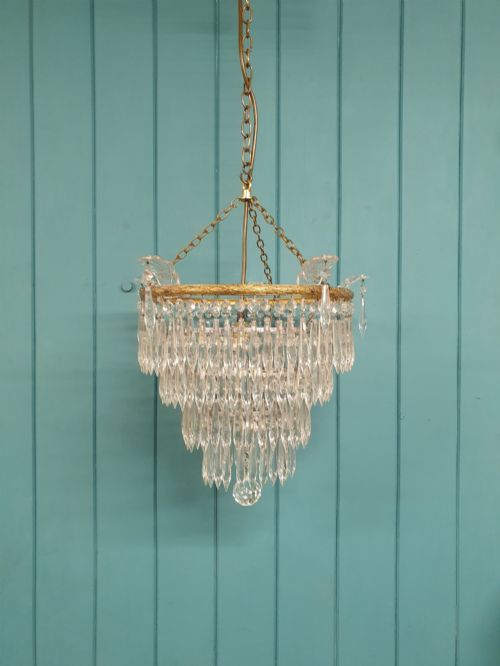
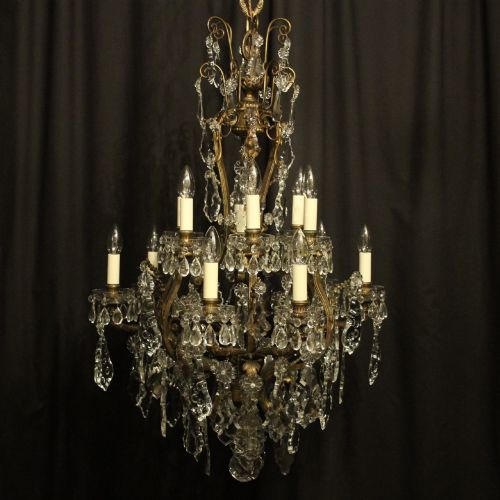
You meet double-tiered and multi-tiered formations alongside tent and waterfall configurations carrying numerous light sources. Brass, bronze, and copper frames support configurations ranging from compact single-light plafonieres to massive fixtures holding twenty-four lights.
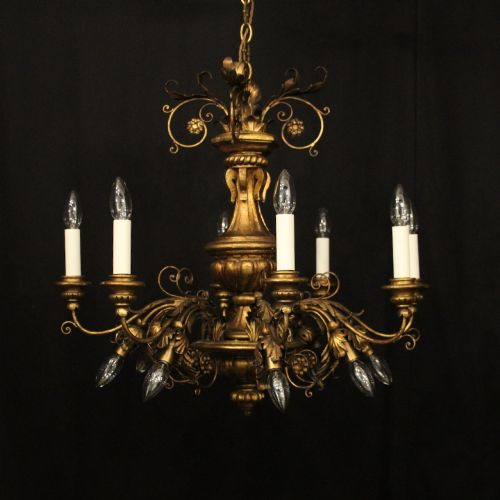
Origins stretch across France, Italy, England, Sweden, and the Netherlands, offering styles from French Rococo and Florentine polychrome to Dutch domestic traditions. These fixtures serve as central ceiling lighting in period interiors and high-ceilinged modern rooms alike.
How they were made
Metal frames take shape in cast and gilded bronze, brass, copper, and silver-gilded metal to form the structural skeleton and arms. These durable armatures support the weight of numerous glass components suspended across multiple levels.
Prisms, drops, beads, and cut-glass elements catch and refract light through meticulous hand-cutting and polishing. Workshops combined these crystal components with wired or candle-configured arms to build complex multi-tier silhouettes.
Vintage Tiered Chandelier Retail Price Guide 2026
Typical asking prices for vintage tiered chandelier among the pieces listed under this phrase on Sellingantiques today, from the lower quarter to the upper quarter. They describe what is for sale here now, not the wider market.
Some early twentieth-century spike chandeliers pack up to twenty-four individual lights into a compact multi-tier arrangement.
What varies in quality
The density and purity of the crystal drops dictate how brilliantly a fixture refracts light across a room. Superior examples utilise heavy, hand-cut glass that retains sharp facets and substantial weight.
The underlying metalwork separates standard production from exceptional craftsmanship through the depth of gilding and the weight of the cast bronze or brass frame. Multi-tiered armatures require robust structural integrity to support dozens of candle arms without sagging.
The Vintage Tiered Chandelier Glossary
- Tent and Waterfall
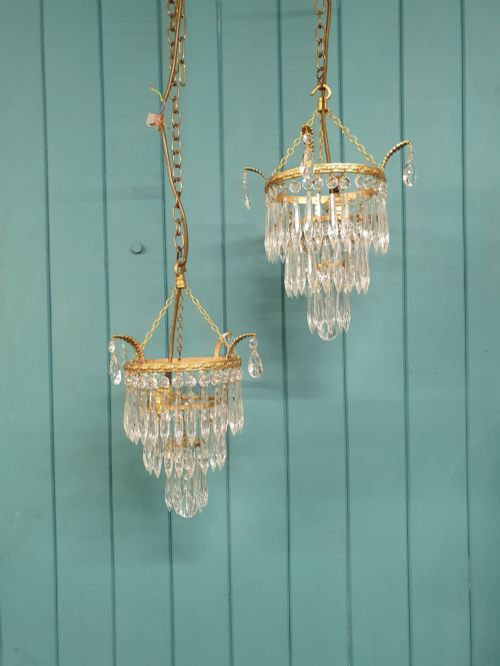
- A lighting configuration where upper strings of beads form a tent shape above a cascading waterfall of glass drops.
- Gilded Bronze
- A metal base of copper and tin alloy treated with a gold finish, often seen on French frames.
- Plafoniere
- A ceiling-mounted light fixture that sits close to the surface rather than hanging on a long chain.
- Polychrome
- A multi-coloured painted surface decoration applied to metal or wooden framing elements.
- Cut Glass
- Glass shaped by grinding and polishing facets onto the surface to increase light reflection.
Vintage Tiered Chandelier: Frequently Asked Questions
How do I hang a heavy multi-tier chandelier?
Installation requires anchoring directly into ceiling joists using a heavy-duty steel electrical box and supporting hook.
Professional electricians should manage the weight distribution and wiring for fixtures holding twelve or more lights.
What rooms suit a double tiered chandelier?
High ceilings in formal dining rooms, grand hallways, and spacious living rooms provide the vertical clearance these large fixtures demand.
Measuring the floor-to-ceiling height ensures adequate walking clearance beneath the lowest tier.
How do I clean vintage crystal chandeliers?
Regular dusting with a soft feather duster maintains clarity between deep cleanings.
Hand-washing individual drops with a mild solution of warm water and alcohol restores brilliance when needed.
How do I date a tiered chandelier?
Stylistic markers such as geometric Art Deco lines or ornate French Empire motifs point toward specific eras.
Examining the metal casting quality, wiring methods, and suspension loops helps confirm the period of manufacture.