



Vintage Tier Bookstand
These vintage tier bookstand designs are practical revolving wooden pieces that let you keep a generous library close to your favourite chair.
Vintage Tier Bookstand
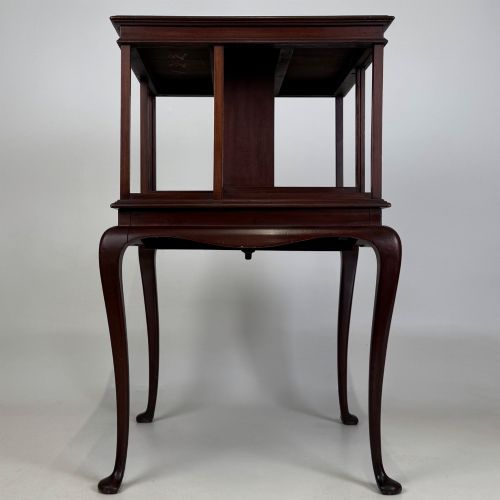
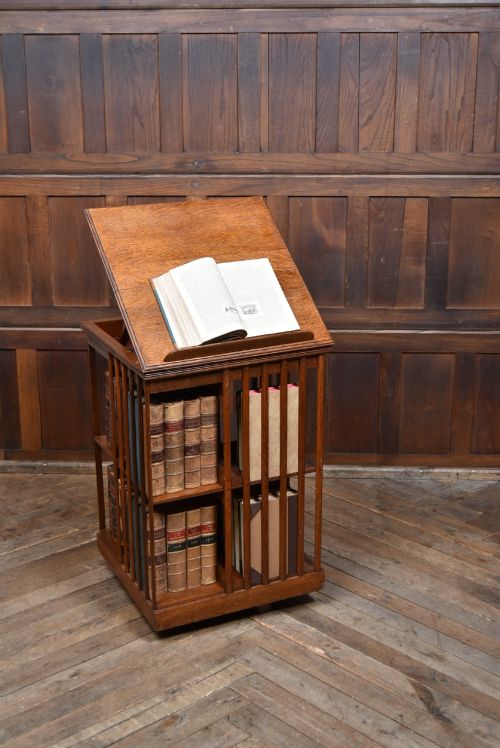
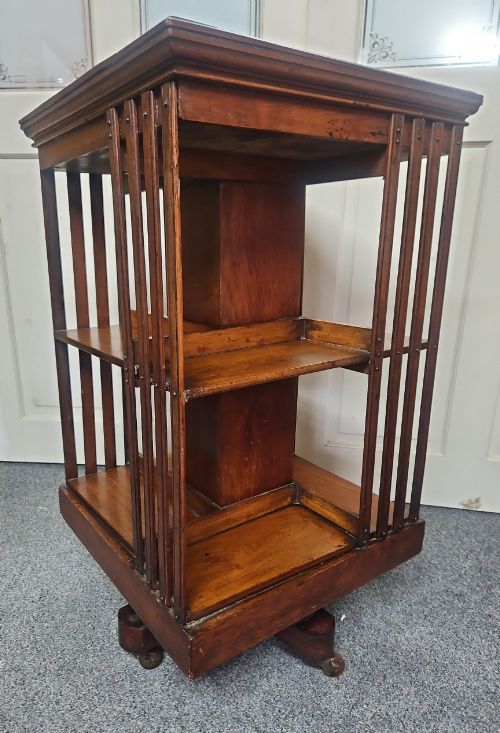
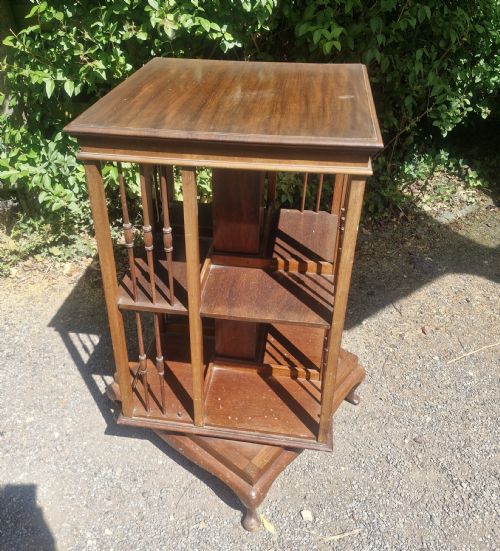
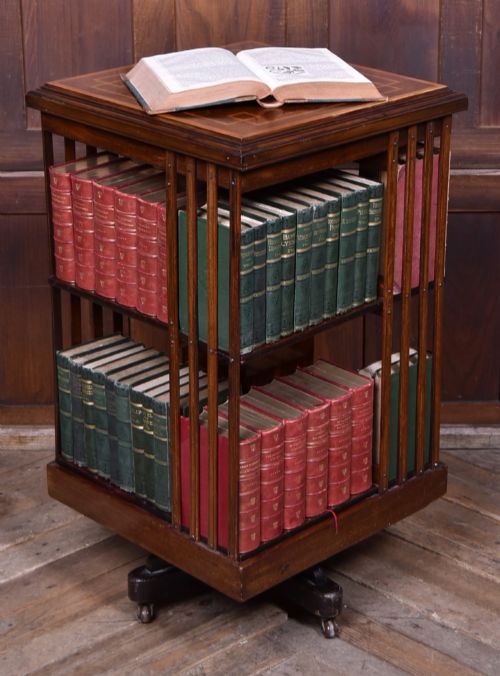
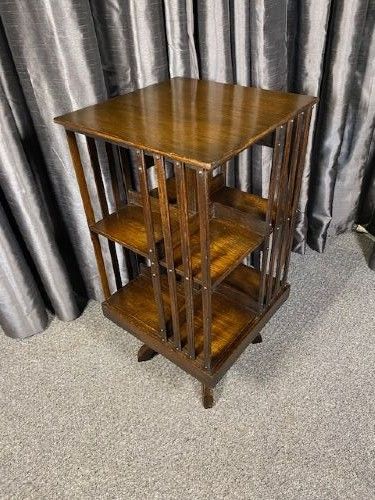
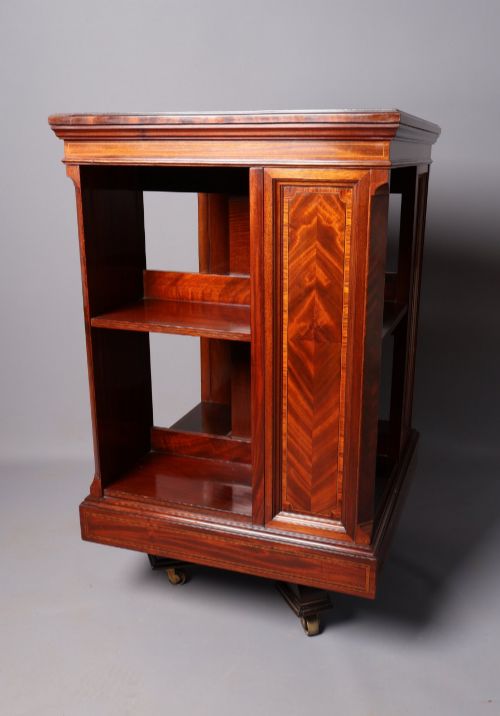
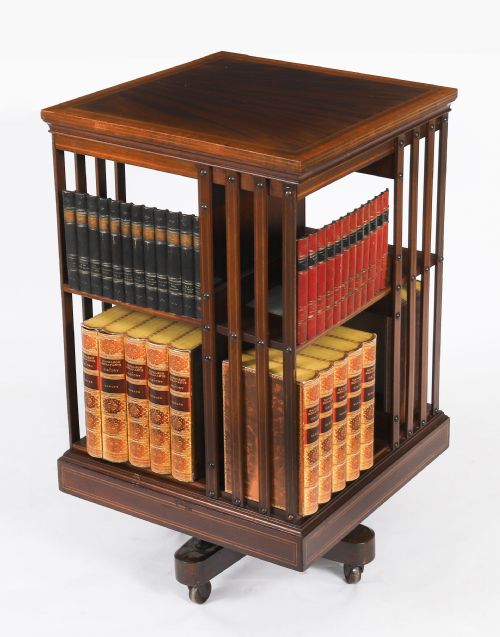
A vintage tier bookstand primarily manifests on this page as the revolving bookcase, a form built to sit beside a desk or armchair for easy access to volumes. Most examples encountered here date from the Edwardian period, constructed with multiple revolving tiers atop slender pillars or cabriole legs.
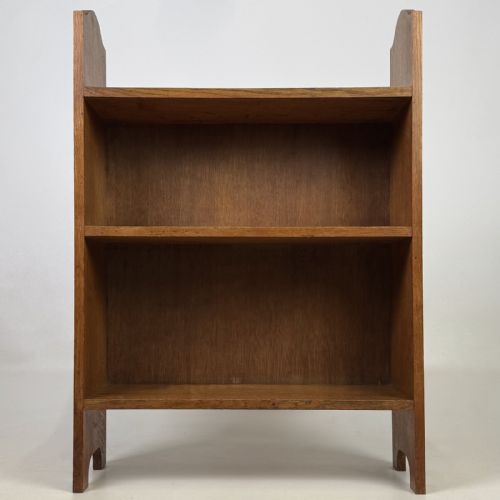
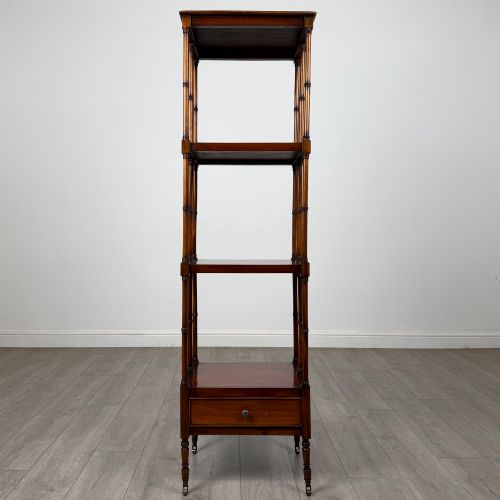
Beyond the standard revolving formats, the selection includes open bookcase designs and Regency waterfall bookcases in mahogany. These pieces vary from compact single or four-tier tables to taller structures, frequently incorporating circular tops and occasional satinwood or walnut elements.
Materials and construction
Cabinetmakers built these pieces predominantly in solid mahogany and oak, often selecting flame mahogany veneers for richer grain patterns on top surfaces. Inlaid satinwood details appear on select Edwardian examples, offering contrasting borders and decorative enrichment.
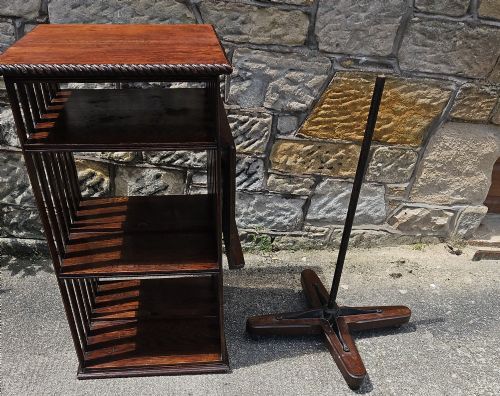
Revolving mechanisms rely on concealed internal metal and cast iron components that permit smooth rotation of the tiers. Structural support is provided by sturdy wooden pillars or four cabriole legs, balancing the weight of stacked books across the revolving tiers.
Vintage Tier Bookstand Retail Price Guide 2026
Typical asking prices for vintage tier bookstand among the pieces listed under this phrase on Sellingantiques today, from the lower quarter to the upper quarter. They describe what is for sale here now, not the wider market.
Many an Edwardian reader lost track of time simply spinning a loaded mahogany tier while searching for a single misplaced volume.
Assessing quality and finish
The distinction between standard items and superior examples lies in the choice of timber and the refinement of the cabinetwork. Mahogany with strong flame figuring or crisp satinwood inlay indicates a higher tier of manufacture than plain utility timber.
Mechanically, the quality rests in the smooth operation of the internal swivel mechanism and the stability of the upright pillars. Well-executed corner joints and cleanly turned wooden spindles separate finer workshops from mass production.
The Vintage Tier Bookstand Glossary
- Revolving bookcase
- A freestanding tiered shelving unit mounted on a concealed pivot mechanism that allows the whole structure to turn. This design enables access to books from any angle without moving the piece.
- Cabriole leg
- A furniture leg that curves outward and then tapers inward, finishing in a pad or foot. This form derives from classical furniture styles and appears frequently on Edwardian pieces.
- Flame mahogany
- A decorative veneer cut from timber where the branch meets the trunk, producing a rippled, flame-like pattern. Cabinetmakers utilised this figure on prominent exterior surfaces.
- Waterfall bookcase
- A tiered bookcase design where each successive shelf steps back from the one below, resembling cascading water. These pieces present an open shelving arrangement rather than a revolving drum.
Vintage Tier Bookstand: Frequently Asked Questions
How do revolving bookcases work?
These pieces use a hidden central pivot and ball bearing assembly fixed between the base and the lowest shelf. This internal metal hardware allows the stacked wooden tiers to turn effortlessly by hand.
Weight distribution is crucial for smooth rotation, so heavier volumes are best placed on the lower tiers to maintain balance while spinning.
Where should I place a tier bookstand?
A revolving bookstand functions best beside an armchair, sofa, or desk where books need to remain within arm's reach. Because the tiers turn freely, the piece can sit in a corner or an open room without blocking access.
Allow sufficient clearance on all sides so the tiers can complete a full rotation without striking nearby walls or furniture.
How do I identify an Edwardian bookstand?
Edwardian pieces typically feature lighter timbers such as mahogany and oak, often decorated with subtle satinwood stringing or crossbanding. The construction reflects early twentieth-century cabinetmaking standards with slender pillars and sometimes cabriole legs.
Many examples incorporate mechanical revolving elements that became widely popular in homes and offices during this period.
Are these bookstands suitable for heavy volumes?
Solid mahogany and oak structures provide substantial load-bearing strength for standard hardbacks and reference books across their tiers. The internal pivot mechanisms are engineered to support distributed weight when loaded evenly.
Care should be taken not to overload a single upper tier, as excessive top weight can strain the vertical pillars and affect the rotation.