

Vintage Three Stone
Vintage three stone jewellery centres on classic rings holding a trio of gems, representing past, present and future.
Vintage Three Stone
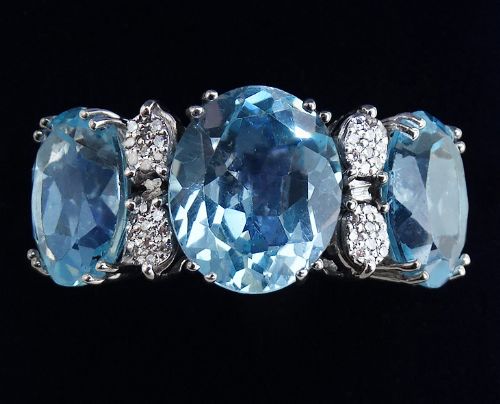
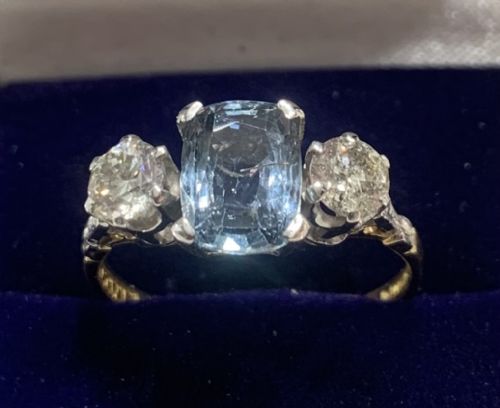
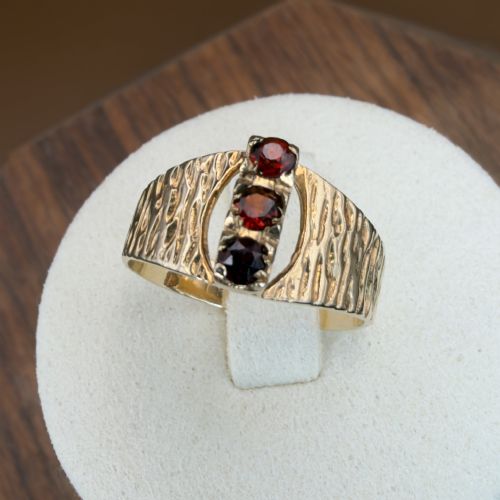
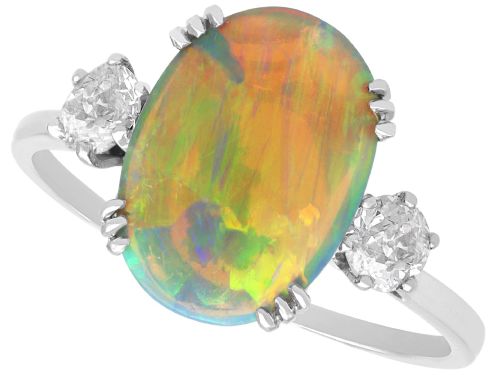
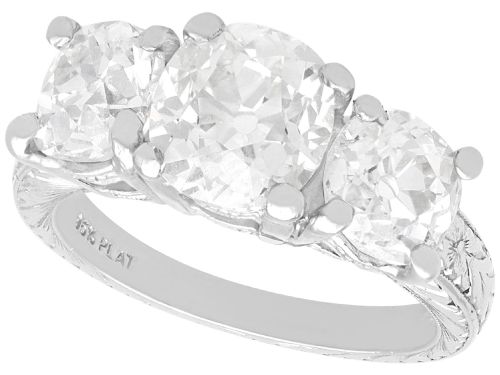
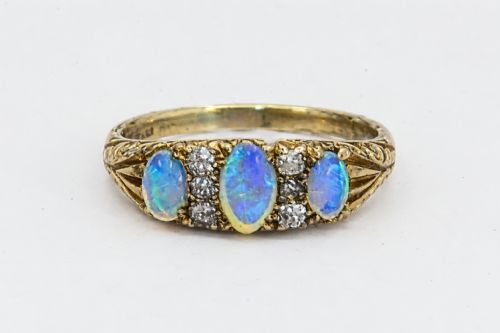
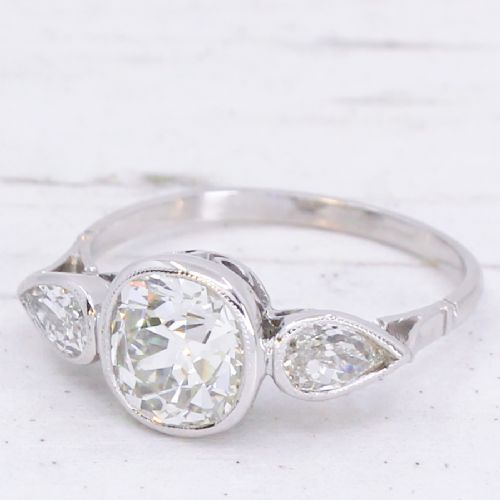
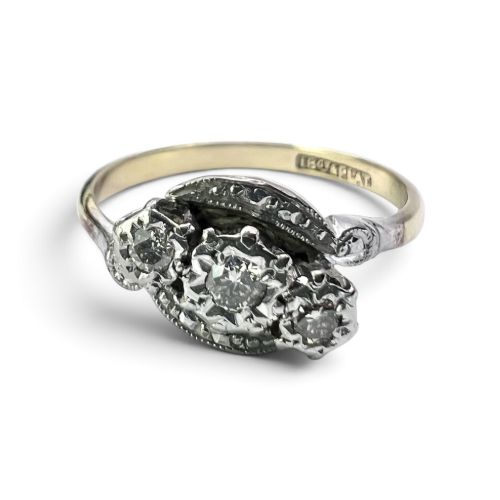
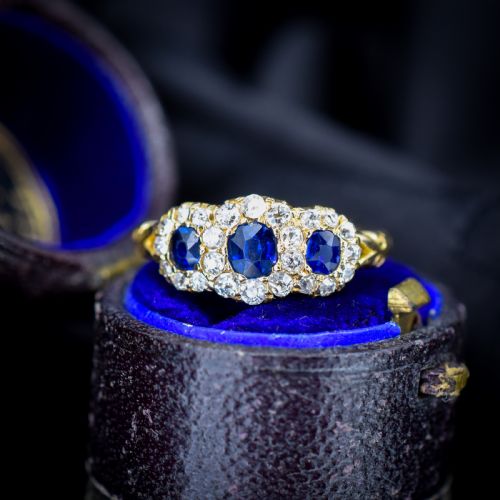
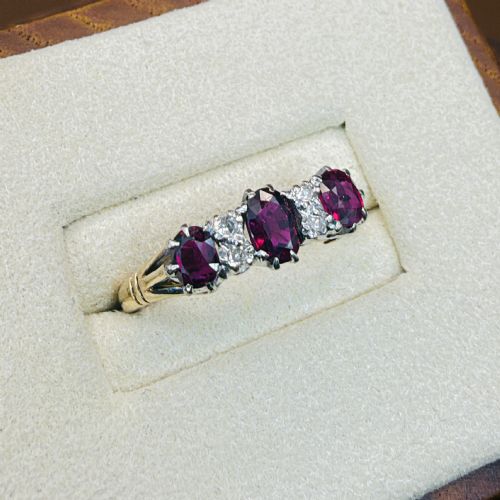
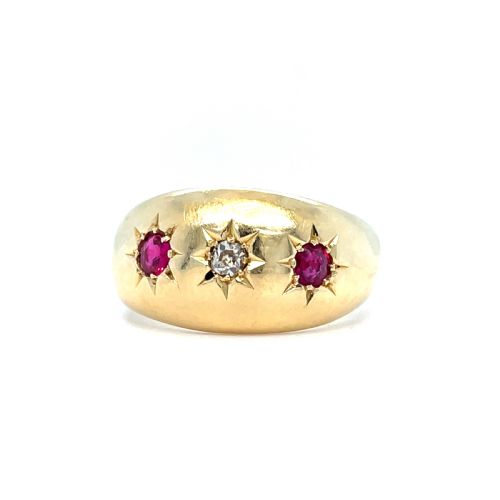
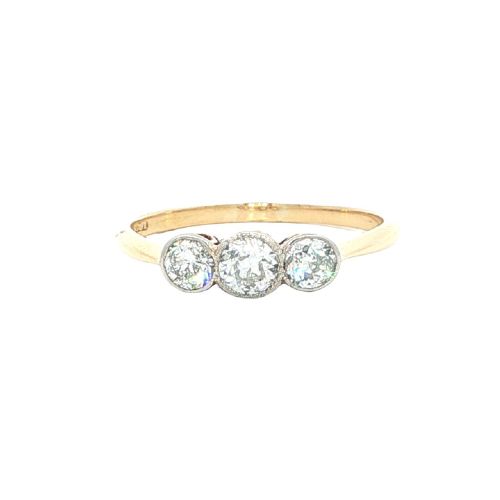
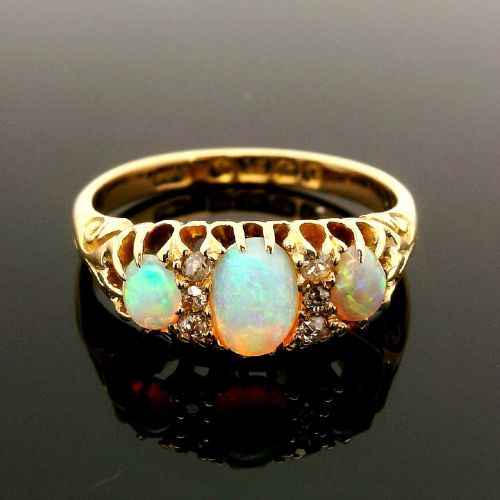
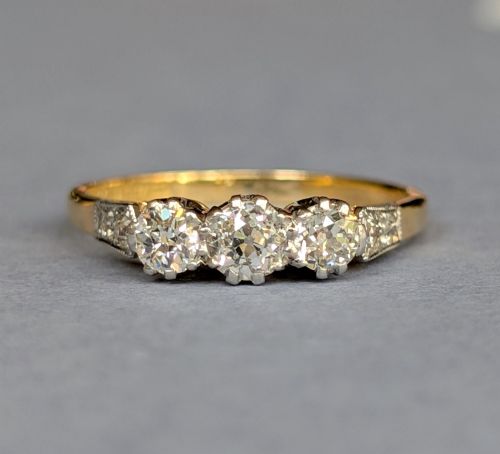
Vintage three stone items are primarily rings configured with a trio of prominent gems, often designated as trilogy designs. These pieces span periods from Victorian and Edwardian eras through Art Deco and Mid-Century decades, reflecting changing aesthetic preferences across generations.
The most common formats on this page combine diamonds with rubies, sapphires or opals, mounted in traditional band settings. While rings dominate the inventory, the wider selection occasionally includes pendants and sculptures.
Origins stretch from early twentieth-century workshops into the mid-century period, providing buyers with options carrying distinct historical character. The tripartite arrangement remains a enduring choice for engagement and dress rings alike.
Factors influencing quality
The standard of a vintage three stone piece relies heavily on the matching, clarity, and cut of the primary gems. Stones possessing harmonious proportions and balanced colour distribution elevate the overall impact of the trilogy arrangement.
Metalwork integrity and setting preservation dictate the structural longevity of the piece. Fine craftsmanship is evident in the secure, even spacing of the stones and the clean preservation of original prongs or bezel edges.
Materials appearing across the inventory include diamonds, sapphires, rubies, opals, and emeralds set into rings and pendants.
The Vintage Three Stone Glossary
- Trilogy
- A jewellery design featuring three distinct stones set in a row. This configuration traditionally symbolises the past, present, and future of a relationship.
- Old Cut
- A diamond cutting style prevalent before modern brilliant standards were established. These stones typically feature smaller tables, higher crowns, and open culets that catch candlelight effectively.
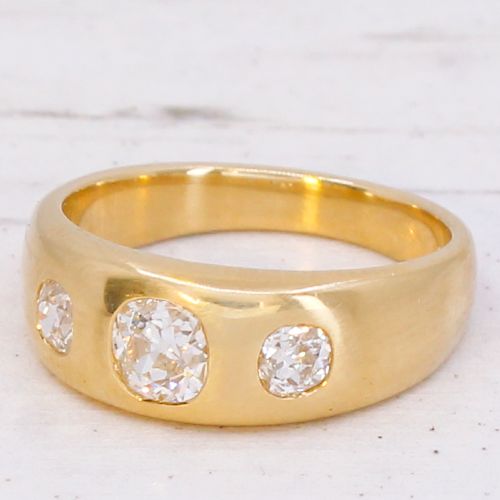
- Gypsy Ring
- A ring style where stones are flush-set directly into the thick metal band. This creates a smooth, rounded profile popular during the Victorian and Edwardian eras.
- Paste
- Hand-cut glass used historically as a gemstone simulant in antique jewellery. It allows for vibrant colour and sparkle without natural stone inclusions.
- Culet
- The small flat facet at the base of a gemstone. Older cuts frequently display a visible culet when viewed from the top through the table.
Vintage Three Stone: Frequently Asked Questions
What does a three stone ring mean?
A three stone ring traditionally carries sentimental weight, with the trio of gems symbolising the past, present, and future of a couple's shared life together.
This symbolic configuration has remained popular across multiple eras, from Victorian sentimental jewellery through to mid-century engagement traditions.
How do I identify an Edwardian three stone ring?
Edwardian pieces often utilise platinum and yellow gold alongside delicate, airy filigree work or platinum-topped gold settings. The diamonds from this era are typically old cuts with soft brilliance.
Maker marks and hallmarking details stamped inside the band also help verify the early twentieth-century origins of the piece.
What is an old cut diamond?
An old cut diamond refers to stones hand-faceted prior to the standardisation of modern brilliant cuts in the mid-twentieth century. These diamonds display distinctive optical traits, including smaller tables and deeper pavilions.
Their handcrafted nature means each stone possesses unique geometry and charm distinct from contemporary machine-cut gems.