



Vintage Three Bottle Decanter
A vintage three bottle decanter brings together matched glassware and secure frames for after-dinner service, offering both practical containment and period display.
Vintage Three Bottle Decanter
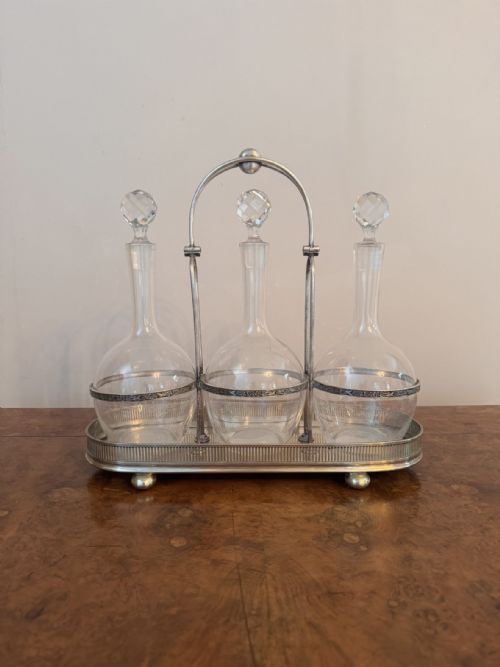
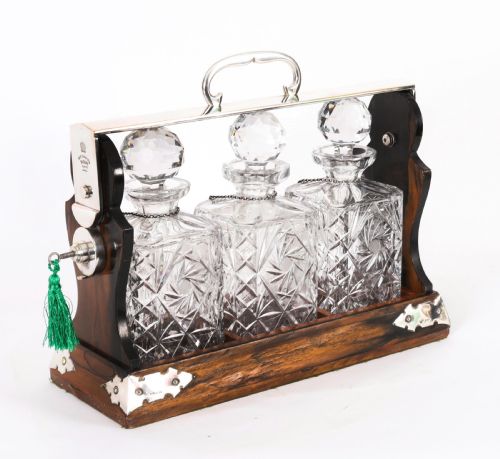
When a buyer searches for a vintage three bottle decanter, they encounter formats ranging from standalone cruet frames to fitted lockingtantaluses designed for the dining room or sideboard. The most common examples on this page are Edwardian and Victorian three-bottle setups housed in timber frames.
The materials span clear cut glass, heavy crystal, and moulded vessels held within frames of oak, coromandel, and satin wood. Metal mounts in silver plate, brass, and Old Sheffield plate complete the construction of these multi-bottle sets.
Origins stretch across the nineteenth and early twentieth centuries, capturing periods from the Regency era through to the Edwardian decades. Buyers find variations that include matching sets of glass decanters alongside frames equipped with locking mechanisms.
How They Were Made
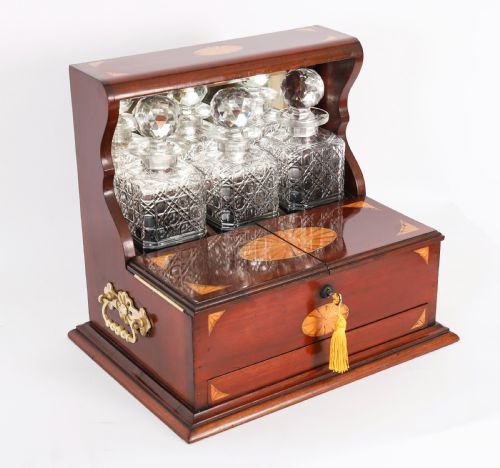
Glass vessels are shaped through cutting and crystal blowing, producing deep facets and three-ring necks that catch the light. Frames utilise solid timbers such as oak and exotic woods like coromandel, often enhanced with marquetry stringing and satin wood inlay.
Metal components involve silver plating over base metals, alongside brass mounts and heavy cast locks designed to secure the bottles within the frame. These elements are joined to create stable stands that support three separate decanters simultaneously.
Several sets include integrated games compartments alongside the locking decanters for complete evening entertainment.
What Varies in Quality
Quality reveals itself in the crispness of the glass cutting and the weight of the crystal bottles, where deeper facets and clearer metal distinguish finer examples from standard production. The presence of matching sets of three decanters rather than assembled replacements elevates a piece.
Cabinetwork separates the ordinary from the exceptional, visible in the selection of figured timbers like coromandel and satin wood, alongside precise marquetry stringing. Robust hardware, working locks, and substantial silver plating or brass mountings complete the standard of a superior build.
Betjemann’s·Elkington·The Goldsmith Co.
The Vintage Three Bottle Decanter Glossary
- Tantalus
- A locking drink cabinet that holds decanters securely within a wooden frame while displaying the bottles to view. The mechanism prevents pouring until the locking bar is released with a key.
- Cruet
- A fitted stand designed to hold multiple bottles or containers for condiments or beverages. These frames often feature handles and supporting rings for three or more vessels.
- Coromandel
- A dense, dark exotic timber with distinctive contrasting grain patterns used for fine nineteenth-century cabinetwork. It appears frequently on luxury tantalus frames.
- Cut crystal
- High-clarity glass containing lead oxide, shaped by wheel-cutting to produce sharp geometric patterns. The material is heavy and resonant when struck.
- Old Sheffield plate
- A composite material made by fusing a thin sheet of silver to a thicker copper base before rolling and forming. This technique predates modern electroplating.
Vintage Three Bottle Decanter: Frequently Asked Questions
How do tantalus locks work?
A metal bar spans the stoppers of the decanters and engages with a locking mechanism fitted to the wooden base or uprights. When secured with a key, the bar prevents the stoppers from being removed and the bottles from being lifted out.
This design allowed hosts to restrict access to spirits while keeping the bottles visible on the sideboard. The key is typically held separately by the owner.
Are all three decanters matching?
Many sets feature three matching vessels designed specifically for the frame, sharing identical glass cutting, height, and stopper styles. Some configurations incorporate various tall cut crystal bottles assembled together later.
Examining the neck rings, glass tint, and star-cut bases helps determine if the three bottles originated as a unified set. Matched sets remain more desirable for display.
What is the difference between a cruet and a tantalus?
A cruet functions primarily as an open stand for carrying multiple bottles or cruet jars during meal service, often lacking a security mechanism. A tantalus incorporates a locking bar specifically engineered to restrain the decanters.
Tantaluses emerged later in the nineteenth century as after-dinner luxury items for secure entertaining. Both forms accommodate multiple glass vessels within a unified frame.
How should I clean antique decanter glass?
Gentle washing with warm water and mild detergent removes dust and residue from the interior and exterior of cut glass bottles. Abrasive materials and harsh chemicals must be avoided to protect the historic surface.
Stoppers should be washed separately and stored safely out of the bottle to prevent sticking. Wooden frames require only dry dusting and occasional wax maintenance away from direct moisture.