

Vintage Tent Chandelier
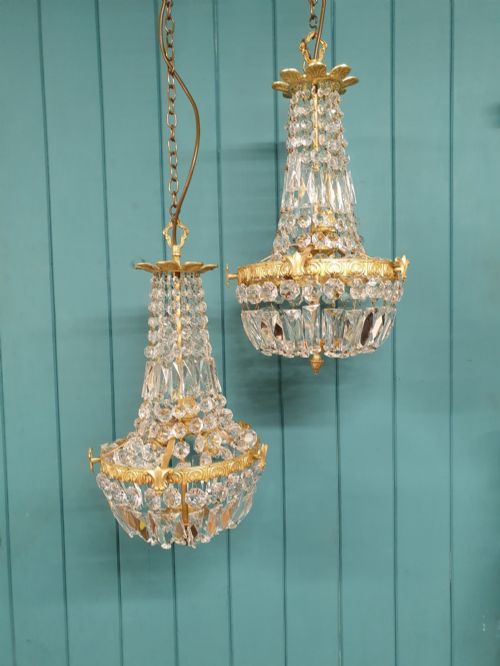
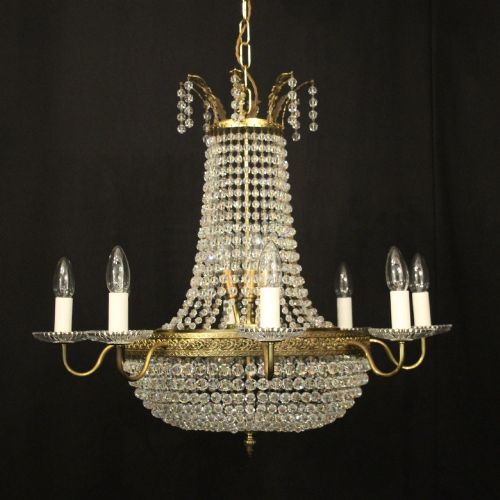
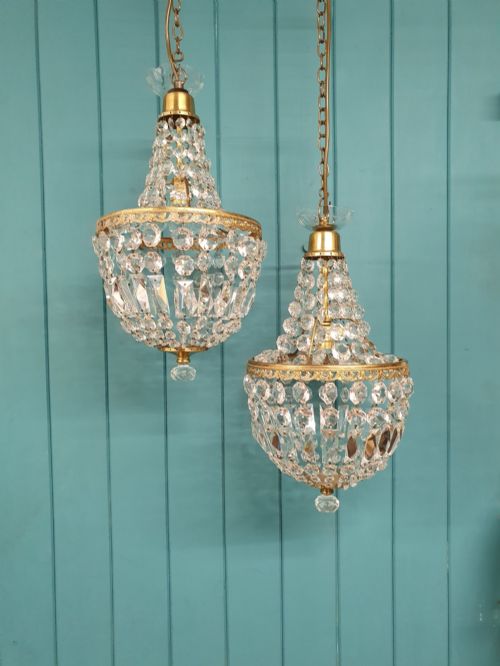
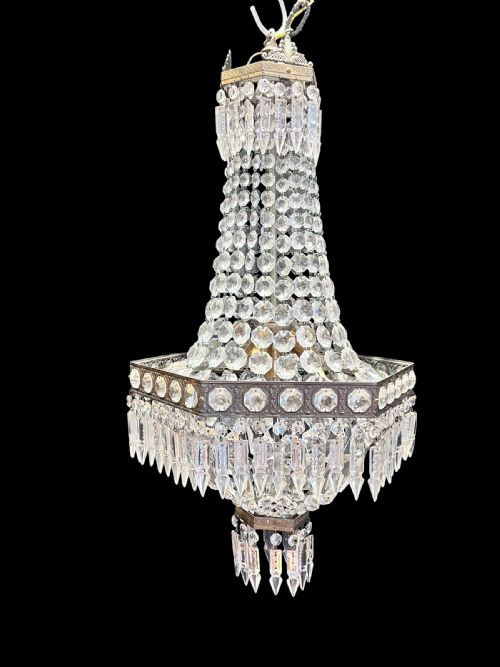
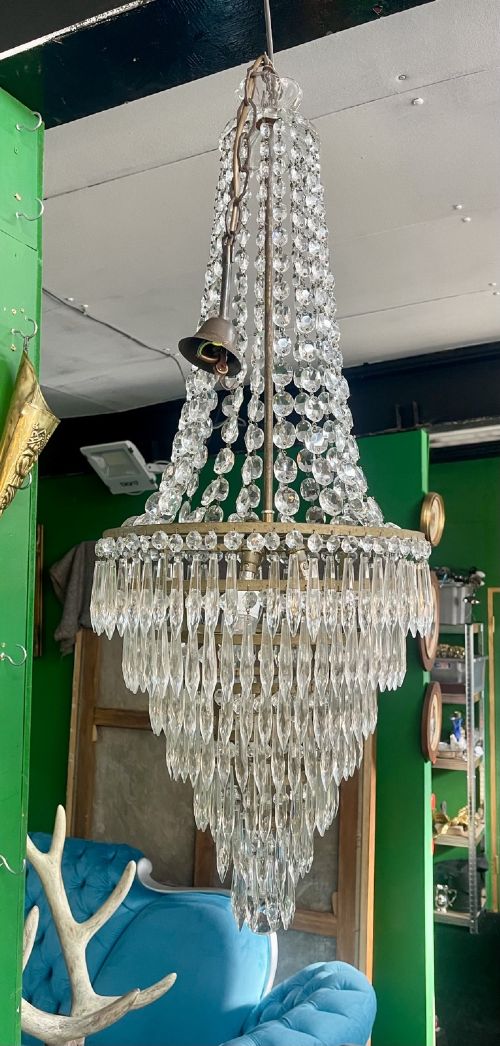
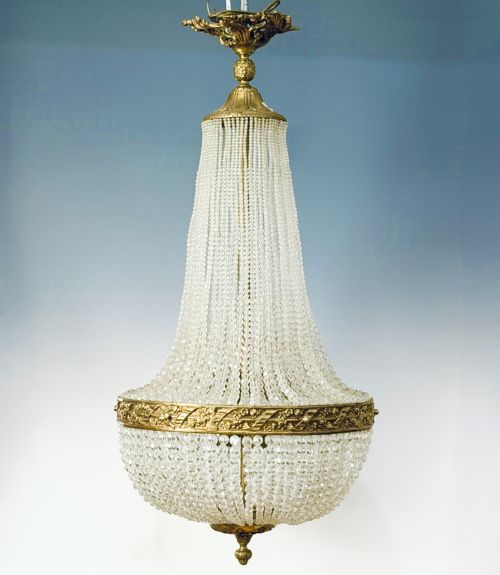
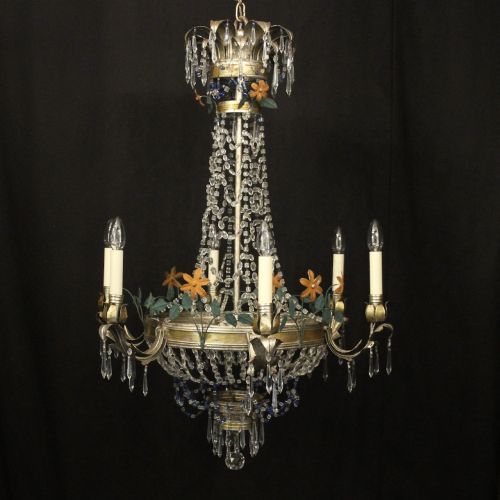
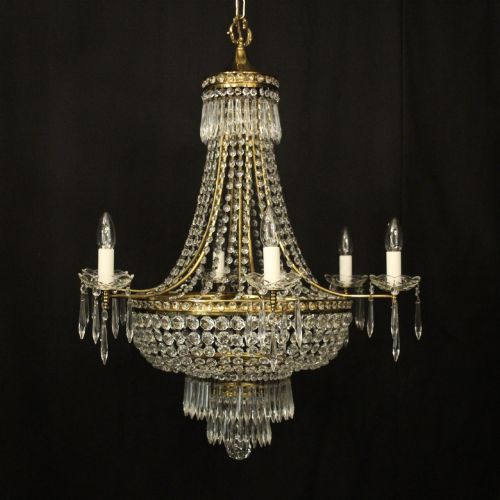
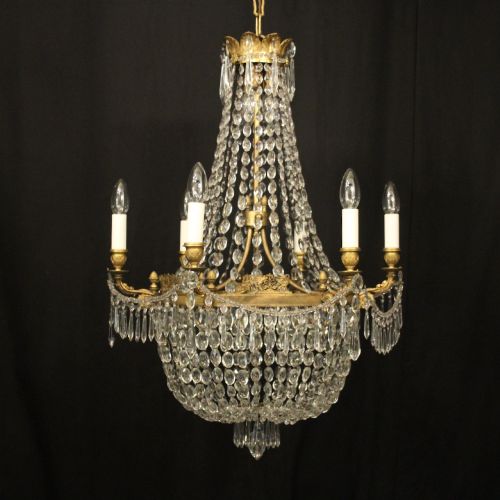
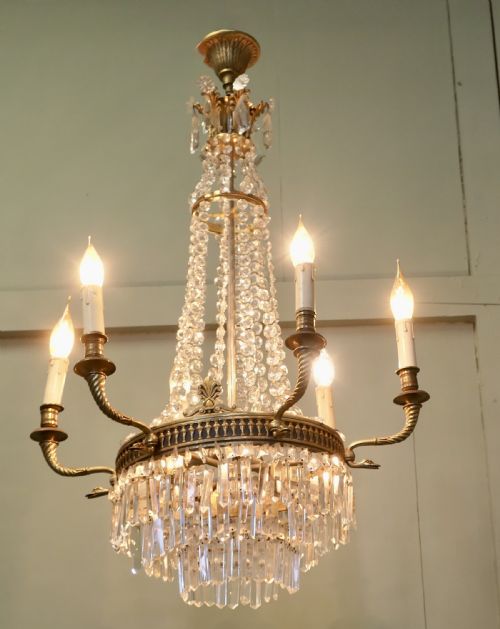
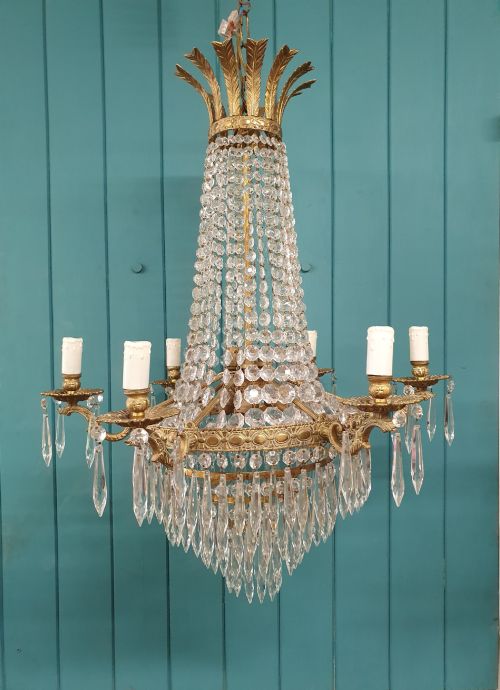
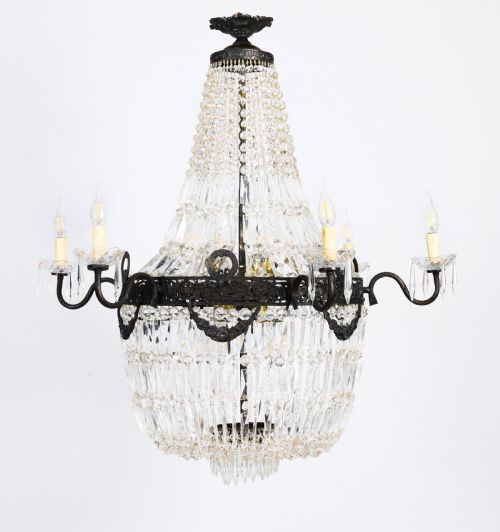
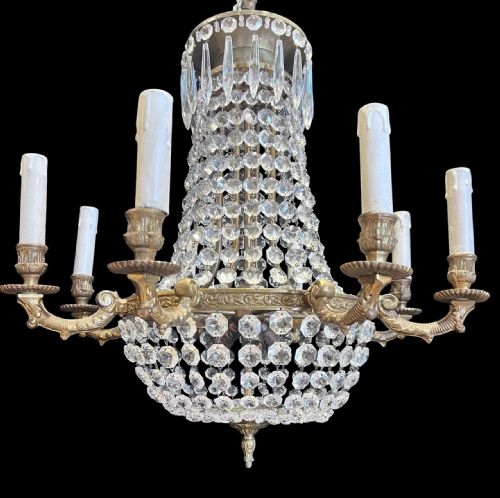
A vintage tent chandelier brings distinct period sparkle to a room, formed of upper draped glass swags cascading down to lower tiers.
Vintage Tent Chandelier
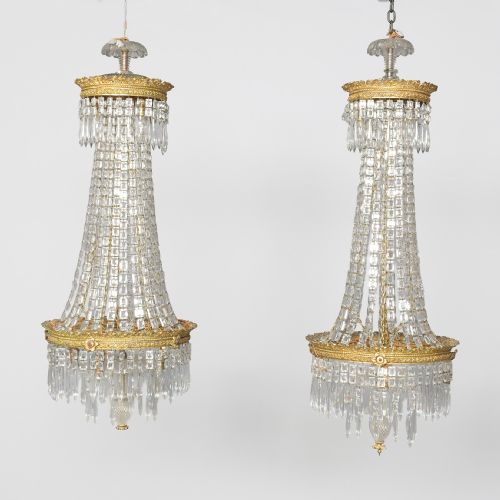
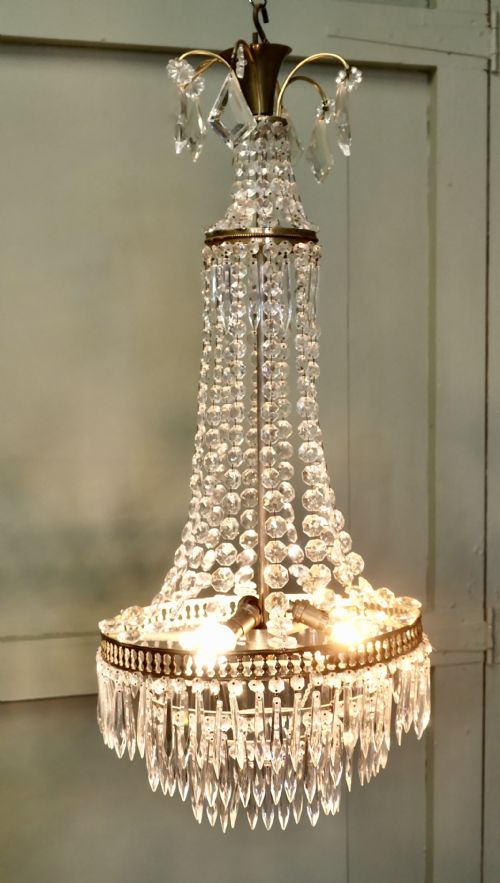
A vintage tent chandelier sits in a lineage of lighting stretching from the eighteenth century through the nineteenth century and into the early twentieth century. Buyers seeking this specific form encounter ceiling lights characterised by an upper canopy or crown linked by strings of glass beads to a lower metal ring, creating the distinctive tent silhouette.
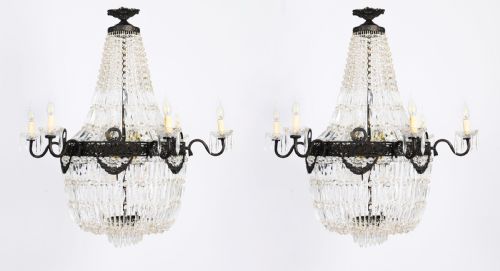
The selections span French Empire, Regency, and Louis Revival styles alongside Edwardian interpretations. Many examples combine this upper tent arrangement with lower waterfall drops, bag sections, or baskets containing multiple lights.
Origins lean heavily toward French workshops and chateaux aesthetics, though English examples also appear. Proportions range from small single-light hallway fixtures up to large ballroom chandeliers holding fifteen or sixteen lights.
How they were made
Constructed primarily around metal frames of brass, gilt bronze, or other metals, these fixtures rely on solid structural integrity to support heavy glass components. The metal armature provides both the upper crown and the branching arms that hold the candle tubes or electric bulb fittings.
Prisms, drops, beads, and bag sections consist of cut glass, cut crystal, or plain glass wired together by hand. Individual glass pieces are threaded onto fine wire swags that drape from the top ring to the perimeter of the chandelier.
Vintage Tent Chandelier Retail Price Guide 2026
Typical asking prices for vintage tent chandelier among the pieces listed under this phrase on Sellingantiques today, from the lower quarter to the upper quarter. They describe what is for sale here now, not the wider market.
Cherubs occasionally peek out from the metalwork atop early twentieth-century swags and spikes.
What varies in quality
Quality rests significantly in the density, clarity, and cutting of the glass components. Finer examples utilise heavy cut crystal and cut glass that refracts light with sharp brilliance, whilst simpler pieces employ plainer moulded glass drops.
The refinement of the metalwork also divides the range. Gilt bronze and finely chased brass mounts with detailed leaf decoration or figural elements elevate a piece well above standard cast metal frames.
Wedgwood
The Vintage Tent Chandelier Glossary
- Tent
- The upper conical section formed of glass beads draped from a crown ring down to a wider lower band. This shape defines the classic Empire and Regency lighting silhouette.
- Waterfall
- A cascading tier of glass drops flowing outward and downward below the main frame. It adds extra refractive depth beneath the central tiers.
- Bag chandelier
- A style featuring a gathered, sack-like lower section packed with close-set glass drops and beads. These often suspend beneath a top tent or swag arrangement.
- Gilt bronze
- Metal cast in bronze and treated with a gold-coloured finish or mercury gilding. It provides a rich, warm metallic tone seen on finer period frames.
Vintage Tent Chandelier: Frequently Asked Questions
How do I hang a heavy vintage tent chandelier?
These fixtures require secure ceiling joists and appropriate metal hooks to bear the substantial combined weight of the metal frame and glass drops.
Professional electrical installation is recommended to ensure the internal wiring safely handles the multiple light branches found on these pieces.
What rooms suit a tent chandelier best?
Dining rooms, hallways, and principal reception rooms provide suitable spaces where the vertical drop and sparkling glass can be fully appreciated.
Ceiling height determines the appropriate scale, with smaller multi-tier versions fitting modest rooms and larger fifteen-light fixtures requiring substantial clearance.
How do I clean the glass drops safely?
Cleaning involves wiping individual crystal and glass elements in situ using a mild soapy solution and a soft cloth without unstringing the delicate wire swags.
Taking down the entire fixture is rarely necessary unless a complete rewiring or structural restoration of the metal frame is required.
How do I tell an Edwardian chandelier from an 18th century one?
Dating relies on examining the metal casting techniques, screw threads, and the specific style of glass cutting used across the frame and drops.
Eighteenth-century and nineteenth-century examples often display hand-finished bronze mounts and specific crystal characteristics distinct from early twentieth-century revivals.