

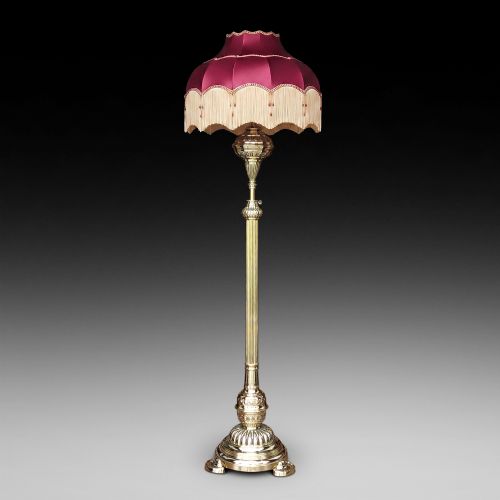


Vintage Telescopic Floor Light
A vintage telescopic floor light brings adjustable height and period character to a room, offering the practical adaptability needed for reading or ambient illumination.
Vintage Telescopic Floor Light
A vintage telescopic floor light combines height adjustment with a freestanding upright format, serving primarily as a functional lighting column within a domestic interior. These objects evolved from earlier oil-burning lamps and candle stands into electrified fittings designed to illuminate specific zones of a room.
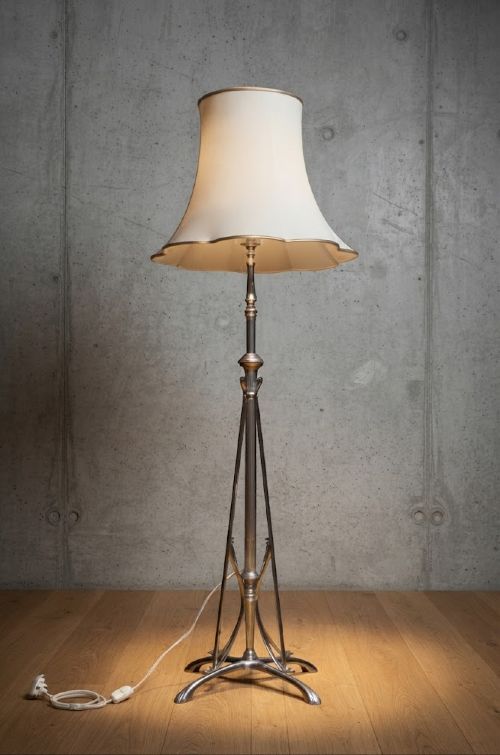
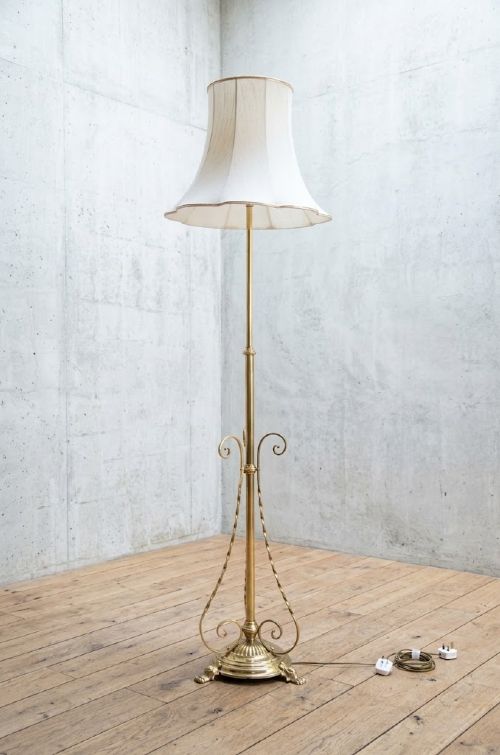
The versions most commonly met on this page span the Victorian, Edwardian, and Arts and Crafts periods, alongside early twentieth-century examples up to the nineteen-sixties. Standard lamps and floor lamps dominate the selection, frequently utilising extensible brass columns that alter the overall height.
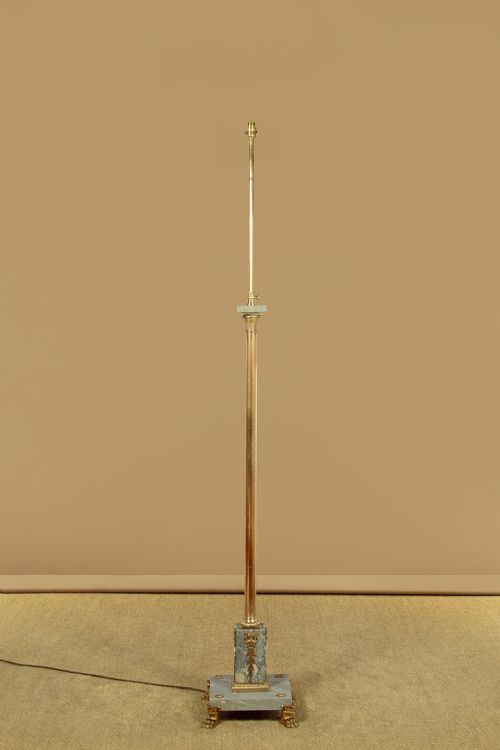
Origins range from English workshops to French studios, encompassing diverse aesthetic movements such as Art Nouveau and the French Empire Revival. Buyers encounter heavy metal standards designed to anchor substantial fabric shades or opaline glass diffusers.
How they were made
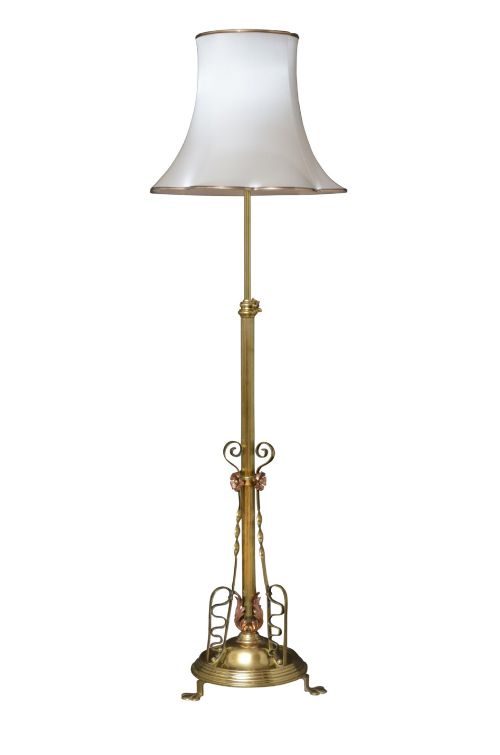
Makers constructed the primary upright shafts using solid brass, copper, and wrought iron, often incorporating internal sliding mechanisms to achieve the telescopic action. Cast metal components provided stability at the base, whilst upper sections held oil reservoirs or electrical lamp holders.
Decorative detailing relied on mixed media including marble, onyx, ormolu, and ebonised metal, applied to enrich the visual weight of the stand. Metalwork techniques involved casting, turning, and hammering, visible in the fluted Corinthian columns and hand-wrought ironwork.
Vintage Telescopic Floor Light Retail Price Guide 2026
Typical asking prices for vintage telescopic floor light among the pieces listed under this phrase on Sellingantiques today, from the lower quarter to the upper quarter. They describe what is for sale here now, not the wider market.
Listings incorporate nineteenth-century Victorian designs alongside Edwardian and 1920s Arts and Crafts examples, demonstrating a wide chronological spread of extensible lighting.
What varies in quality
The distinction between tiers rests upon the weight and gauge of the metal utilised in the telescopic shaft and base. Superior pieces employ heavy solid brass or dense cast elements that maintain stability at full extension without leaning.
Refinement of detail separates standard production from exceptional work, seen in crisp chasing on brass mountings, intricate wrought iron manipulation, or the integration of decorative stones like onyx and marble. The precision of the extending mechanism and the retention of original fittings dictate the standing of an individual piece.
Hinks of B'ham·Messenger
The Vintage Telescopic Floor Light Glossary
- Telescopic
- Describing an upright shaft composed of concentric tubes that slide within one another to alter height. This mechanism allowed users to raise or lower the light source depending on domestic requirements.
- Standard Lamp
- A term historically used for a freestanding floor lamp designed to hold a shade or oil burner. These fixtures provided movable illumination before overhead electric lighting became universal.
- Oryx
- A misspelling often encountered in descriptions of onyx, a banded silicate mineral used for decorative columns and bases. It adds colour and textural variation to the metal framework.
- Ormolu
- Gilded bronze applied as an ornamental mount or decorative accent on nineteenth-century stands. This technique imparts a rich golden tone to metal surfaces.
- Opaline
- A milky, translucent glass used for lamp shades and diffusers. It softens the light output while contributing a characteristic period aesthetic.
Vintage Telescopic Floor Light: Frequently Asked Questions
How do I adjust the height?
Most models use a central thumb screw or collar mechanism on the upper shaft. Loosening this allows the inner tube to slide up or down before locking it into the desired position.
Support the upper section with one hand whilst operating the fastener to prevent sudden drops.
Were these originally for oil or electricity?
Many examples began life as standard oil lamps featuring burners and glass reservoirs before being subsequently electrified. Others were manufactured specifically as electrical floor lighting during the early twentieth century.
Converted pieces often retain their original brass gallery mounts and fuel containers adapted for modern wiring.
How do I date an antique floor light?
Dating relies on stylistic clues such as the presence of Arts and Crafts hand-beaten metalwork, Victorian Corinthian capitals, or Edwardian opaline glassware. The construction methods of the weighted base and the threading on the metal components also offer clues to the period.
Comparative study of recorded maker signatures helps confirm the era of production.
What shade fits a standard lamp?
Shade selection depends on the harp or gallery fitting attached to the top of the lamp holder. Fabric shades, glass globes, and coolie styles all appear across different periods.
Proportion is the primary guide, ensuring the shade diameter complements the height and weight of the brass or iron base.