



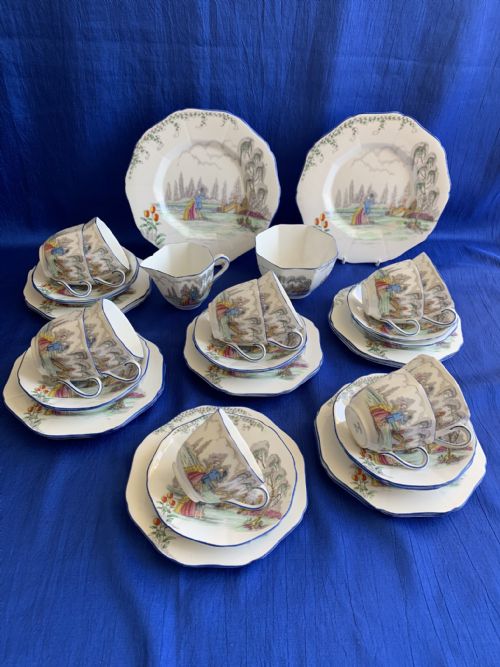
Vintage Teacup
These vintage teacup pieces bridge centuries of ceramic design, offering a tangible connection to historical tea culture that collectors prize.
Vintage Teacup
A vintage teacup search reveals an expansive lineage of ceramic artistry spanning from the eighteenth century through the twentieth century. These objects include individual cups and saucers, trios, and extensive afternoon tea services designed for social hospitality.
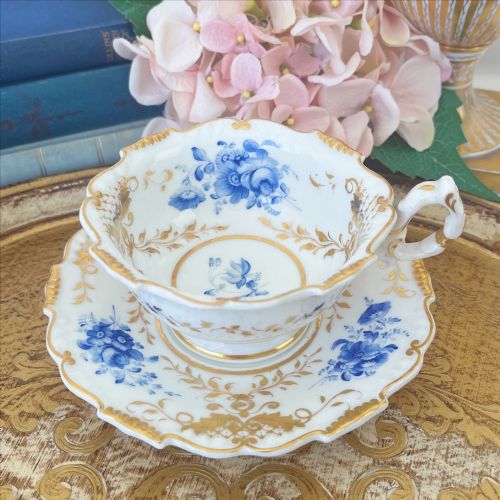
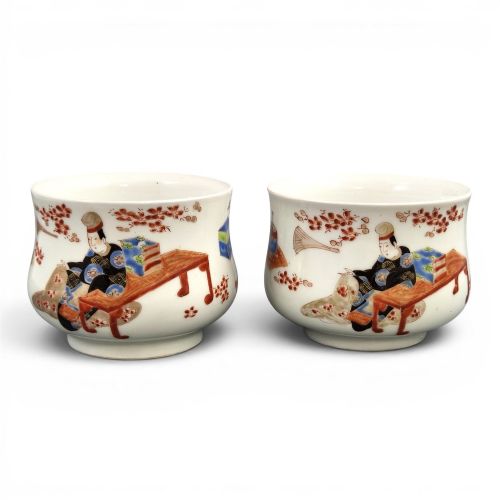
Most examples encountered here originate from English, European, and Asian kilns, reflecting periods such as the Georgian era, Victorian period, and Art Deco design movements. Forms range from delicate bone china breakfast sets to hand-painted porcelain cabinets cups.
Buyers frequently encounter porcelain tea sets and individual cups displaying distinct regional characteristics, whether English bone china or French Old Paris porcelain. Each piece documents the shifting domestic habits and decorative tastes of its specific era.
Elements of distinction and refinement
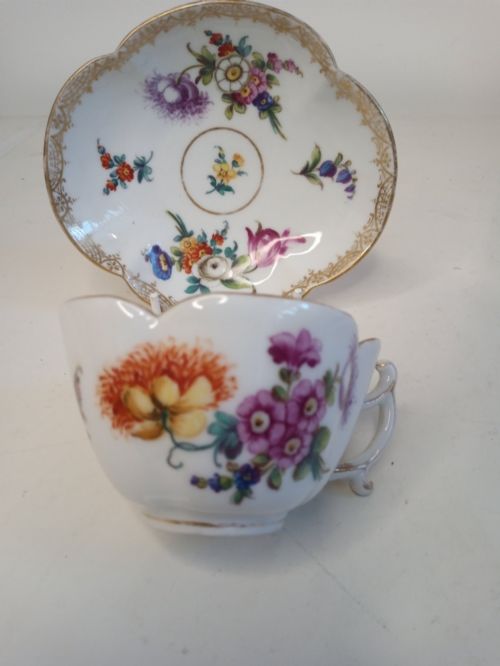
Quality rests upon the crispness of the porcelain moulding, the delicacy of the potting wall, and the precision of the hand-painted execution. Superior examples display meticulous brushwork in polychrome enamels and consistent, unblemished glaze surfaces.
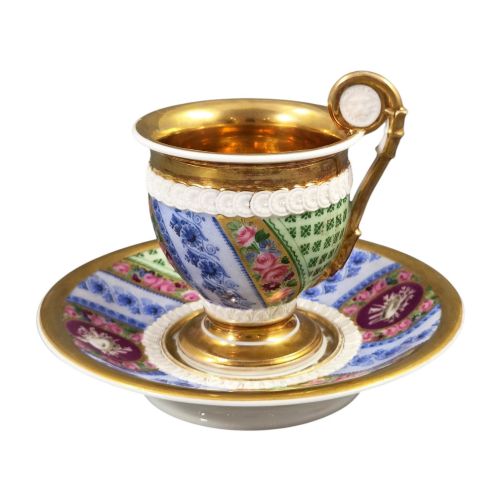
The integration of applied gilding and specialised handles, such as lion mask formations or gilt swags, distinguishes standard utility wares from cabinet-grade pieces. Maker reputation and the preservation of original hand-applied details further elevate a piece within its period.
Vintage Teacup Retail Price Guide 2026
Typical asking prices for vintage teacup among the pieces listed under this phrase on Sellingantiques today, from the lower quarter to the upper quarter. They describe what is for sale here now, not the wider market.
Some nineteenth-century cups feature hidden lion mask handles that peer out quietly while you sip your morning tea.
H & R Daniel·Royal Worcester·Royal Albert Crown China·KPM Berlin·Shelley
The Vintage Teacup Glossary
- Bone china
- A type of soft porcelain incorporating animal bone ash, producing a durable, milky-white body. It allows for thinner walls while maintaining structural strength.
- Soft-paste porcelain
- An artificial porcelain mixture developed in Europe before the discovery of true hard-paste deposits. It is characterised by a warm tone and softer glaze surface.
- Enamel
- Low-melting glass coloured with metal oxides, applied over the fired glaze for surface decoration. Artisans use it to create vibrant pictorial scenes and floral motifs.
- Gilding
- The application of gold leaf or gold powder to ceramic surfaces for decorative accentuation. It is frequently applied along rims, handles, and painted borders.
- Cabinet cup
- An ornamental cup and saucer produced primarily for display within a glass cabinet rather than daily use. These often feature elaborate hand-painted landscapes or portrait medallions.
Vintage Teacup: Frequently Asked Questions
How were antique teacups used?
These vessels functioned primarily during formal afternoon tea rituals, breakfast gatherings, and social visits in domestic drawing rooms. They were handled with care during polite conversation and social display.
Larger services accommodated multiple guests, often including matching slop bowls, milk jugs, and cake plates alongside the individual cups and saucers.
Can I use vintage teacups today?
Many sturdy bone china and porcelain cups remain suitable for gentle daily use or special afternoon tea occasions. Hand washing is strongly recommended to preserve delicate gilding and enamel work.
Pieces with extensive gold leaf or early soft-paste bodies are better reserved for careful handling or display to protect their historic glaze surfaces.
How do I identify eighteenth-century pieces?
Early pieces from the seventeen-hundreds often exhibit the characteristic translucency and weight variations of soft-paste porcelain. Hand-painted underglaze blue or early polychrome enamel palettes are common markers of this period.
Forming techniques relied heavily on hand-thrown potting methods rather than modern industrial slip casting, resulting in subtle individual variations between pieces.
What defines Art Deco teacups?
Art Deco examples from the early twentieth century feature geometric patterns, stylised floral motifs, and bold colour contrasts. Shapes often embrace cleaner, more angular silhouettes influenced by modern design.
Maker marks and stylistic motifs from this era reflect a distinct shift away from Victorian ornamentation toward streamlined, contemporary elegance.