

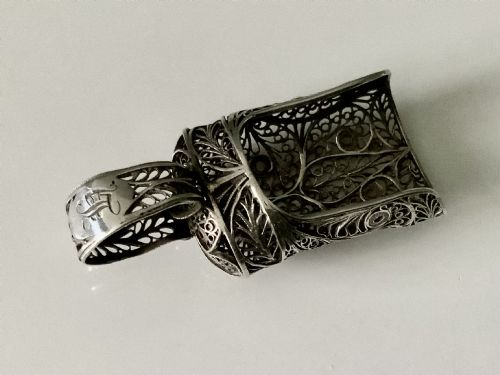
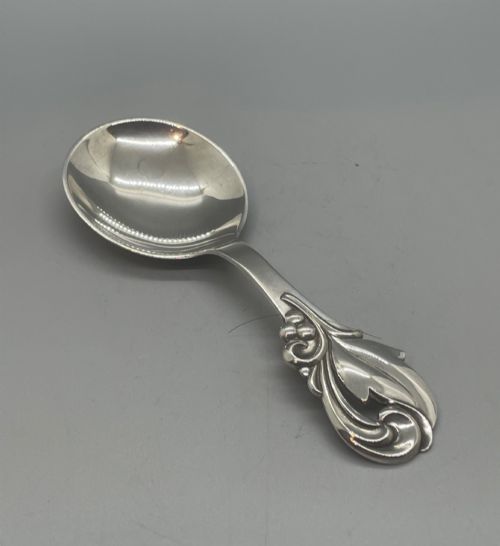
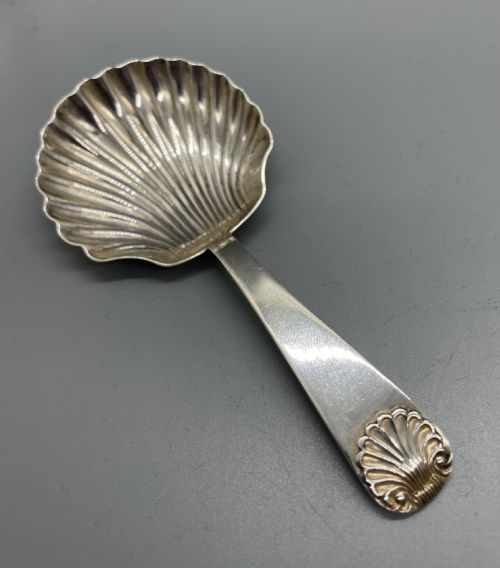
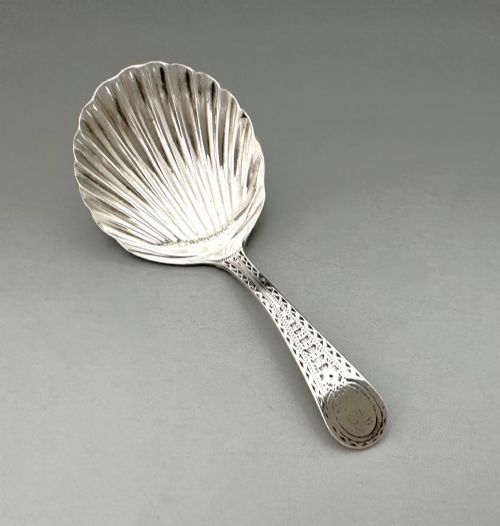
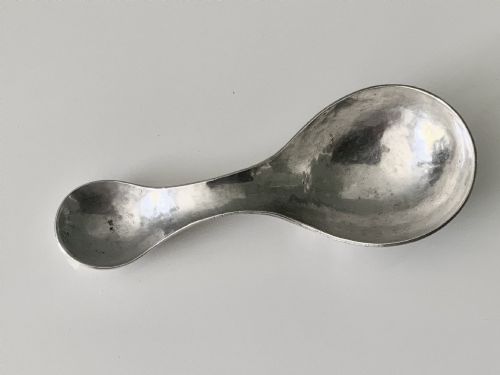


Vintage Tea Scoop
These vintage tea scoop pieces are small functional vessels shaped to measure dry leaf, crossing from Georgian silver into Danish modern work.
Vintage Tea Scoop
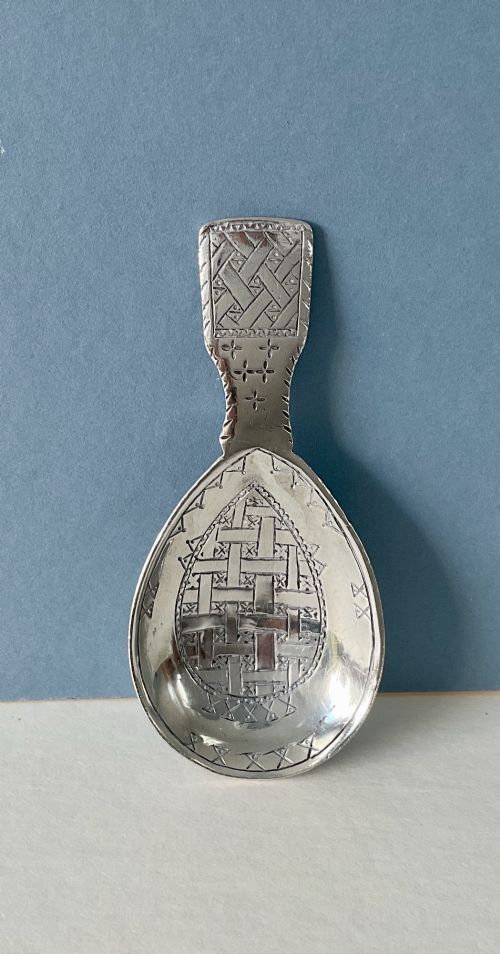
When you search for a vintage tea scoop, you encounter caddy spoons and tea accessories spanning from the eighteenth century through to the mid-twentieth century. The selection leans heavily towards sterling silver caddy spoons, alongside occasional hardwood oriental spoons and bamboo tea scoops used in ceremonies.
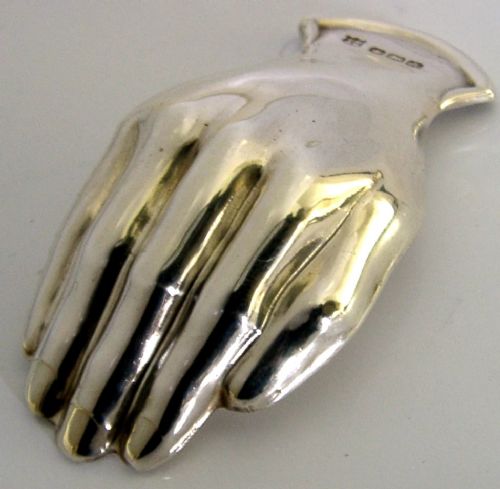
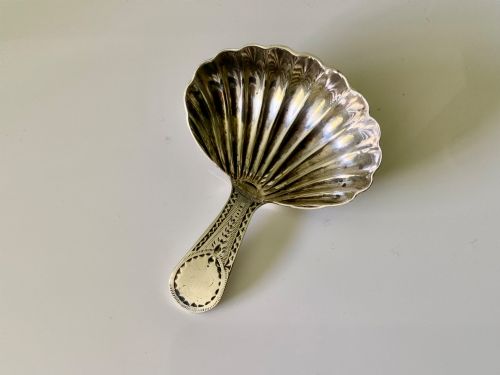
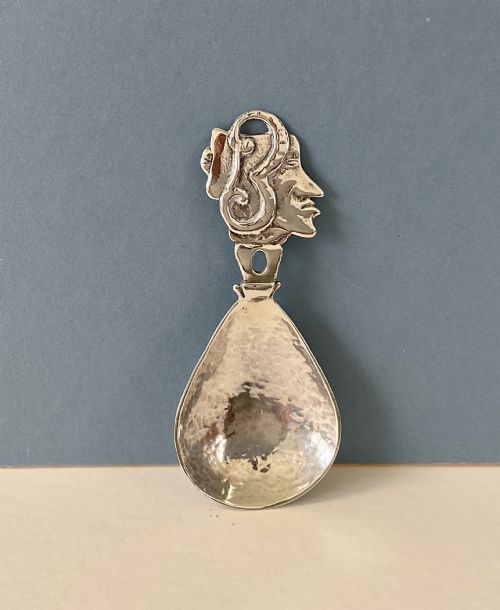
Forms range from simple shell bowls with engraved handles to novelty jockey caps and Arts and Crafts hammered silver designs. You also meet sugar tongs and sugar nips listed alongside the core scoop inventory.
Origins stretch across English provincial towns, London silversmiths, Scandinavian workshops, and American makers. The heavier concentration sits in Georgian, Victorian, and Edwardian silver pieces.
How they were made
Sterling silver and standard silver dominate the metalwork, shaped through casting, hammering, and die-stamping. Many bowls feature engraved decoration or applied enamel panels, particularly in Scandinavian and later Arts and Crafts examples.
Hardwood and bamboo pieces rely on carving and natural bending techniques. Treen scoops show careful hand shaping from single pieces of timber.
Vintage Tea Scoop Retail Price Guide 2026
Typical asking prices for vintage tea scoop among the pieces listed under this phrase on Sellingantiques today, from the lower quarter to the upper quarter. They describe what is for sale here now, not the wider market.
Listings include items spanning from the eighteenth century to the 1960s, executed in sterling silver, silver gilt, enamel, and hardwood.
What varies in quality
Quality rests on the weight of the metal and the crispness of the hand engraving or chasing on the bowl and handle. Double-struck handles and clear, legible hallmarks indicate careful domestic production by established silversmiths.
Design ambition separates standard spoons from notable maker pieces, such as those bearing Liberty, Georg Jensen, or David Andersen attributions. Enamel work and specialised novelty forms introduce higher levels of artisan execution.
Judy·Liberty·David Andersen·Georg Jensen·Plucknett
The Vintage Tea Scoop Glossary
- Caddy spoon
- A small spoon specifically designed for measuring loose tea leaves from a caddy into a pot. These form the majority of silver examples on the market.
- Sterling silver
- An alloy of silver containing ninety-two point five percent silver by mass, standard for English silver pieces. Most listed items carry hallmarks confirming this standard.
- Silver gilt
- Silver that has been coated with a thin layer of gold on its surface. This finish often appears inside the bowl of decorative spoons.
- Chashaku
- A traditional Japanese bamboo tea scoop used in the tea ceremony. It is shaped by bending heated bamboo over a form.
- Double struck
- A method where a coin or spoon die strikes the metal twice to ensure high relief and sharp design details. This technique produces heavier, more defined handles.
Vintage Tea Scoop: Frequently Asked Questions
What is a vintage tea scoop?
A vintage tea scoop is a small utensil used historically to measure dry tea leaves from storage containers. Most examples found are silver caddy spoons, though bamboo and hardwood scoops also exist.
These pieces vary from plain utilitarian bowls to elaborate novelty shapes like jockey caps. They reflect the changing domestic habits of tea drinking across several centuries.
How do I date a silver scoop?
Silver scoops often carry hallmarks that identify the assay office, the maker, and the exact year of production. British pieces typically use date letters stamped directly into the metal.
Stylistic cues also help narrow down the period, ranging from Georgian engraving to Arts and Crafts hand hammering. Examining the marks provides the most precise date.
What is the difference between a caddy spoon and a sugar scoop?
Caddy spoons were designed specifically to handle dry loose tea leaves before brewing. Sugar nips and sugar tongs handled lump sugar for sweetening the cup.
While their functions differed on the tea table, collectors frequently group them together under tea accessories and silverware. Their sizes remain similarly compact.
How were bamboo tea scoops used?
Bamboo tea scoops, known as chashaku, serve a specific role in the Japanese tea ceremony. They transfer powdered green tea from a container to the tea bowl.
Carved from bamboo and curved by heat, these minimalist tools emphasise tactile engagement. They contrast with the heavy metal work of European silver spoons.