



Vintage Table Striker
A vintage table striker brings tactile ritual to daily lighting and summons guests with resonant brass or carved wood.
Vintage Table Striker
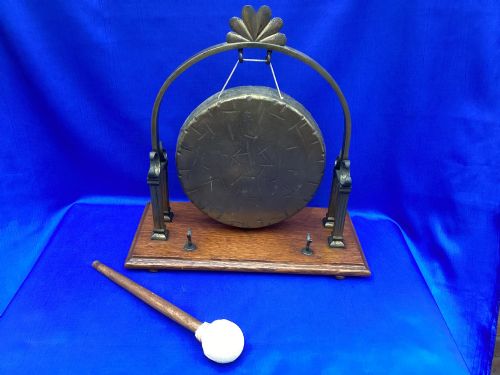
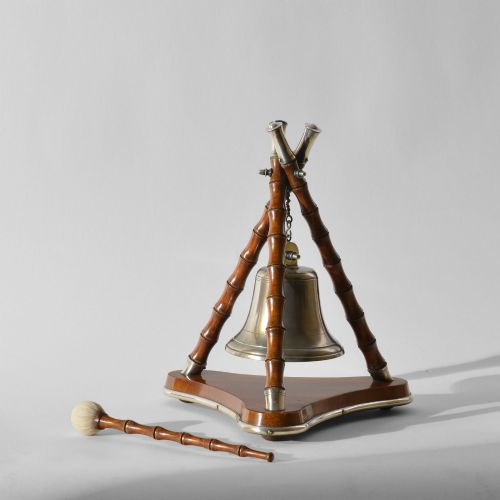
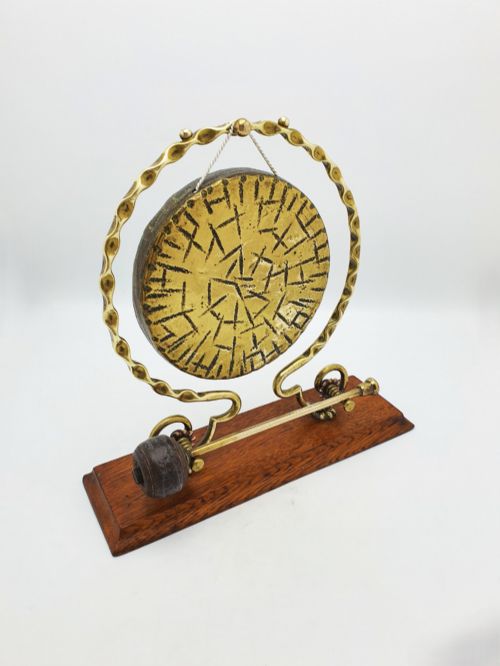
A vintage table striker encompasses domestic dinner gongs and match or vesta strikers designed for tabletop use. These objects span periods from the late nineteenth century into the twentieth century, reflecting varied domestic habits.
The versions most commonly met on this page include brass dinner gongs mounted on oak bases and handheld match strikers in sterling silver, glass, and brass. Forms range from Edwardian silver pieces to carved mango wood and Anglo-Indian engraved brass.
Makers and origins reach from English workshops to Chinese export and 20th century folk art traditions. Buyers encounter everything from compact desk accessories to large carved floor and table gongs.
How they were made
Makers utilised cast and engraved brass, heavy oak bases, and cast iron to build durable dinner gongs that could sustain repeated percussion. Metal strikers and cord hangings were paired with the main body to produce a clear, resonant tone.
Match and vesta strikers combined textured glass, sterling silver, and semi-precious stones such as onyx and lapis lazuli. These desk accessories relied on precise metalwork and fitted glass inserts to safely hold matches and provide a striking surface.
Vintage Table Striker Retail Price Guide 2026
Typical asking prices for vintage table striker among the pieces listed under this phrase on Sellingantiques today, from the lower quarter to the upper quarter. They describe what is for sale here now, not the wider market.
Someone once carved an entire dinner gong out of mango wood, proving that not every musical summons in a Victorian household required heavy metal.
What varies in quality
The refinement of the surface decoration and the weight of the materials separate standard examples from finer works. Hand-engraved brass and deeply carved wood show an artisan's hand, whereas simpler cast items lack that distinct depth.
The harmony and duration of the gong's resonance indicate the quality of the metal alloy and casting precision. Selection of secondary materials, such as solid oak bases or hallmarked sterling silver mounts, elevates a domestic object into a piece of fine craftsmanship.
George Betjemann
The Vintage Table Striker Glossary
- Vesta case
- A small portable box used for holding safety matches, often fitted with a textured striking surface on the base. These pieces were common pocket and tabletop accessories in the nineteenth and twentieth centuries.
- Dinner gong
- A suspended metal disc or bowl struck with a mallet to announce meals in large houses. They are mounted on wooden frames or stands.
- Sterling silver
- An alloy of silver containing ninety-two point five percent silver and seven point five percent other metals, typically copper. This standard denoted high-quality domestic metalwork in British manufacturing.
- Aesthetic Movement
- A late nineteenth century design style that emphasised visual beauty over narrative or moral content. Objects from this movement often show clean lines and simplified geometric forms.
- Cast iron
- An iron-carbon alloy poured into a mould to form solid, heavy objects. It was frequently utilised for robust Victorian dinner gongs.
Vintage Table Striker: Frequently Asked Questions
How do you strike a table gong?
Hold the handheld wooden or padded striker firmly and deliver a single, measured blow to the centre of the metal disc. Allow the vibration to decay naturally before striking again to appreciate the full resonance.
Avoid using excessive force, which distorts the tone and strains the cord or mounting frame. A gentle tap on brass or iron yields a rich, sustained hum.
Where were table strikers used?
Dinner gongs stood in hallways or dining rooms to summon household members and guests to meals. Match strikers rested on desks, smoking tables, and mantelpieces for lighting pipes or candles.
Their placement depended entirely on domestic convenience and the formal routines of nineteenth and twentieth century homes.
How do I clean brass gongs?
Dust the metal regularly with a soft, dry cloth to prevent the accumulation of grit in engraved recesses. Avoid aggressive chemical polishes that strip away the aged patina built up over decades.
If cleaning is necessary, use a mild, non-abrasive metal cleaner applied sparingly with a cloth, then buff gently to restore the natural shine.
Are these strikers safe for modern matches?
Most vintage match and vesta strikers feature textured glass or metal surfaces designed for safety matches of the period. Modern strike-anywhere matches may ignite too violently on historic textured glass.
Test the surface gently with a single match to ensure the friction texture remains effective without damaging the historic material.