

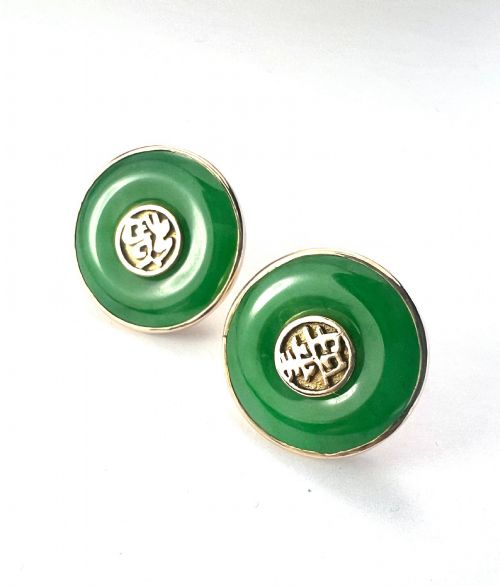
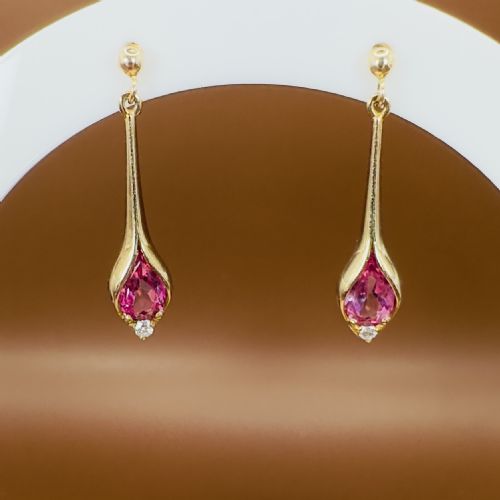

Vintage Stud Earrings
Vintage stud earrings bring close-fitting historical gemstones and precious metals to the earlobe, offering compact character that easily suits daily wear.
Vintage Stud Earrings
When searching for vintage stud earrings, buyers encounter a focused selection of close-fitting lobe adornments spanning periods from the Victorian era through the mid-twentieth century. These pieces sit directly against the ear or drop slightly, featuring central gemstones secured by metal settings.
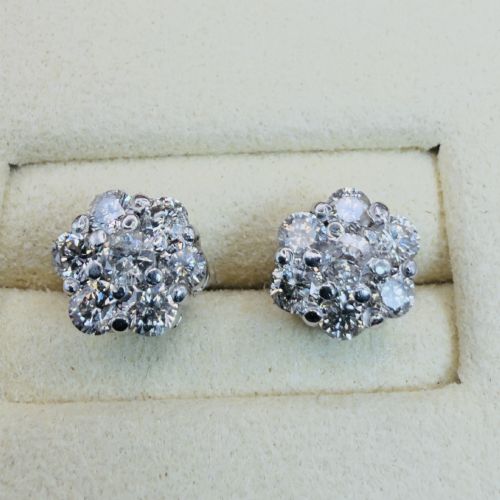
The most common examples on this page date from the 1950s and 1960s, heavily weighted toward clustered arrangements of diamonds and coloured stones set in nine-carat and eighteen-carat gold. Alongside these mid-century designs, earlier Edwardian and Art Deco examples appear with geometric platinum settings and stepped cut stones.
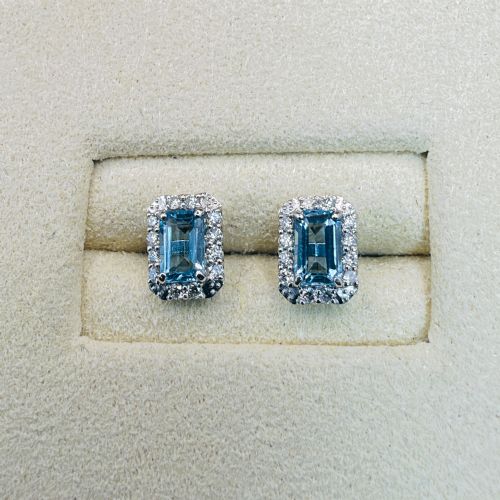
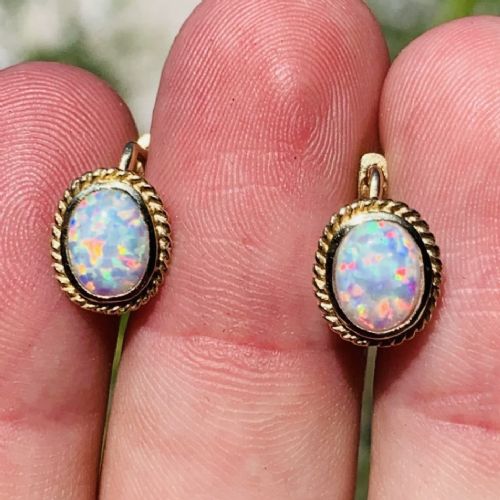
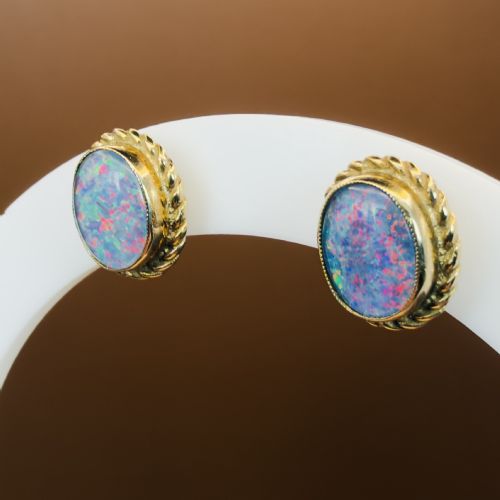
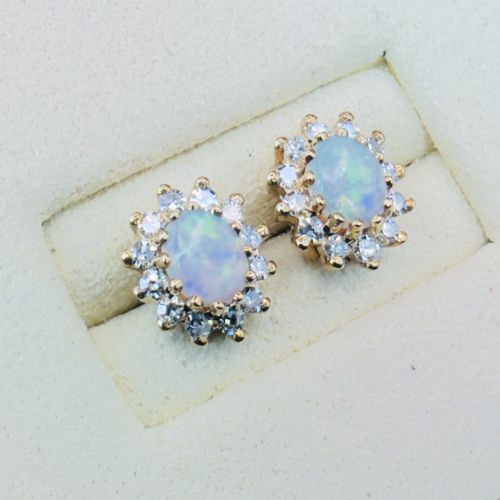
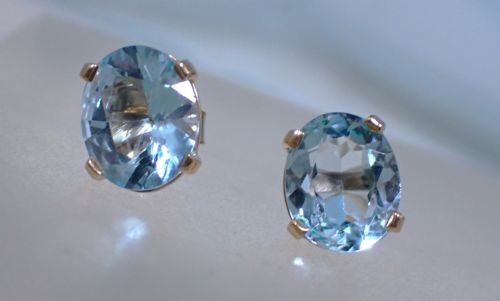
Forms vary from simple cabochon opal solitaires to complex halo clusters incorporating pearls, garnets, and aquamarines. Buyers find both screw-backs and standard posts among the fastenings, reflecting the decade of production.
How they were made
Metals span nine-carat, fourteen-carat, and eighteen-carat gold, alongside platinum and silver-gilt, providing structural integrity for delicate stone settings. Gold and platinum are worked into prongs, bezels, and complex cluster frames to secure the gems firmly.
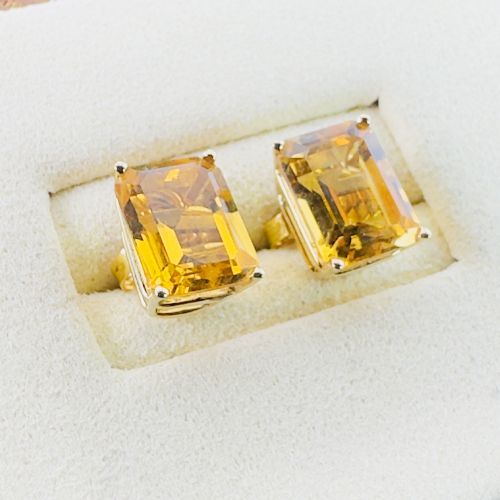
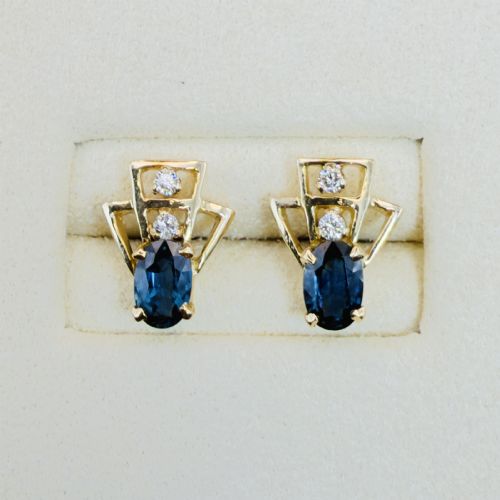
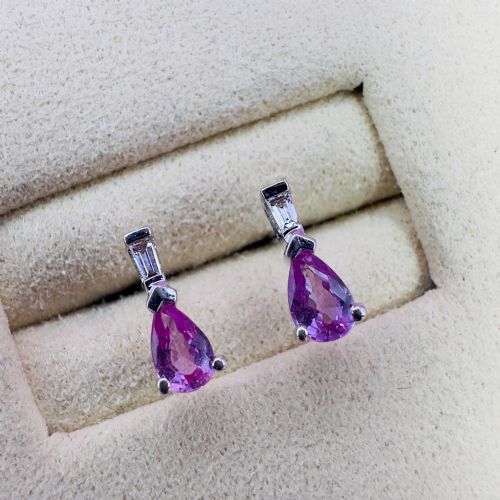
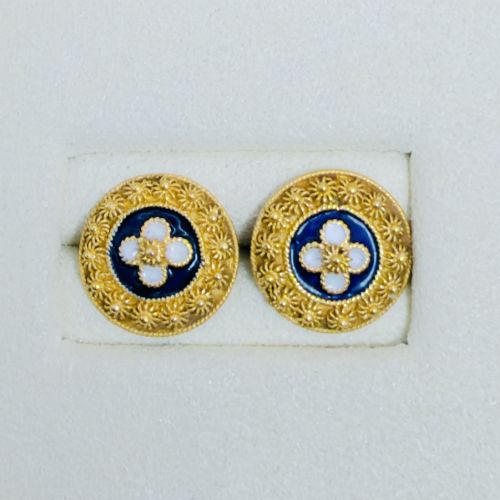
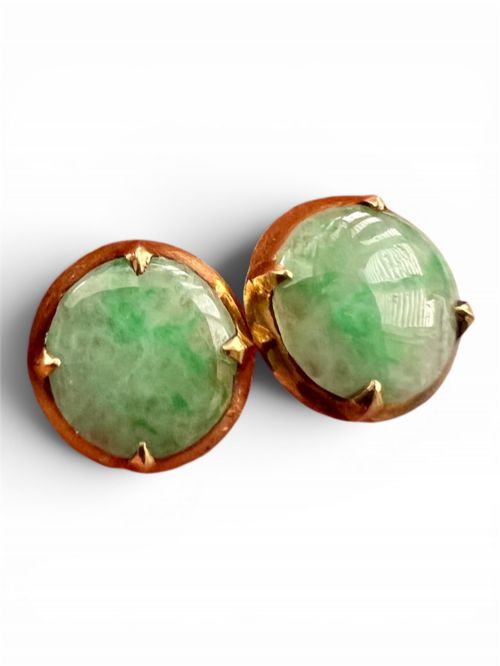
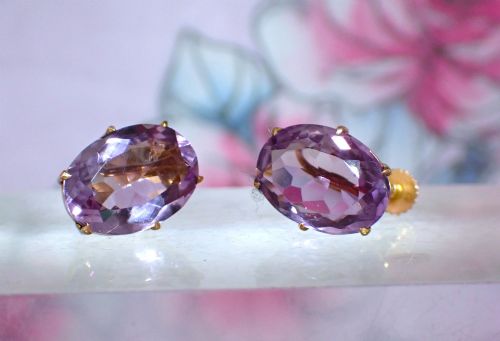
Gemstones including diamonds, sapphires, emeralds, opals, jade, and pearls are shaped using period cuts such as emerald cut, oval cabochon, pear, and old cut. Enamel work and granulation occasionally supplement the stones on floral and patterned motifs.
Button up your lobes with engraved metal buttons that look entirely dressed for a tailored waistcoat.
What varies in quality
The standard of materials dictates much of the distinction, separating simple base metals or paste stones from solid platinum, high-carat gold, and well-matched natural gem groupings. The presence of certified or substantial diamond weight alongside fine emeralds, sapphires, or natural pearls elevates the piece.
Execution of design also marks the range, separating standard commercial production from meticulous Art Deco geometric wirework, hand-engraved detailing, and precise stone calibration within cluster arrangements.
Deakin & Francis·Mikimoto
The Vintage Stud Earrings Glossary
- Cabochon
- A gemstone shaped and polished with a smooth, rounded surface rather than faceted facets. This style highlights the natural optical phenomena in stones like opals, jade, and star sapphires.
- Cluster
- An arrangement where a larger central stone is surrounded by a ring of smaller gems, typically diamonds or pearls. This technique maximises visual impact and light reflection on the earlobe.
- Screw back
- A mechanical fastening utilising a threaded post and a small nut screwed down to secure the earring. This design accommodated non-pierced ears commonly during the mid-century period.
- Platinum
- A dense, silvery-white precious metal prized for its strength and durability in fine jewellery. Its rigidity allowed makers during the Art Deco era to create delicate, lace-like settings.
- Halo
- A concentric ring of pavé or bezel-set smaller stones encircling a larger focal gem. The surrounding border enhances the perceived size and brilliance of the central stone.
Vintage Stud Earrings: Frequently Asked Questions
How do I secure screw back earrings?
Screw back earrings utilise a threaded post where a small threaded nut is carefully turned down along the post until it rests comfortably against the back of the lobe. This provides an adjustable, secure fit for non-pierced or pierced ears alike without relying solely on friction.
Take care not to over-tighten the backing against the ear tissue. Gentle rotation will secure the earring safely in place throughout the day.
How can I tell an Art Deco stud from a mid-century one?
Art Deco studs typically employ platinum or white gold with geometric symmetry, millegrain edging, and baguette or old-cut diamonds. Their lines are sharp, architectural, and heavily influenced by the design movements of the 1920s and 1930s.
Mid-century examples from the 1950s and 1960s often introduce yellow gold, softer organic curves, floral cluster motifs, and cabochon-cut gems like opals and jade.
Are vintage opals durable enough for daily wear?
Opals possess a softer mineral structure than diamonds or sapphires, requiring thoughtful handling to preserve their characteristic play of colour. Cabochon opals set into studs are shielded somewhat by bezels or cluster surrounds, but they still benefit from removal during rigorous physical tasks.
Storing them away from extreme temperature fluctuations protects the stone's internal moisture and structural integrity over decades of use.