


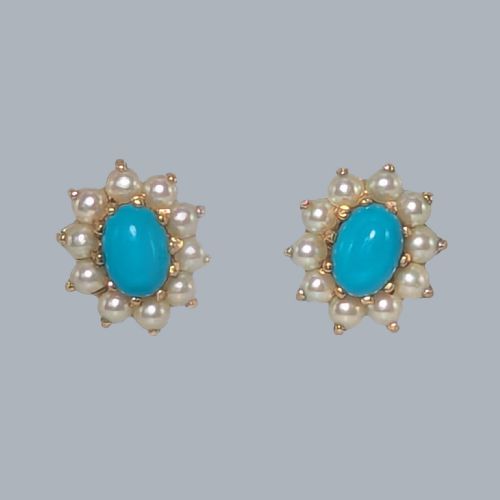


Oval Gemstone Stud Earrings
Oval gemstone stud earrings bring together centred colour and secure everyday wear in classic shapes.
Oval Gemstone Stud Earrings
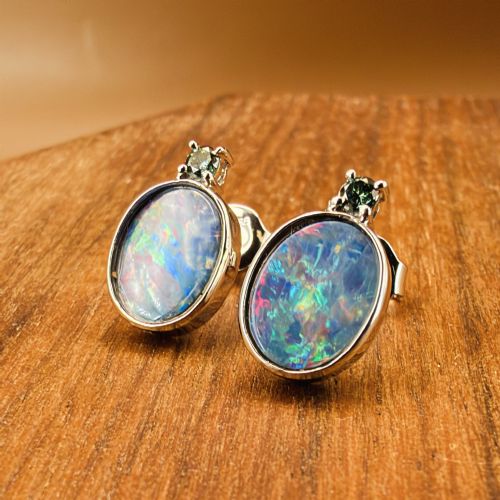
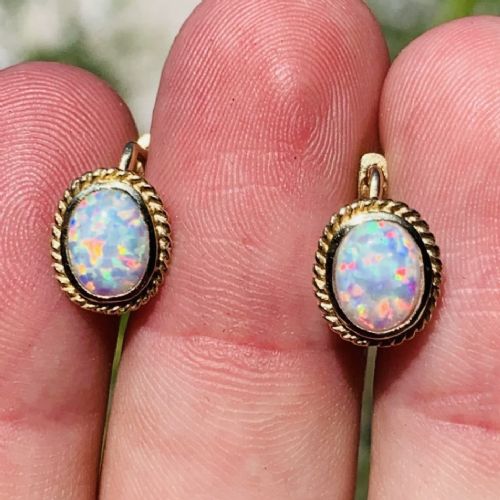
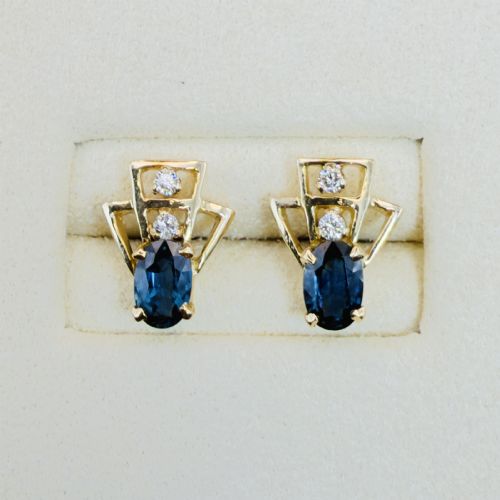
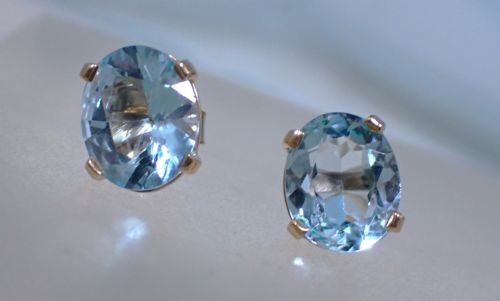
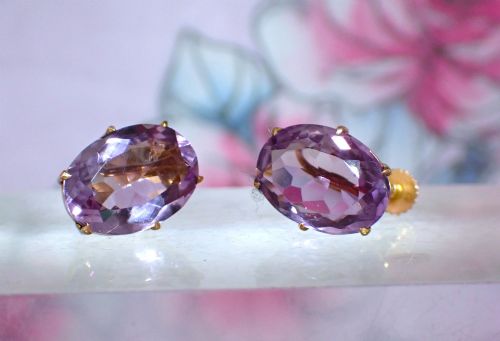
Oval gemstone stud earrings appear across several decades, running from early twentieth-century designs through to mid-century forms. These pieces centre on oval-cut stones, set closely against the earlobe or framed by smaller surrounding gems.
The selections on this page draw on styles such as Art Deco, Edwardian, and vintage mid-century aesthetics. Most pieces utilise straightforward stud mountings, though variations include drop configurations and screw-on backs.
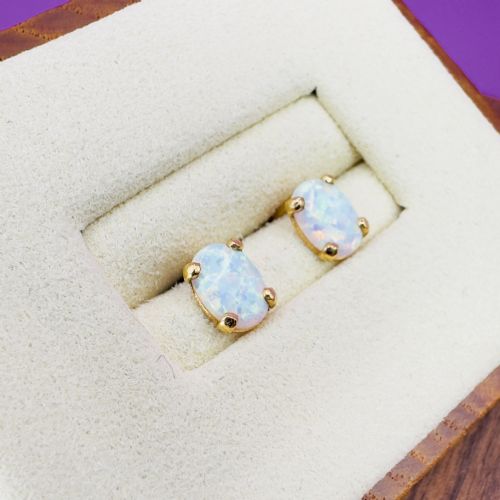
Origins stretch from traditional workshop pieces to hallmarked mid-century examples. The stones chosen range from deep blue sapphires and opals to rich amethysts and aquamarines.
Materials and Technique
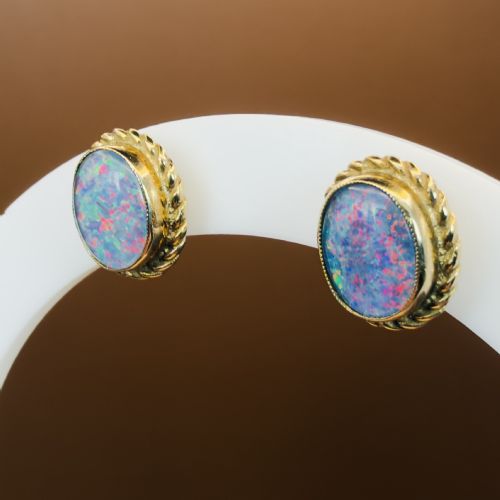
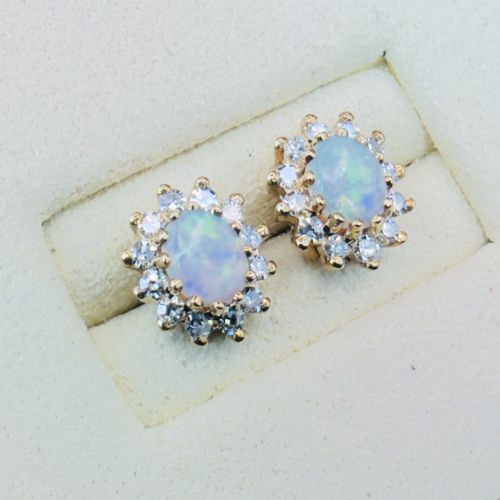
Goldsmiths utilise nine-carat yellow gold, fourteen-carat gold, and eighteen-carat white gold to form the mountings for these stones. Settings range from simple four-claw arrangements to intricate filigree frames and diamond halo clusters.
Stones are shaped into oval cabochons or faceted oval cuts to maximise the play of light across the surface. Combinations often pair central coloured gems with supporting diamonds, split pearls, or smaller accent stones.
Listings feature yellow gold, white gold, and platinum-coloured mountings paired with opals, sapphires, amethysts, and diamonds across multiple decades.
Quality Variations
Distinctions in quality rest upon the depth of colour in the central gemstone and the precision of its cut. Stones with vibrant, even saturation and lively internal reflections set superior examples apart from paler or heavily included specimens.
The standard of metalwork also defines the piece, visible in the crispness of filigree wirework, the secure setting of claw and cluster stones, and the presence of clear hallmarks.
Andrew Grima
The Oval Gemstone Stud Earrings Glossary
- Cabochon
- A gemstone shaped and polished with a smooth, rounded surface rather than faceted edges. This style highlights the optical phenomena in stones like opals and star-bearing minerals.
- Doublet
- A composite gemstone made by fusing two separate sections together, commonly a thin slice of opal joined to a darker backing. This technique enhances the colour play while adding structural stability.
- Filigree
- Delicate openwork jewellery formed from twisted fine threads of gold or silver soldered together in intricate patterns. It appears frequently in Edwardian and mid-century mountings.
- Halo cluster
- An arrangement where a central gemstone is encircled by a border of smaller matching or contrasting stones, usually diamonds. This setting increases the visual presence of the primary gem.
Oval Gemstone Stud Earrings: Frequently Asked Questions
What periods do these earrings cover?
The pieces span from the Edwardian era and the nineteen-twenties through to the nineteen-sixties and later decades. Each period brings distinct mounting styles and stone preferences.
Mid-century examples often favour clean geometric lines and textured gold, while earlier Edwardian designs lean towards delicate filigree and cluster formations.
How do I care for opal earrings?
Opals contain natural water content and benefit from gentle handling away from harsh chemicals, extreme heat, and ultrasonic cleaners. Store them in a soft pouch to prevent surface scratches.
When cleaning is necessary, use a damp cloth rather than submerging the stones in water, particularly for doublet configurations where moisture can affect the adhesive.
What is the difference between studs and drop studs?
Standard studs sit directly and flatly against the earlobe, secured firmly with a butterfly or screw back. They offer a compact profile suitable for daily wear.
Drop studs incorporate a dangling element suspended beneath the main ear fitting, allowing the gemstone to move gently with the wearer.
Are these pieces hallmarked?
Many items feature assay office marks, maker stamps, or purity stamps indicating the specific karat of gold used. London hallmarks and other regional marks provide precise dating evidence for mid-century pieces.
Unmarked pieces rely on stylistic indicators, mounting construction, and material testing to determine their approximate period of origin.