




Vintage Store Sign
These vintage store sign pieces are authentic commercial artefacts that bring genuine trade history and character to interior spaces.
Vintage Store Sign
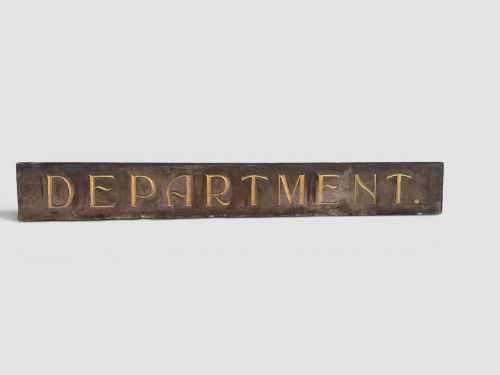
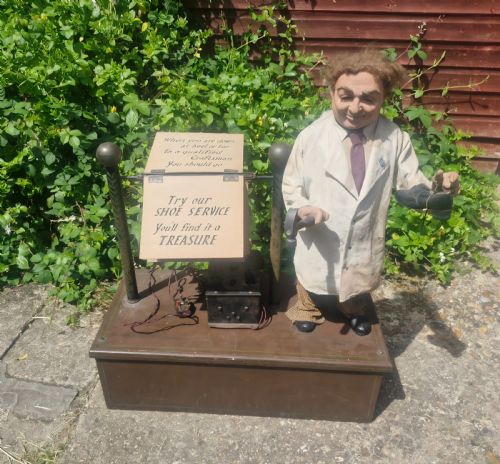
A vintage store sign represents historical commerce through trade signs, advertising figures, and painted glass window panels. Buyers seeking a vintage store sign will encounter items originating from the nineteenth century through the nineteen-thirties.
The selection ranges from large department store signage to specialised trade displays such as tobacconist figures and confectionary window panels. These objects served functional roles in Victorian, Edwardian, and early twentieth-century high street shops.
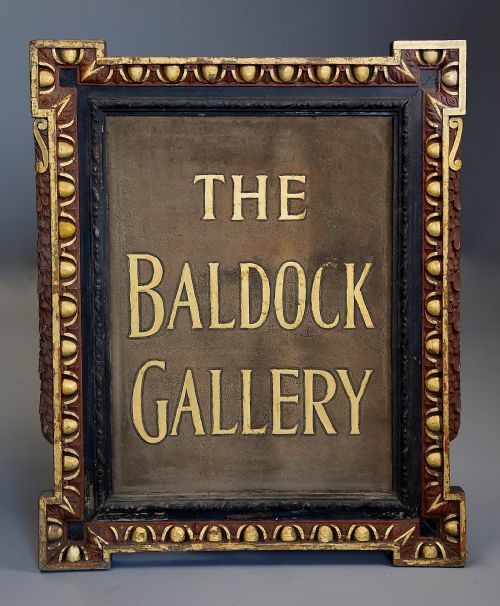
Wooden carved pieces, ironwork, and reverse-cut glass panels dominate the available forms. Many items combine traditional craftsmanship with commercial advertising utility from periods like the Edwardian era.
Materials and Construction
Makers utilised solid wood, iron, and brass as the primary structural foundations for these trade objects. Carved timber frequently received hand-painted finishes and occasional applications of gold leaf for visibility.
Glass techniques include reverse cutting and painted panels set into original wooden frames. Composition materials and metals also appear in specific advertising figures and hardware sample boards.
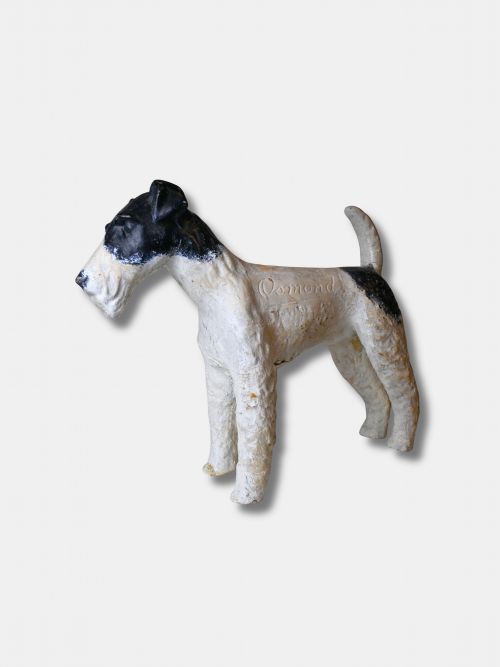
A life-size composition fox terrier waits quietly among the shop displays, hoping nobody throws a stick.
Assessing Quality
Quality rests upon the depth of hand-carving, the preservation of original paint surfaces, and the integrity of the base materials. Pieces retaining their authentic unpolished patinas command greater interest among collectors.
The sophistication of the lettering, pictorial detail, and glasswork distinguishes superior examples from standard commercial survivals. Original frames and mounting hardware further elevate the standing of an individual sign.
Gerwin and Co Birmingham·Watsons Matchless Soap·Breitling
The Vintage Store Sign Glossary
- Reverse Cut Glass
- A technique where glass is gilded, painted, and carved from the rear side so the finished image appears protected through the front pane. This method created durable shop window panels and mirrors.
- Advertising Figure
- A three-dimensional carved or composition sculpture displayed outside or inside a shop to draw trade. Examples include animals, human figures, and brand mascots.
- Hardware Sample Board
- A mounted display board showcasing a manufacturer's range of small metal goods or fastenings for commercial travellers and shopkeepers. These boards gathered various products onto a single wooden backing.
- Gold Leaf
- Extremely thin gold beaten into sheets and applied to carved wooden letters and details. It provided a weather-resistant and luminous finish for high street shop facades.
Vintage Store Sign: Frequently Asked Questions
What materials make up vintage store signs?
Makers constructed these pieces using solid wood, iron, brass, glass, and composition materials.
Surfaces typically feature hand-applied paint, gold leaf, and protective framing.
How were trade signs used originally?
Merchants hung or mounted these signs outside shops and displayed them in windows to announce their trade.
They served as functional commercial markers before modern illuminated plastic signage became common.
How do I date a store sign?
Dating relies on the manufacturing materials, the style of lettering, and construction methods characteristic of specific decades.
Nineteenth-century examples often feature heavy carved timber while nineteen-thirties pieces include enamel and glass panels.
Where should I display a trade sign?
These large wall art displays and figures suit prominent interior walls in living spaces or commercial interiors.
Their robust construction allows them to serve as focal points in rooms with high ceilings.