
Vintage Standing Bookshelves
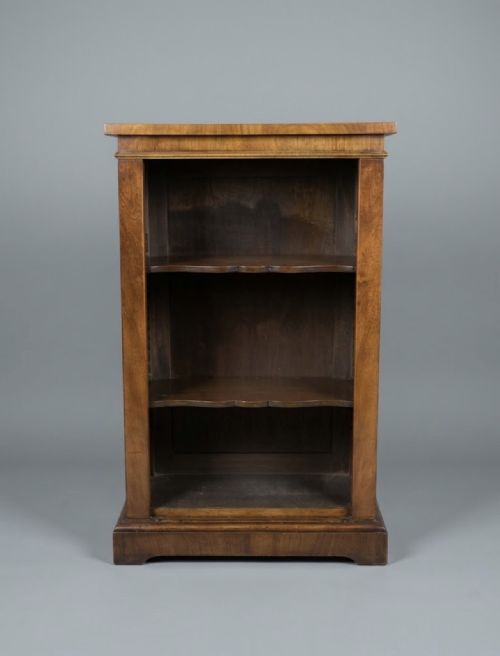
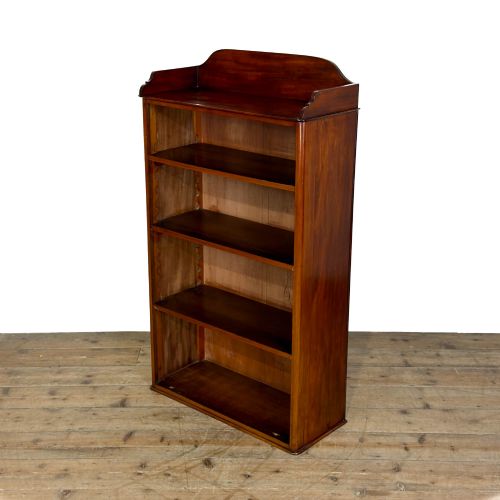
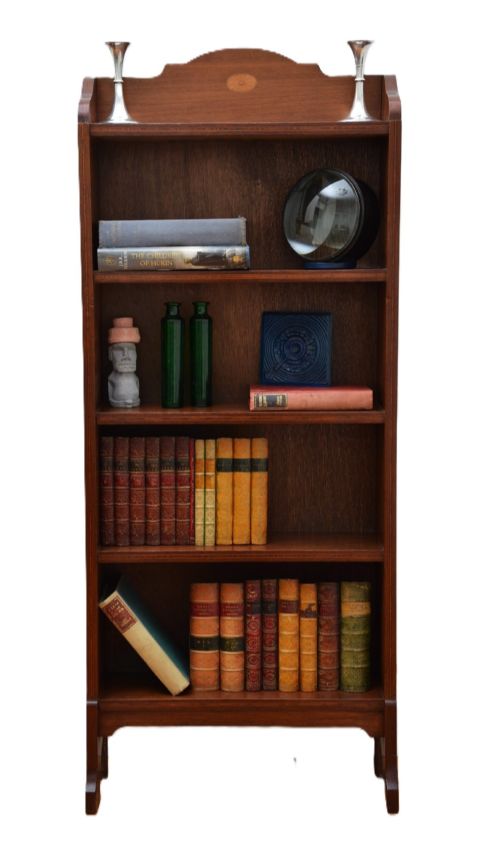
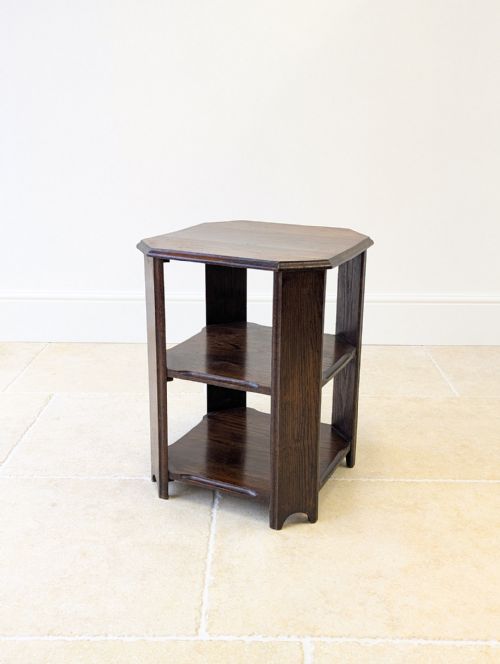
These vintage standing bookshelves bring character and practical organisation to rooms, drawing on periods from the Victorian era through to the 1930s.
Vintage Standing Bookshelves
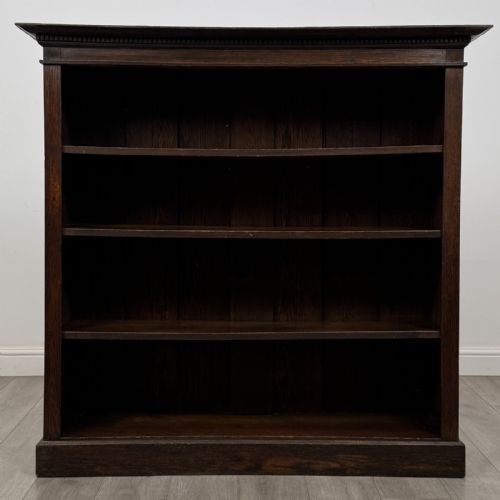
When searching for vintage standing bookshelves, buyers encounter a variety of freestanding timber furniture designed to hold books and display items. The selection on this page leans heavily towards Edwardian and 1920s examples, alongside pieces from the Victorian era and the 1930s.
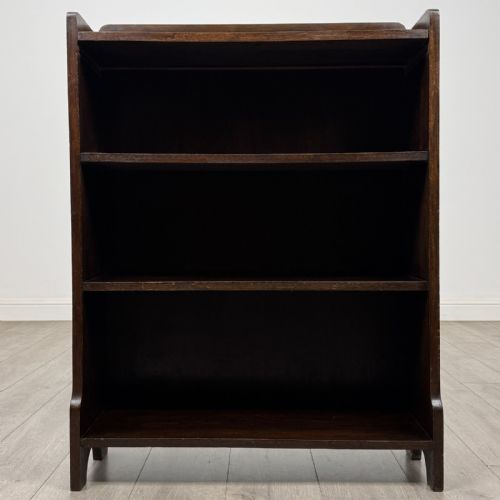
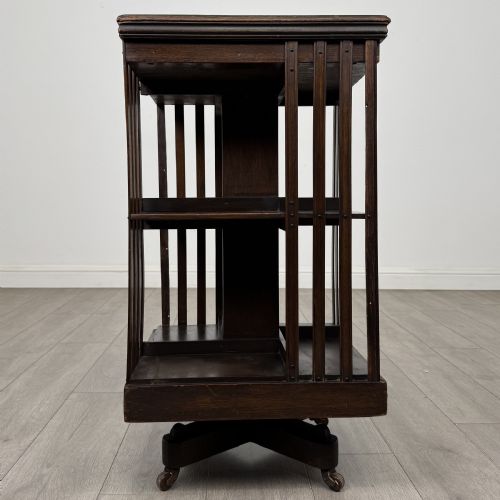
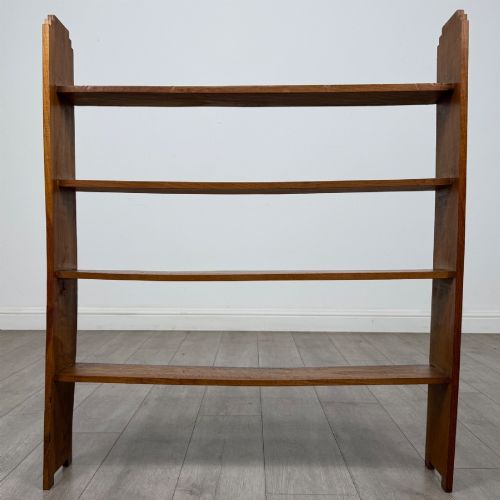
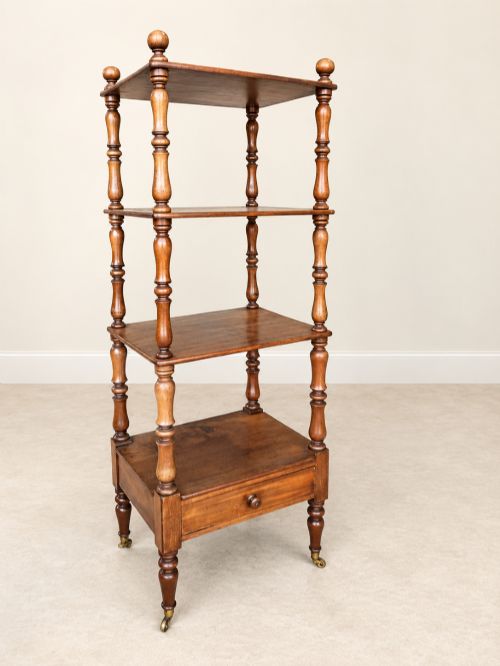
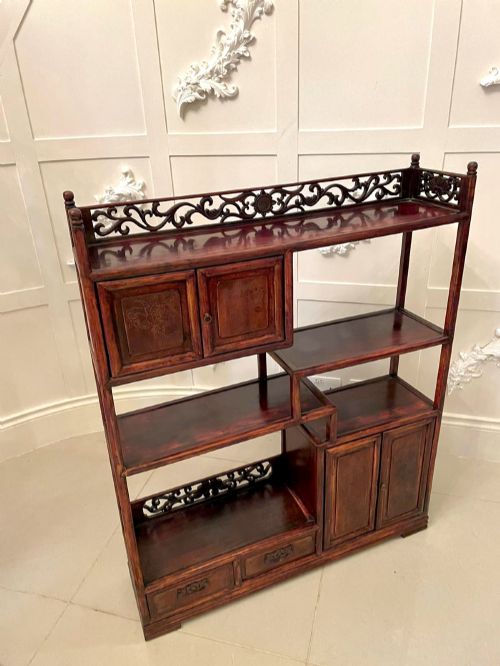
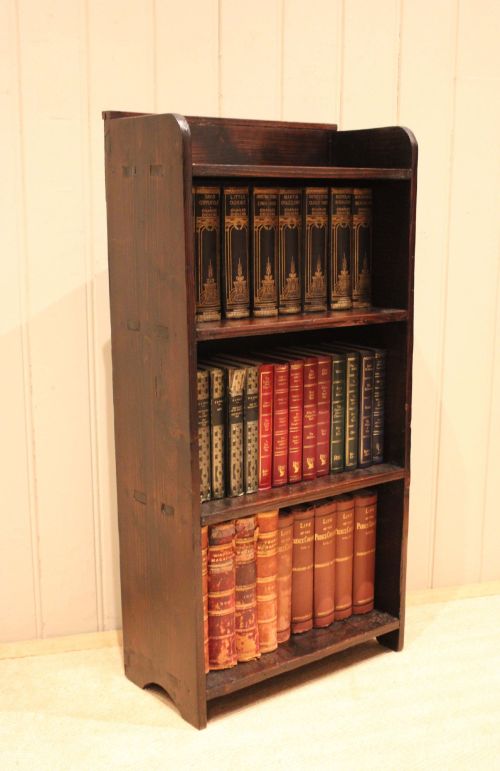
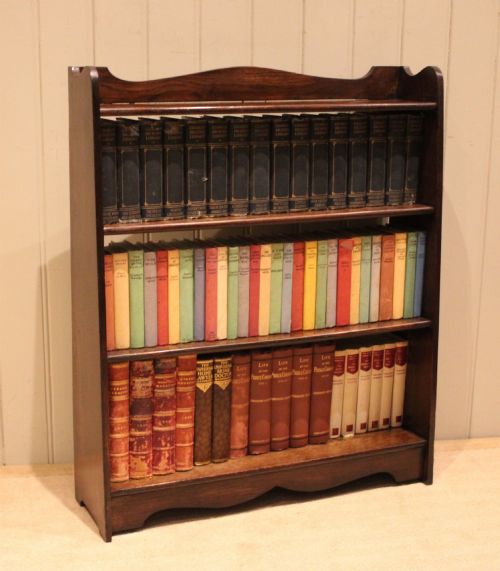
The forms span straightforward open bookcases in oak and mahogany, revolving bookcases, and variations featuring shelves, magazine racks, or small cabinets. Pieces range from compact rustic models to taller library configurations.
Origins include English workshops, French makers, and specific regional interpretations, providing structural variety within domestic settings.
Materials and Construction
Makers relied principally on solid oak and mahogany, sometimes incorporating satinwood, brass, and metal details. Timber selection defined the primary weight and visual tone of each piece.
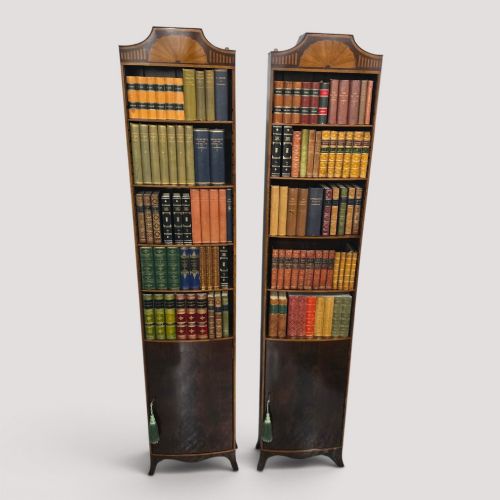
Construction techniques include adjustable shelving mechanisms, beaded edges, and satinwood inlay work. Revolving models integrated internal rotating hardware to allow easy access from multiple angles.
Listings feature oak and mahogany predominantly, alongside brass, satinwood inlay, and cast iron details.
Assessing Quality and Build
Quality separates pieces through the selection of timber grain and the precision of joinery. Finer examples display careful attention to detail in inlay work and hardware.
Structural integrity of adjustable shelves and rotating mechanisms determines the durability of the piece under everyday domestic use.
The Vintage Standing Bookshelves Glossary
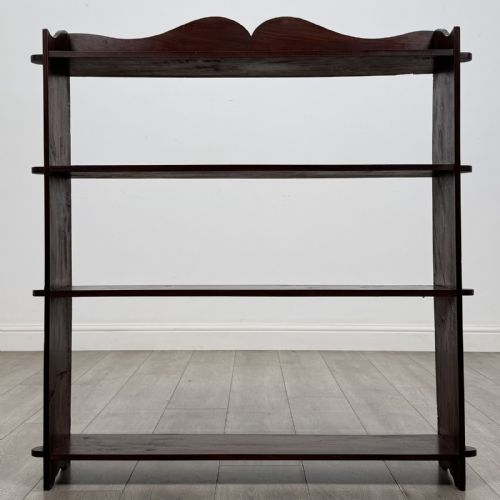
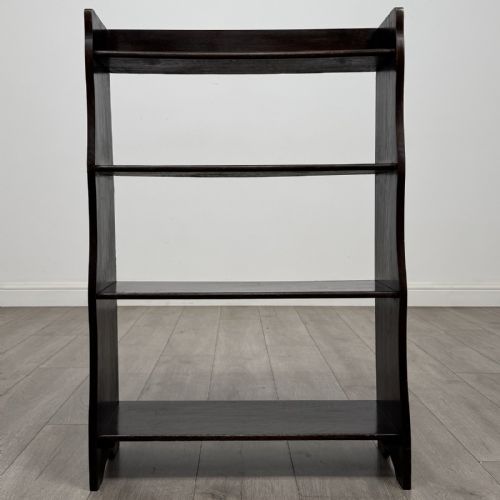
- Waterfall bookcase
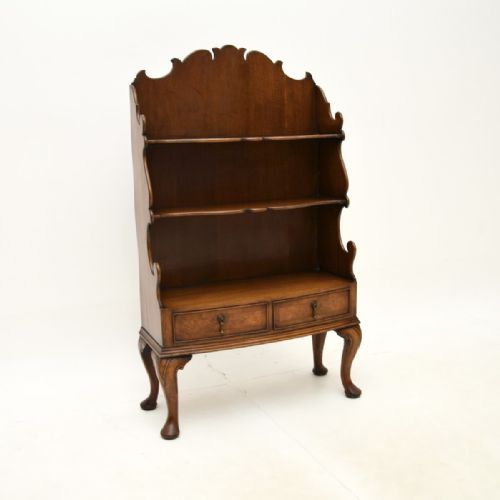
- A standing set of shelves where each tier steps back progressively from the one below it. This stepped profile creates a distinct cascading silhouette.
- Revolving bookcase
- A freestanding shelving unit built upon a rotating base. It allows books to be stored on multiple sides and accessed by spinning the cabinet.
- Satinwood inlay
- A decorative technique using contrasting light-toned wood embedded into the primary timber surface. It creates geometric or floral patterns.
- Arts and Crafts
- A design movement prioritising traditional craftsmanship and simple forms over mass-produced ornamentation. Pieces often highlight exposed structural joinery and natural wood grains.
Vintage Standing Bookshelves: Frequently Asked Questions
What periods do these bookcases span?
The listings span from the 19th century and Victorian eras through the Edwardian period, 1920s, and into the 1930s.
This range includes pieces influenced by Regency styles, Arts and Crafts movements, and Jacobean revival designs.
Are the shelves adjustable?
Many of the open bookcases feature adjustable shelving systems to accommodate books of varying heights.
Buyers should check individual listings to confirm whether a specific unit includes movable shelves.
How do revolving bookcases function?
Revolving bookcases sit upon a concealed rotating mechanism built into the base of the unit.
This allows the entire cabinet to spin smoothly, providing access to books stored on multiple sides without moving the furniture.
What woods were commonly used?
Oak and mahogany appear most frequently across the selection, encompassing dark oak, golden oak, and rich mahogany tones.
Some examples also incorporate satinwood inlay, brass fittings, and mixed metals.