






Vintage Square Stools
These vintage square stools bring solid timber frames and traditional upholstery straight to your floor.
Vintage Square Stools
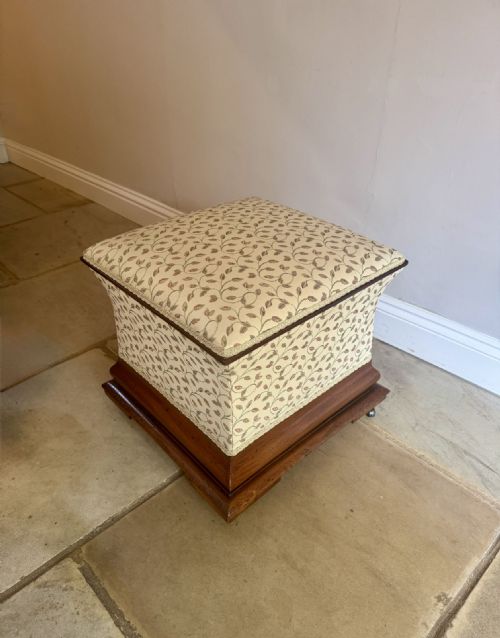
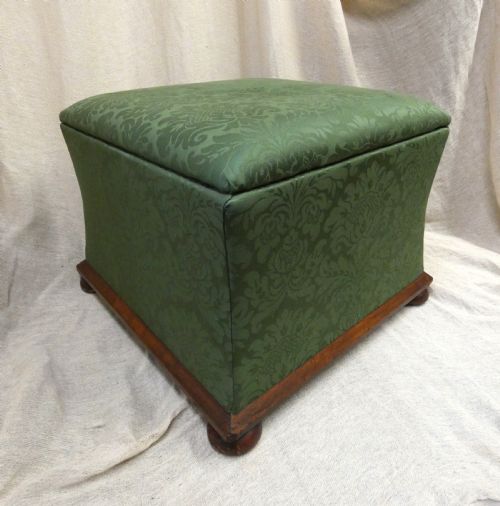
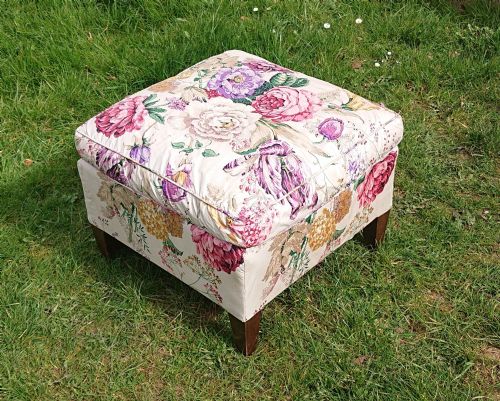
Vintage square stools encompass a practical group of low seating, footstools, ottomans, and occasional tables spanning the nineteenth and early twentieth centuries. When searching for vintage square stools, buyers encounter varied timber frames and upper surfaces dressed in leather, needlepoint, velvet, and standard upholstery fabric. These pieces serve functions ranging from dressing table seats and piano stools to large centre ottomans in country house settings.
The assortment on this page draws heavily from Victorian periods, Edwardian eras, and broader nineteenth-century workshops. Common forms include buttoned leather footstools, mahogany and oak frames, and pieces referencing Georgian Revival or French Chateau styles. Each item provides a compact footprint suited to living spaces, studies, and bedrooms.
How they were made
Makers constructed these frames from hard timbers such as mahogany, oak, walnut, and occasional gilt wood, often adding brass details and caned panels. Woodworking joints relied on traditional joinery techniques to support daily weight and heavy upper cushioning.
Upholstery methods involved deep buttoning, needlepoint stitching, and layered padding secured over webbing or springs. Finishers applied fabric, leather, or velvet tightly across the square surfaces, sometimes pairing the woodwork with ebonised touches.
Vintage Square Stools Retail Price Guide 2026
Typical asking prices for vintage square stools among the pieces listed under this phrase on Sellingantiques today, from the lower quarter to the upper quarter. They describe what is for sale here now, not the wider market.
Some nineteenth-century makers evidently expected tired feet, packing their square stools with enough upholstery to rival a small mattress.
What varies in quality
Quality separates through the integrity of the timber frame, the crispness of carved details, and the depth of the upholstery work. Superior pieces display substantial hardwoods, tight joints, and refined secondary materials like finely grained walnut or substantial brass fittings.
The execution of the top surface further dictates standard, whether through hand-stitched needlepoint, carefully buttoned leather, or intact caned panels. Pieces associated with notable makers or specific revival styles hold distinct design execution compared to simpler domestic workshop output.
Howard and Sons
The Vintage Square Stools Glossary
- Ottoman
- A low, upholstered seat or footstool typically without arms or a back. These pieces often feature deep buttoning and generous interior or upper padding.
- Needlepoint
- A type of canvas work embroidery used historically to cover stool tops with intricate patterns. This textile technique provides a textured, decorative surface.
- Buttoned
- An upholstery method where tufting pulls the fabric deep into the padding using buttons in a diamond grid pattern. This secures the filling and creates a tailored appearance.
- Caned
- Woven rattan or split cane material used to form openwork panels on seats or tables. It offers a lightweight, breathable surface texture.
Vintage Square Stools: Frequently Asked Questions
How do I style a vintage square stool?
Place a leather or fabric square stool centrally in a room to act as a coffee table substitute or extra seating.
Pair wooden frames near armchairs or dressing tables to introduce period texture and practical utility.
Were these stools used as tables?
Several nineteenth-century square pieces combine sturdy timber frames with solid or caned tops designed to serve as both low tables and seats.
Upholstered versions function primarily for resting feet or sitting, while wooden or caned variants accommodate trays and decorative objects.
What is the difference between an ottoman and a footstool?
Ottomans generally denote larger square or rectangular upholstered forms suited for central room placement or heavy daily use.
Footstools usually present a more compact scale intended specifically to support seated legs.
How can I tell a Victorian stool from an Edwardian one?
Victorian examples frequently display darker mahogany or oak timbers with heavier proportions, deep buttoning, and ornate carvings.
Edwardian pieces often lighten the palette and lean toward refined revival styles with simpler structural lines.